
24/7 Customer Support

Free returns

Same-day & Next-day Delivery

Quality Guaranteed

Unlock Your Welcome Offers: FREE Delivery | Up to 80% OFF | Free 30-day JoyPlus trial
Download the APP
By Joybuy Product Recommendation Officer
An adjustable weight bench can support bench presses, dumbbell work, shoulder presses, abdominal exercises and more. However, the wrong design may become uncomfortable, unstable or difficult to store long before your training routine becomes consistent.
For UK households, the main challenge is separating useful specifications from vague marketing language. A high stated load capacity does not automatically mean a bench will suit your room, lifting style or available equipment. Before buying, check the following common pitfalls.
Some listings show a large static load capacity, which may refer to the bench remaining stationary under a much higher load. The dynamic load capacity is more relevant during exercise because it reflects movement from the user and weights.
Always check whether the limit includes your body weight and whether it applies to flat, incline and decline positions. If the listing does not clearly explain the figure, consult the supplied instructions before attempting heavy lifts.
A bench may advertise numerous angles but still have excessive gaps between the backrest and seat, unwanted movement or an adjustment mechanism that is awkward to operate. The practical essentials are a clearly marked locking system, a stable frame and a backrest angle that suits your exercises.
A full-size home gym weight bench needs enough clearance for loading dumbbells, moving around the frame and safely mounting or dismounting. A foldable weight bench can help in a flat or compact training area, but check its folded dimensions and lifting weight before choosing it for everyday storage.
Look for a clearly stated capacity and identify whether it is static or dynamic. Steel frames are commonly used for strength training benches because they provide a rigid structure, but stability also depends on the base width, feet, welds and adjustment points.
For UK home use, place the bench on a level, solid surface and avoid exceeding the manufacturer’s stated limit. A higher capacity can be useful for progressive training, but it should not replace correct setup or a spotter when lifting heavily.
A flat incline decline bench offers more exercise options than a flat-only model. Flat positioning is useful for presses and rows, while incline settings can support upper-body movements. Decline settings may be useful for selected abdominal or pressing exercises, provided the bench remains stable.
Inspect the adjustment pins, support brackets and pivot points. They should engage fully without relying on friction alone. Before every session, confirm that the backrest and seat are locked into position.
Thicker padding is not automatically more supportive. The bench should provide a firm, even surface that allows your shoulder blades and feet to remain well positioned. Compare the bench width and backrest length with your body size, especially if you are tall or plan to use a barbell.
Also consider the height from floor to seat. A lower bench may make it easier for some users to place their feet securely, while a taller design may feel more natural for others. Product dimensions are more useful than general claims such as “professional” or “ergonomic”.
A multifunctional weight bench may include a leg developer, preacher curl pad or squat rack. These features can save space, but they also add assembly points and moving parts. Check the maximum load for each attachment rather than assuming it matches the bench frame.
If you are assembling the equipment at home, confirm what is included and how much work remains. An 80% pre-assembled design may be convenient, but the remaining bolts and locking mechanisms still need careful installation.
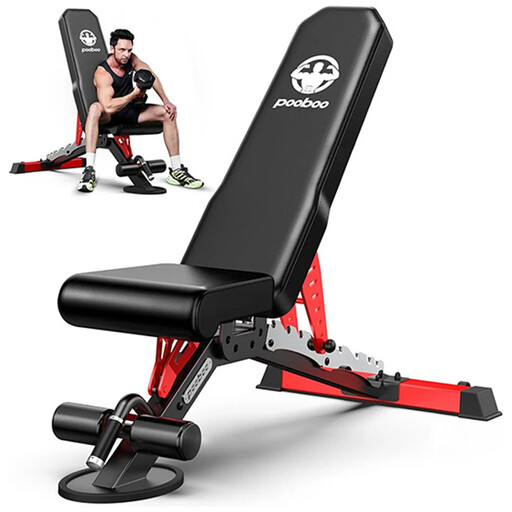
Why This Fits Their Persona: It provides flat, incline and decline positions for users building a basic home strength-training setup without immediately adding several separate pieces of equipment.
The listing provides a specific 1,500-pound maximum capacity and identifies the alloy steel frame, rather than relying only on general durability wording. Assembly is required, so allow time to tighten and check every connection.
Flat, incline and decline adjustment; alloy steel frame; suitable for full-body home workouts.
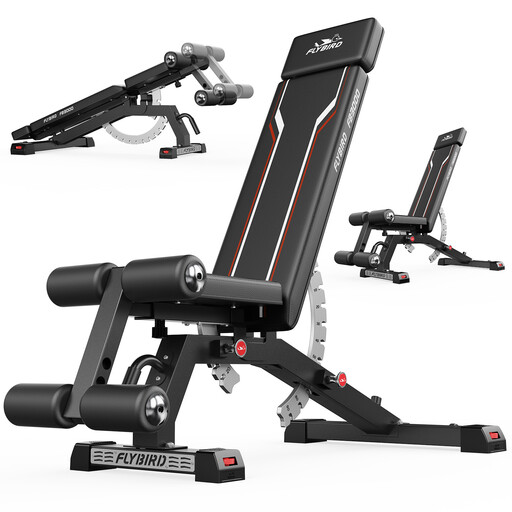
Why This Fits Their Persona: The foldable structure suits a dedicated home gym where equipment needs to be cleared after training, while the quick-adjust design supports frequent changes between movements.
The listing specifies heavy-duty commercial-grade steel, powder coating, multiple positions, folding storage and 80% pre-assembly. Treat the 544 kg figure as the listed limit and verify the operating instructions before heavy use.
Quick adjustment; foldable construction; listed 544 kg load capacity; 80% pre-assembled.
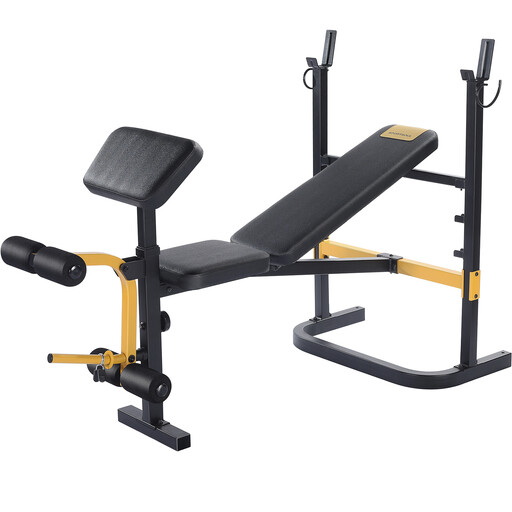
Why This Fits Their Persona: This option is aimed at users who want a combined bench and rack arrangement for barbell training, leg extensions, leg curls and preacher curls in one home or commercial-style setup.
The listing separates the 410-pound dynamic capacity from the 1,200-pound static capacity, making the figures more practical to interpret. It also specifies safety hooks and four backrest levels.
Integrated squat rack; leg developer; removable three-level preacher curl pad; four-level backrest adjustment.
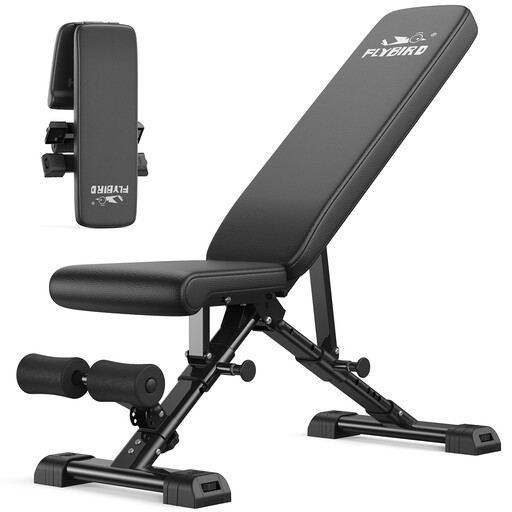
Why This Fits Their Persona: The foldable format is practical for a spare room, flat or garage where the workout area may need to serve another purpose between sessions.
Its stated 363 kg capacity, quick-adjust system and 80% pre-assembled format provide concrete information to compare with other foldable weight bench designs.
Space-saving folding structure; quick adjustment; commercial-grade steel frame; suitable for flat and incline training.
We have compiled a complete, real-time list of products that fully satisfy these strict selection criteria and UK safety regulations.
Before using any workout bench, follow these steps:
A flat bench such as the SPORTSOUL Sturdy Flat Weight Bench may suit buyers who do not need incline settings. Its listed 610-pound, or 277 kg, capacity, widened cushion and built-in wheels are relevant for straightforward dumbbell and barbell exercises, although assembly and level-floor positioning remain essential.
Yes, provided the bench is stable, correctly assembled and used within its stated capacity. Beginners should start with manageable weights, learn safe lifting technique and avoid training alone with loads that are difficult to control.
Lifespan depends on frequency of use, load, storage conditions and maintenance. Regularly tightening fasteners, keeping the frame dry and checking upholstery and adjustment hardware can help identify wear early. Replace or stop using the bench if the frame bends, locking parts fail or excessive movement develops.
No. Standard adjustable benches use manual pins, brackets or quick-adjust mechanisms, so they do not normally add to household electricity costs. The main ongoing considerations are floor space, cleaning and occasional maintenance of moving parts.