
24/7 Customer Support

Free returns

Same-day & Next-day Delivery

Quality Guaranteed

Unlock Your Welcome Offers: FREE Delivery | Up to 80% OFF | Free 30-day JoyPlus trial
Download the APP
An adjustable weight bench can support bench presses, dumbbell work, shoulder presses, abdominal exercises and lower-body movements without requiring several separate machines. However, attractive product listings can hide details that affect stability, storage and long-term usability.
Before buying a home gym weight bench, watch for three common pitfalls:
For strength training, look beyond a large number in the product title. Check whether the listing gives a dynamic load capacity, a static load capacity or one combined maximum. The total normally includes your bodyweight, dumbbells, barbells and any attached accessories.
A heavy-duty weight bench should have a rigid steel frame, secure joints and feet that sit evenly on a flat floor. Carbon steel, alloy steel and commercial-grade steel are common frame materials, but the material name alone does not guarantee stability. Also check the bench’s dimensions, frame design and assembly instructions.
If you plan to perform barbell work, compare the bench with the rest of your equipment. A bench press bench used with a separate rack needs compatible height and sufficient clearance. A weight bench with squat rack should have secure bar supports and clear safety hooks.
A useful flat incline decline bench should provide a genuinely flat position as well as suitable incline settings. Flat positioning is important for presses and supported dumbbell exercises, while incline positions can support seated shoulder presses and upper-body variations.
Check how the backrest adjusts:
A multifunctional weight bench may also include a leg developer or preacher curl pad. These additions can widen the range of exercises, but they add moving parts and may increase the storage footprint.
Measure the space available in your home gym, including room to walk around the bench and lift safely. For flats or shared rooms, a foldable workout bench can make storage easier, although folding joints should be checked regularly for looseness or damage.
Padding should be thick enough to provide support without feeling unstable. Breathable synthetic leathaire may be easier to wipe clean than fabric, while a widened seat can offer more contact area. These are comfort and maintenance considerations rather than proof of exercise performance.
For UK homes, keep the bench indoors in a dry environment. Wipe upholstery with a soft, damp cloth and mild soap, avoid abrasive chemicals and retighten fasteners periodically. Before each session, check the frame, adjustment pins, locking mechanisms and any accessory attachments.
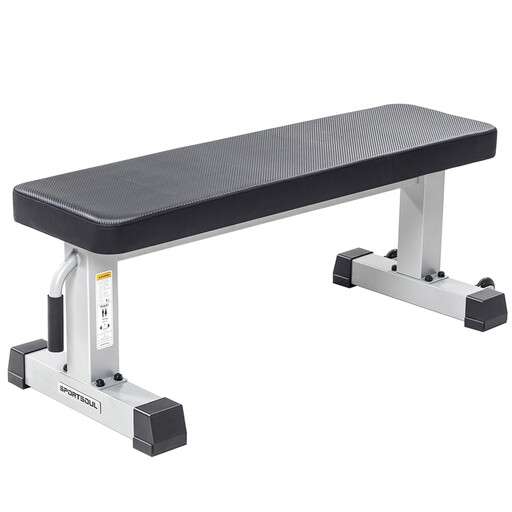
Why This Fits Their Persona: A straightforward flat bench suits UK users starting with dumbbells, presses and abdominal exercises without needing a complex rack system.
Its listing states a 610 lb (277 kg) maximum capacity and identifies the carbon steel frame, rather than relying only on vague “heavy-duty” wording. The capacity still includes the user and weights.
Flat 46 × 19 × 17 in dimensions, built-in wheels, widened leathaire padding and included assembly hardware.
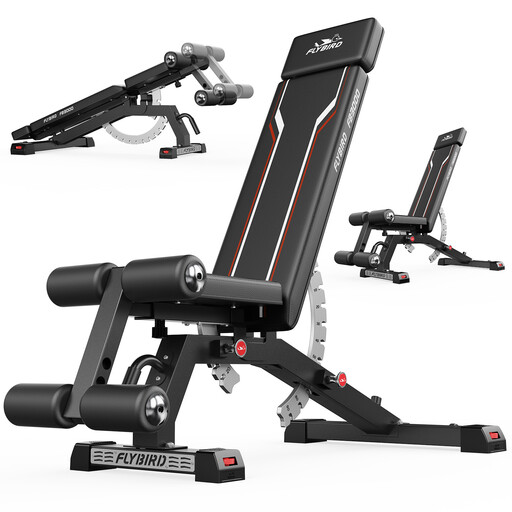
Why This Fits Their Persona: Suitable for advanced home-gym users who want quick position changes and a foldable design for a compact training area.
The listing specifies a 544 kg load capacity, a quick-adjust system and a powder-coated commercial-grade steel frame. Confirm the folding joints and locks are secure before every session.
Foldable construction, flat/incline/decline positioning and 80% pre-assembly.
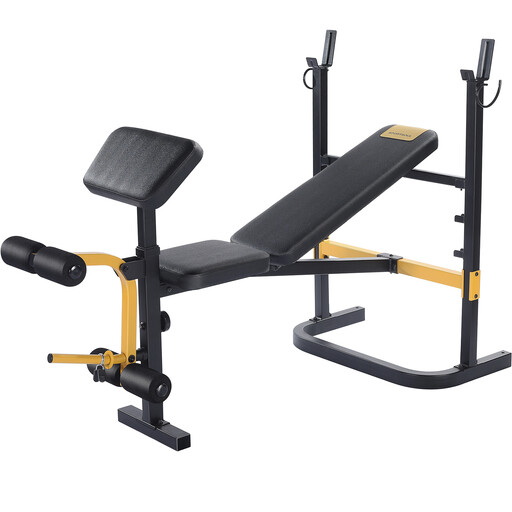
Why This Fits Their Persona: A practical choice for users wanting one station for barbell work, curls and leg exercises in a home or small commercial gym.
It clearly separates a 410 lb (186 kg) dynamic capacity from a 1,200 lb (544 kg) static capacity. The removable preacher curl pad and safety hooks also have defined functions.
Four backrest levels, three preacher-curl-pad adjustments, leg extension/curl function and compatibility with 6 ft and 7 ft barbells.
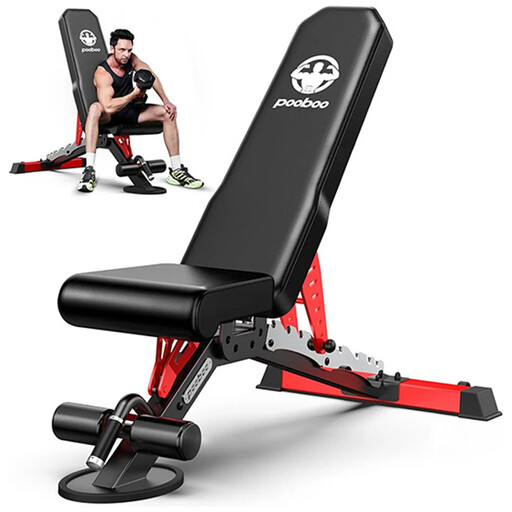
Why This Fits Their Persona: Designed for users prioritising a substantial stated capacity and multiple positions for demanding full-body strength routines.
The listing identifies the alloy steel frame and states a 1,500 lb maximum capacity. Treat this as a total limit, confirm every adjustment is stabilised and follow the supplied instructions.
Flat, incline and decline settings, a 58.27 × 24.02 × 46.03 in footprint and an alloy steel frame.
Most benches require at least some assembly. Lay out the parts before starting, use the supplied hardware and tighten each connection only after the frame is correctly aligned. A partially tightened joint can create movement even when the bench appears assembled.
Place the bench on a level, non-slip surface and test each position without weights first. Adjustment pins should be fully inserted and folding mechanisms should be locked before use. When lifting heavy barbells, use a spotter and ensure the rack’s safety hooks are correctly positioned. Do not exceed the stated capacity, use damaged equipment or allow children and pets near the training area.
It can be, provided you measure the working footprint rather than only the folded dimensions. A foldable model may be easier to store, while built-in wheels can help move a flat bench. Leave sufficient space for safe mounting, dismounting and dumbbell movement.
Lifespan depends on load, frequency, assembly quality, storage and maintenance. Regularly inspect welds, bolts, hinges, upholstery and locking pins. Keeping the bench dry and tightening loose fasteners can help preserve its condition, but damaged structural parts should not be used.
It can cover many exercises, but it may not replace a dedicated rack, cable machine or leg machine. Choose accessories such as a leg developer or preacher curl bench according to exercises you will actually perform, not simply the number of features listed.
We have compiled a complete, real-time list of products that fully satisfy these strict selection criteria and UK safety regulations.