
24/7 Customer Support

Free returns

Same-day & Next-day Delivery

Quality Guaranteed

Unlock Your Welcome Offers: FREE Delivery | Up to 80% OFF | Free 30-day JoyPlus trial
Download the APP
An adjustable weight bench can support bench presses, dumbbell work, shoulder exercises and core training without taking up the space of several separate machines. However, the wrong model can become an expensive piece of equipment that feels unstable, occupies too much floor space or cannot accommodate your training style.
For UK home gym owners, the key is to look beyond a high capacity number or a long list of exercises. Check how the bench is constructed, how its adjustment system works and whether its dimensions suit your available room.
A listed capacity normally includes your body weight plus the weights being lifted, rather than the weight of the dumbbells or barbell alone. Some products also distinguish between dynamic and static loads. Dynamic capacity relates to movement during exercise, while static capacity refers to a stationary load.
For example, a bench may list a 410 lb dynamic load and a 1,200 lb static load. These figures should not be interpreted as permission to perform moving lifts at the static limit. Always check the supplied instructions and leave a sensible margin below the stated maximum.
A multifunctional weight bench may include a leg developer, preacher curl pad or squat rack. These additions can be useful, but they also increase the footprint, assembly requirements and number of moving parts.
Before paying for attachments, consider whether you will genuinely use them. A well-built adjustable bench may be more suitable than a crowded station if your routine focuses on dumbbell presses, bench press variations and seated shoulder work.
A flat incline decline bench is only useful if the backrest and seat lock firmly into position. Loose adjustment pins, excessive play or a narrow base can affect confidence under load.
Foldable storage is also not automatically space-saving in practice. Measure the folded dimensions, the clearance needed to unfold the bench and the storage route through doors or stairways. In a UK flat or spare bedroom, these details can matter as much as the upholstery.
Look for a carbon steel, alloy steel or commercial-grade steel frame with a powder-coated finish. Steel does not eliminate movement, so also inspect the base design, leg width, welds and contact points.
A heavy-duty workout bench should remain planted on a flat, level floor during pressing and lowering movements. Feet with broad contact areas can help distribute force, although the floor surface and assembly quality remain important.
Compare capacities on a like-for-like basis:
For general strength training, a bench with flat and incline positions may cover dumbbell press, chest-supported work and seated shoulder press. Decline adjustment can add abdominal movements and decline pressing, but it requires a secure seat and reliable locking mechanism.
A four-level backrest, such as the one on the SPORTSOUL rack bench, provides flat, incline and decline positioning. Quick-adjust systems can make transitions easier, but users should still confirm that the locking pin is fully engaged before loading the bench.
Measure the bench width, backrest length, seat height and total footprint. A wide seat can feel more supportive, while a very high bench may make foot placement difficult for shorter users.
Breathable synthetic leathaire with foam or latex padding can be comfortable during longer sessions, but it still needs care. Wipe the surface with a soft, damp cloth and mild soap, avoid abrasive cleaners and store the bench indoors in a dry environment. Inspect bolts, pivot points and locking pins regularly.
The following options match different buying priorities. Product capacities and specifications are based on the supplied product information; check the current listing and manual before purchase.
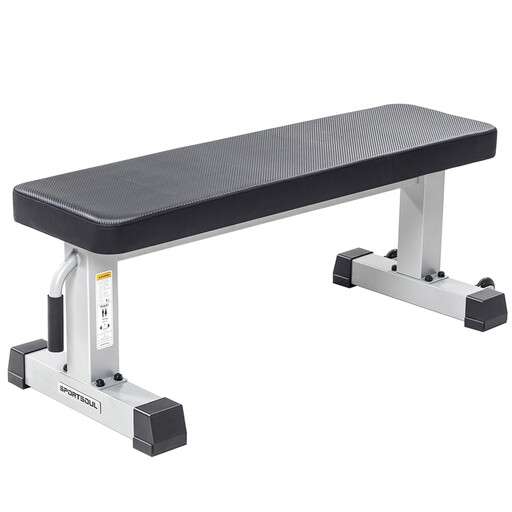
Why This Fits Their Persona: A straightforward option for UK users beginning a home strength-training routine who do not need incline settings or a rack. Built-in wheels can assist with moving it between storage and workout areas.
Its simple flat design avoids paying for unused attachments. The upside-down T-shaped legs are intended to provide stability when correctly assembled on a level floor.
Carbon steel frame; listed 610 lb (277 kg) maximum capacity; breathable leathaire and latex-layer cushion; transport wheels.
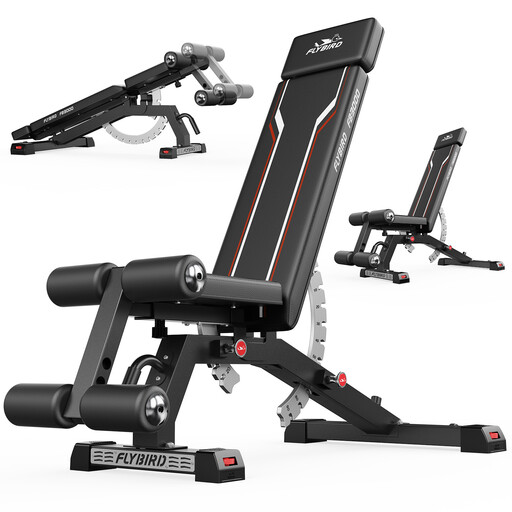
Why This Fits Their Persona: Suitable for experienced home gym owners and powerlifters seeking quick positioning changes and a foldable frame for a compact training room.
The listed quick-adjust system and folding construction address awkward storage and frequent manual repositioning. Users must still check folding joints and locking points before each session.
Commercial-grade powder-coated steel; multiple flat, incline and decline positions; foldable design; listed 544 kg load capacity; 80% pre-assembled.
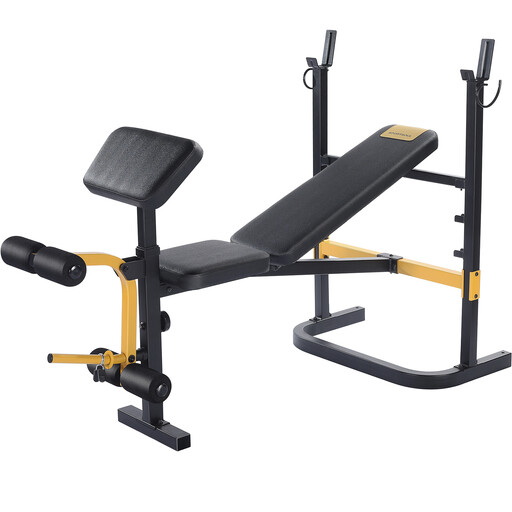
Why This Fits Their Persona: A practical match for intermediate to advanced users who want a bench press bench, squat rack, leg training and preacher curls in one home or commercial gym setup.
The integrated safety hooks and adjustable mechanisms provide defined functions rather than unspecified “multi-gym” claims. Confirm the rack is suitable for your barbell length and available floor area.
Four-level backrest; removable three-level preacher curl pad; leg extension and curl function; 410 lb dynamic and 1,200 lb static load listings.
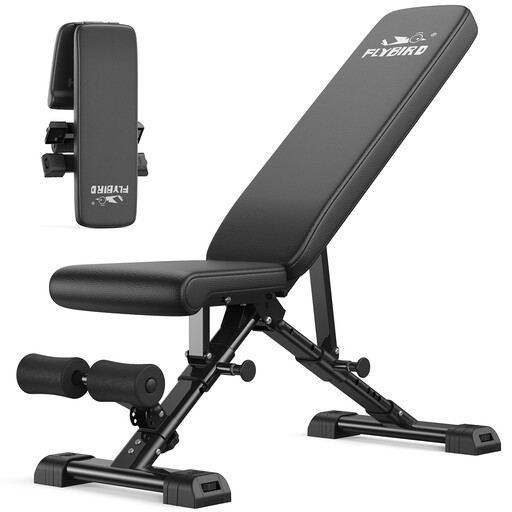
Why This Fits Their Persona: Designed for home users who need an adjustable workout bench that can be folded away after dumbbell and barbell sessions.
Its stated 80% pre-assembly can reduce setup time, while the foldable structure addresses storage concerns. The remaining assembly and all locking checks are still essential.
Powder-coated commercial-grade steel; quick-adjust positioning; foldable frame; listed 363 kg maximum load.
We have compiled a complete, real-time list of products that fully satisfy these strict selection criteria and UK safety regulations.
Yes, provided you measure both the working and storage area. A foldable weight bench can reduce stored floor space, while transport wheels may make a flat bench easier to move. Leave enough clearance around the bench for safe mounting, dumbbell movement and barbell handling.
Lifespan depends on load, frequency, assembly and maintenance. Regularly tighten fasteners, inspect welds and adjustment points, and keep synthetic upholstery dry and free from harsh chemicals. Stop using the bench if the frame, padding, pins or locking joints show damage.
Not necessarily. A standalone strength training bench is suitable for dumbbell presses, seated exercises and core work. Choose a weight bench with leg developer or squat rack when those exercises are central to your routine and you have adequate space. For heavy barbell lifts, use the rack’s safety features correctly and consider a spotter.