
24/7 Customer Support

Free returns

Same-day & Next-day Delivery

Quality Guaranteed

Unlock Your Welcome Offers: FREE Delivery | Up to 80% OFF | Free 30-day JoyPlus trial
Download the APP
An adjustable weight bench can support pressing, dumbbell work, seated exercises and core training without taking up the space of a full commercial gym. However, the wrong model may become frustrating quickly: it can wobble on uneven flooring, offer too few useful positions or prove difficult to store in a typical UK home.
As Joybuy’s Product Recommendation Officer, I focus on practical specifications rather than promotional wording. Before choosing a workout bench, watch for these common buying traps.
A large capacity number may include the user, barbell and plates together. Some listings also separate dynamic load capacity from static load capacity, so these figures are not directly interchangeable.
For example, one SPORTSOUL rack bench lists a 410 lb (186 kg) dynamic capacity and a 1,200 lb (544 kg) static capacity. The dynamic figure is the more relevant one during ordinary training. Always check what the stated maximum includes and leave a sensible margin rather than training at the limit.
An adjustable workout bench may offer several settings, but the spacing between positions, the locking method and the gap between the seat and backrest affect how it feels in practice. A bench that technically reaches incline, decline and flat positions may still be unsuitable if the back pad moves during pressing or does not support your preferred posture.
Look for clearly described adjustment positions and a locking pin, ladder or quick-adjust mechanism that is easy to confirm before each set.
A foldable weight bench can be useful in a flat, spare room or smaller home gym, but “foldable” does not always mean it can be stored under furniture. Check the folded dimensions, transport weight and whether wheels or a carry handle are included.
Also distinguish between 80% pre-assembled and ready-to-use. The remaining assembly still needs to be completed correctly, with every bolt and locking mechanism checked before loading weights.
A heavy-duty weight bench should have a frame material and base design suited to the intended load. Commercial-grade steel, alloy steel and carbon steel are commonly specified in the products below. A powder-coated finish may help protect the frame from ordinary indoor wear, but it does not replace regular inspection or dry storage.
For home strength training, compare:
Place the bench on a flat, level surface and do not exceed the manufacturer’s stated limit.
An incline decline flat bench gives more exercise options than a flat-only model. Incline settings can suit pressing and seated shoulder work, while a flat position is useful for dumbbell pressing and supported exercises. Decline settings may support certain core and pressing routines, provided the bench remains stable and the user can mount and dismount safely.
If you want a multifunctional weight bench, check whether attachments are included or sold separately. A weight bench with leg developer, preacher pad or rack can add exercises, but it also increases the footprint and assembly complexity.
A wider, thicker backrest may feel more supportive, but it can also make the bench heavier and less convenient to store. Measure the available area, including clearance for dumbbells, bar movement and safe access.
Synthetic leathaire, foam and latex-layer padding appear across several listed models. These materials are user-perceivable features, but comfort remains personal. Check the stated bench dimensions and consider whether the back pad supports your shoulders and upper back without restricting movement.
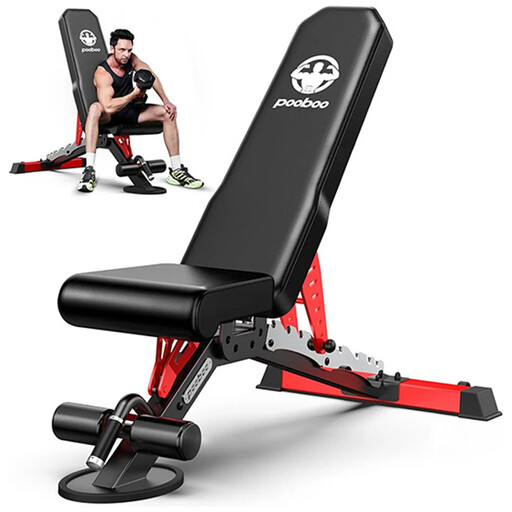
Why This Fits Their Persona: A practical option for beginners building a home gym around dumbbells and basic full-body routines.
The listing specifies flat, incline and decline positions rather than only using a general “adjustable” label. Assembly is required, so buyers can plan time for correct setup.
Alloy-steel frame; stated maximum capacity of 1,500 lb; compact format for home strength training.
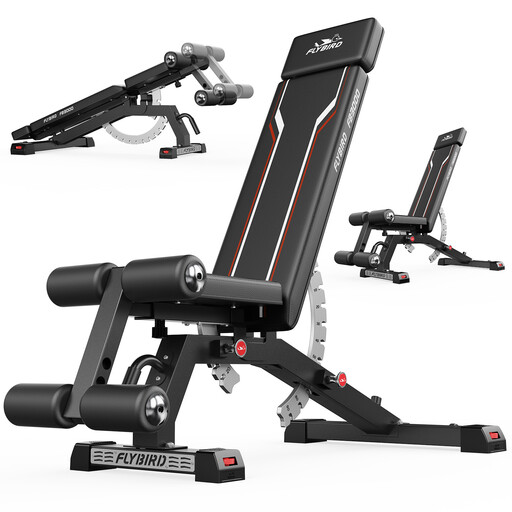
Why This Fits Their Persona: Suits users prioritising a higher listed capacity and a foldable design for a dedicated but space-conscious home gym.
The listing gives a specific 363 kg maximum and identifies quick adjustment, foldability and 80% pre-assembly, making key purchase considerations easier to compare.
Heavy-duty commercial-grade steel; quick-adjust system; foldable structure for storage.
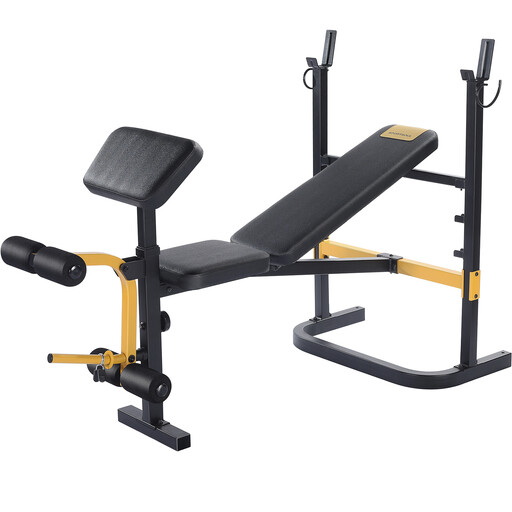
Why This Fits Their Persona: Designed for users who want a weight bench with squat rack, barbell support and lower-body attachments in one setup.
It states a 4-level backrest, safety hooks and a separate 410 lb dynamic capacity, rather than relying only on a larger static figure.
Includes leg extension and curl functions; removable 3-level preacher pad; rack supports 6 ft and 7 ft barbells.
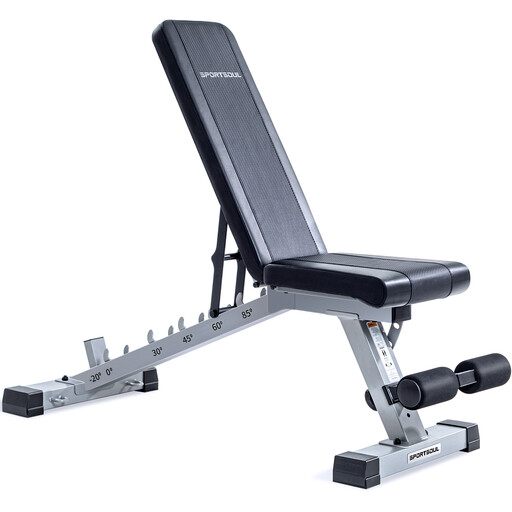
Why This Fits Their Persona: A sensible match for flats, spare bedrooms and multipurpose rooms where equipment must be moved after training.
The product specifies multiple adjustment settings, rubber end caps and built-in wheels, so storage and floor contact are considered alongside capacity.
610 lb (277 kg) stated capacity; incline, decline and flat positions; wheels for relocation.
We have compiled a complete, real-time list of products that fully satisfy these strict selection criteria and UK safety regulations.
Before the first workout, assemble the bench on a level surface and check every bolt, pivot point and adjustment pin. Confirm that the backrest and seat are locked before placing weights on the equipment. For rack models, check that the safety hooks are correctly positioned and use a spotter for heavy barbell lifts.
Wipe synthetic upholstery with a soft, damp cloth and mild soap where permitted by the product instructions. Avoid abrasive cleaners and store equipment indoors in a dry environment. Inspect folding joints, welds, frame connections and upholstery regularly. Stop using the bench if parts are loose, damaged or missing.
When buying in the UK, review the supplied instructions, maximum-load warnings, warranty information and seller contact details. Product dimensions should be checked in centimetres before ordering, particularly where delivery access, flat storage or upstairs movement is involved.
Yes, provided the bench is assembled correctly, positioned securely and used within its stated capacity. Beginners should start with manageable weights and learn how to adjust and lock each position before progressing.
Service life depends on load, frequency, storage and maintenance. Regularly tightening fasteners, keeping the frame dry and replacing damaged components can help preserve the equipment. No lifespan can be guaranteed from specifications alone.
It can be useful where floor space is limited, especially if it includes wheels or a handle. Measure both the assembled and folded dimensions, and allow enough clear space for safe exercises rather than choosing solely on storage size.