
24/7 Customer Support

Free returns

Same-day & Next-day Delivery

Quality Guaranteed

Unlock Your Welcome Offers: FREE Delivery | Up to 80% OFF | Free 30-day JoyPlus trial
Download the APP
An adjustable weight bench is the cornerstone of any serious home gym. It unlocks hundreds of exercises, from chest presses to shoulder work and core routines. Yet, the market is flooded with options that look promising online but fail to deliver on safety, durability and function. Many buyers find their new bench is wobbly, uncomfortable, or simply not up to the task within months.
As a Joybuy Product Recommendation Officer, my role is to help you see past the marketing jargon. Before you invest, let's look at the common pitfalls that UK consumers face and how to identify a bench that will support your fitness goals for years to come.
heavy duty weight bench that isn't heavy-duty at all, creating a wobble during presses or rows. Another common issue is low-density foam padding that compresses permanently after a few sessions and cheap vinyl that cracks or tears easily.foldable weight bench sounds ideal for a space-saving workout bench for home gym. However, many folding mechanisms are either flimsy, compromising the bench's stability, or so cumbersome to use that the feature is quickly abandoned. A good foldable design should be quick, secure and not sacrifice the frame's integrity.To ensure your purchase is a long-term asset, focus on these non-negotiable specifications.
The backbone of any bench is its frame. Look for benches constructed from heavy-gauge alloy steel. A wider footprint at the base, both front and rear, is essential for preventing tipping and wobbling during heavy or uneven lifts. The connection points and welds should be clean and solid. A powder-coated finish will also help prevent rust and scratches, prolonging the life of your investment.
A versatile adjustable weight bench should offer multiple angles. Look for at least 5-7 backrest adjustments and 2-3 seat adjustments. This allows you to transition smoothly between flat, incline and decline positions, targeting different muscle groups effectively. The locking mechanism is paramount for safety. A ladder-style system, where a support bar slots into a fixed rack, is often more secure and faster to adjust than pop-pin systems, which can wear down over time. An incline decline bench with a secure and swift adjustment system makes your workouts more efficient.
For a truly comprehensive strength training bench, consider models that come with attachments. A weight bench with leg extension and preacher curl functionality can replace multiple separate machines, saving you both space and money. The preacher curl pad is excellent for isolating the biceps, while the leg developer allows for targeted quadriceps extensions and hamstring curls. Ensure these attachments are easily removable and as robustly built as the main bench.
We analyse products based on their specifications, materials and suitability for real-world use. Below is a recommendation that aligns with the needs of dedicated home gym users.
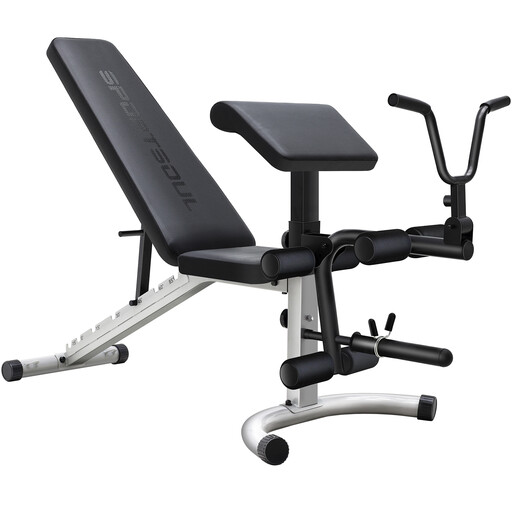
Why This Fits Their Persona: This bench is for the user who wants to build a complete home gym around a single, versatile piece of equipment. It's ideal for those performing a wide range of exercises, including heavy compound lifts and isolated movements, who need a reliable and multi-functional station.
It clearly states a dynamic weight capacity of 610 lbs (277 kg), avoiding the static load trap. The frame is made from alloy steel, and it includes both a preacher curl pad and leg developer, addressing the need for true versatility without compromising on build quality.
The 7 backrest and 4 preacher pad positions offer extensive customisation for various exercises. The upgraded breathable leathaire material and widened cushion provide comfort and durability for longer workouts.
We have compiled a complete, real-time list of products that fully satisfy these strict selection criteria and UK safety regulations.
This is one of the most important distinctions to understand. Static capacity refers to the maximum weight a bench can support when it is completely still. This number is often very high but not relevant for exercise. Dynamic capacity is the crucial figure—it represents the total weight (user + dumbbells/barbell) that the bench can safely handle during active use, such as pressing or rowing. Always prioritise the dynamic capacity when making your decision.
For individuals aiming to create a versatile home gym in a compact area, a bench with these attachments offers excellent value. It allows you to perform targeted bicep curls, leg extensions and hamstring curls without needing to purchase separate, space-consuming machines. If your training is focused solely on dumbbell and barbell presses, a simpler incline decline bench may be sufficient. However, for a more complete strength training setup, the integrated attachments are a practical choice.
When planning your home gym, consider more than just the bench's footprint. You need adequate clearance on all sides to move safely. If you use a standard 7-foot Olympic barbell, you will need at least that much width. You also need space to load and unload plates and to perform exercises without hitting walls or other equipment. Measure your available space carefully and compare it to the bench's assembled dimensions, adding at least a metre of clearance around it for safe movement.