
24/7 Customer Support

Free returns

Same-day & Next-day Delivery

Quality Guaranteed
Download the APP
Categories
Building a home gym is an investment in your health, but choosing the right equipment can feel complicated. A quality weight bench is the cornerstone of any effective strength training setup, yet the market is filled with options that all claim to be the perfect choice. This guide is designed to help you understand the key features to look for in a workout bench, so you can select a model that suits your space, goals and budget.
As a Joybuy Product Recommendation Officer, my role is to provide clear, practical information to help you make an informed decision. We will look at what defines a reliable bench and highlight a few options that stand out for their construction and functionality.
Before you decide, it's helpful to understand a few key factors that separate a basic bench from a truly functional piece of equipment for your weight bench for home gym.
Safety and stability are non-negotiable. A bench's weight capacity refers to the total combined weight it can safely support, including your body weight and the weights you are lifting. For most home users, a bench with a capacity of at least 250 kg (around 550 lbs) provides a solid and secure platform. Look for a heavy duty weight bench constructed from thick-gauge steel, as this provides the rigidity needed for intense workouts. The design of the feet is also important; wide, flat bases offer better stability on various floor surfaces.
The main advantage of an adjustable weight bench is its versatility. While a flat weight bench is excellent for staples like the bench press, an adjustable model opens up a wider range of exercises. An incline decline bench allows you to target different muscle groups more effectively, from incline dumbbell presses for the upper chest to decline crunches for your core. For those with limited space, a foldable weight bench offers the same functionality but can be conveniently stored away after your session.
Some benches come with integrated attachments that can expand your workout possibilities. A weight bench with leg developer allows you to perform leg extensions and curls, providing a way to train your lower body without needing a separate machine. Others may be part of a larger system that includes a bench press rack. Consider your long-term fitness goals; if you plan to progress to heavier barbell work, a bench and rack combination might be a practical investment.
Here are a few recommendations that cater to different needs, from foundational pieces to all-in-one systems.
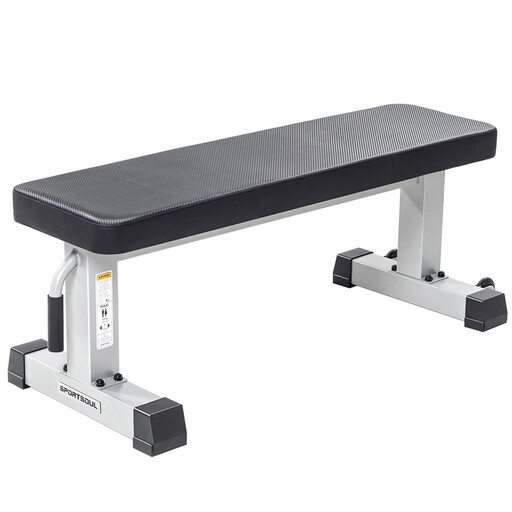
Why It Stands Out: This bench focuses on doing one thing exceptionally well: providing a solid, stable platform for heavy lifting. Its simple, robust design and high weight capacity make it a reliable foundation for any serious strength training bench.
Pros:
Who is it for? This is an ideal choice for individuals who need a dependable flat weight bench for fundamental strength exercises and prioritise stability and durability above all else.
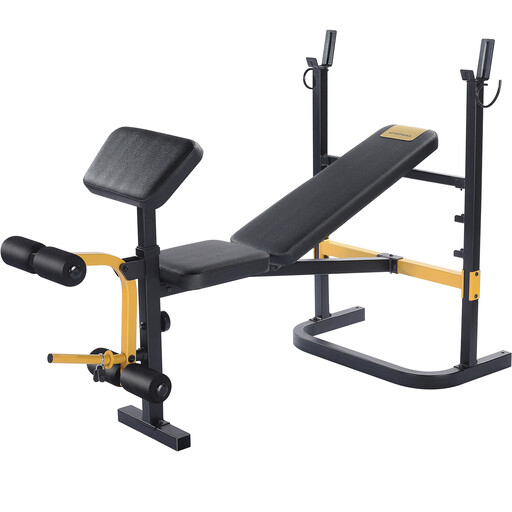
Why It Stands Out: This is a multi-functional unit that combines an adjustable bench, a squat rack and a leg developer. It’s a space-efficient solution for those wanting to build a comprehensive home gym without buying multiple pieces of equipment.
Pros:
Who is it for? This system is well-suited for intermediate lifters who want a single piece of equipment to perform a wide variety of upper and lower body exercises.
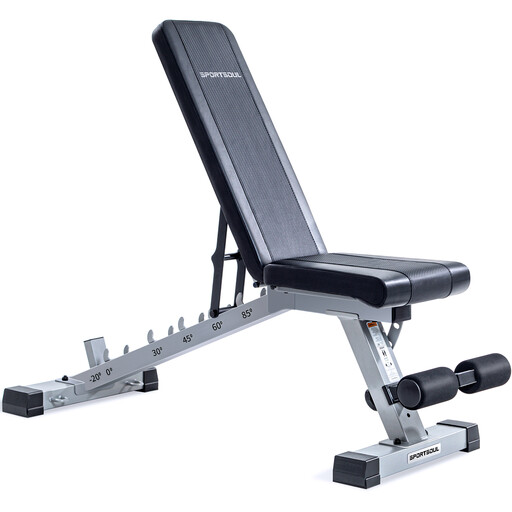
Why It Stands Out: This bench offers a high degree of adjustability combined with a convenient foldable design, making it a versatile option for those who are short on space but don't want to compromise on their workout variety.
Pros:
Who is it for? This is a great fit for home fitness enthusiasts living in flats or smaller homes who need a versatile incline decline bench that can be easily stored away.
Your home gym should be tailored to your personal fitness journey. If the recommendations above aren't quite what you're looking for, there are many other configurations and styles available.
To see a wider selection, explore our full collection of gym weights and related strength training equipment.
For most people, yes. An adjustable bench significantly increases the number of exercises you can perform. By changing the angle, you can target muscles in your chest, shoulders, back and core more effectively than with a flat bench alone. This versatility makes it a highly efficient use of space and money for a home gym.
A good benchmark for a home workout bench is a total weight capacity that is well above your body weight plus the heaviest weight you anticipate lifting. A capacity of 250 kg (approx. 550 lbs) or more is generally sufficient for beginner and intermediate lifters, ensuring the bench remains stable and secure during use. Always check the manufacturer's specified limit.
Plan for the footprint of the bench itself, plus at least 60 cm (about two feet) of clear space on all sides to allow for safe movement and to get on and off the bench. If you plan to use a barbell, you will need enough width to accommodate the bar without hitting walls or other objects. A foldable weight bench is an excellent solution if you need to use a multi-purpose room for your workouts.