
24/7 Customer Support

Free returns

Same-day & Next-day Delivery

Quality Guaranteed

Unlock Your Welcome Offers: FREE Delivery | Up to 80% OFF | Free 30-day JoyPlus trial
Download the APP
For UK commuters, e-bike riders and weekend cyclists, an adult bicycle helmet with light can combine head protection with improved visibility in one practical item. However, a bright LED does not automatically indicate a well-designed helmet. The fit, certification information, ventilation and charging arrangement still determine whether it remains useful beyond the first few rides.
This guide from the Joybuy Product Recommendation Officer focuses on the details that are easy to miss when comparing products online, including the common marketing traps that can lead to an unsuitable purchase.
A helmet light is generally designed to help other road users notice you. A rear red LED can improve your visibility from behind, while a front white light may offer some illumination. It should not automatically be treated as a replacement for a compliant cycle lamp or reflective equipment required for your riding conditions.
Check whether the product has front and rear lights, rear-only lighting, selectable flash modes or a constant mode. A USB rechargeable cycling helmet is also more convenient than one requiring disposable batteries, but only if the charging port and battery access are practical for regular use.
Small, medium and large labels vary between manufacturers. A “large” helmet may fit a 58 cm head in one range and 61 cm in another. Measure around the widest part of your head, approximately 2–3 cm above the eyebrows, and compare the result with the product’s stated circumference.
A secure adjustable commuter bike helmet should sit level, remain stable when you shake your head and allow the adjustment dial to fine-tune the fit. Loose side straps or a chin buckle that rests against the throat are warning signs that the model or size is unsuitable.
Goggles, visors, MIPS-style systems and multiple light modes may be useful, but not every rider needs the same configuration. A road cyclist may prioritise low weight and airflow, while a mountain rider may value extended rear coverage and a visor. For skateboarding or BMX, check that the helmet is specifically described for those activities rather than assuming any bicycle helmet is interchangeable.
Look for clear safety information rather than vague phrases such as “maximum protection”. The supplied models list standards including CPSC, CE and ASTM. These references should be checked against the product listing, packaging and instructions. CPSC and ASTM are commonly referenced in US product information, while CE marking relates to applicable European conformity requirements; a marking alone does not remove the need to follow UK cycling safety guidance.
Common construction materials include a polycarbonate (PC) or ABS outer shell and an expanded polystyrene (EPS) foam liner. In-mould construction bonds the shell and foam together, while other designs use a separate reinforced shell. No bicycle helmet can protect against every type of impact. Replace one immediately after a significant crash, even where visible damage is not obvious.
A bicycle helmet with front and rear lights may offer better all-round visibility than a rear-only design. Compare:
For example, the DKONI HS-158 lists five white front LEDs and 13 red rear LEDs with four rear lighting modes. The DKONI HS-086 uses a removable rear LED with two modes and an estimated three to five hours of lighting time. These figures describe the supplied product specifications, not a guarantee of real-world runtime, which can vary with mode, temperature and battery condition.
A lightweight breathable cycling helmet should provide airflow without compromising a stable fit. Vent counts are useful for comparison, but the shape and placement of the air channels also matter. The supplied options include 15, 17, 20 and 25-vent designs.
Removable, washable pads are practical for regular commuting, particularly through warmer months. Clean the outer shell with a soft damp cloth, wash removable pads according to the instructions and allow everything to dry fully. Avoid solvents, harsh chemicals and unauthorised modifications.
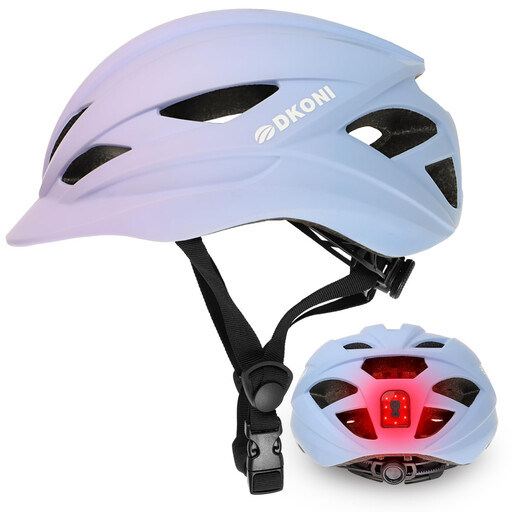
Why This Fits Their Persona: A straightforward choice for new commuters and recreational riders who want an adjustable adult helmet with rear illumination without adding goggles or extra accessories.
The product specifies a removable USB rechargeable rear light, two modes and approximately three to five hours of lighting time, rather than only using a generic “LED” description.
PC and EPS in-mould construction; 15 vents; available in adult large sizing for 58–61 cm heads.
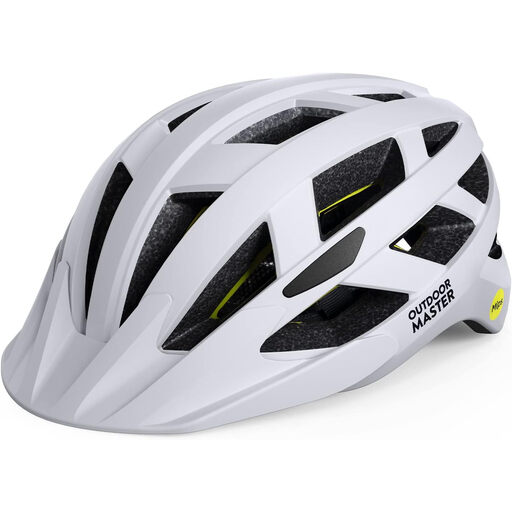
Why This Fits Their Persona: Suitable for riders who prioritise fit adjustment, ventilation and multi-sport flexibility for road cycling, mountain biking, BMX or skating.
The listing identifies the MIPS system and explains its intended role during certain angled impacts, avoiding an unsupported promise of total protection.
25 vents, removable visor, dial fit system and two removable liner thicknesses.
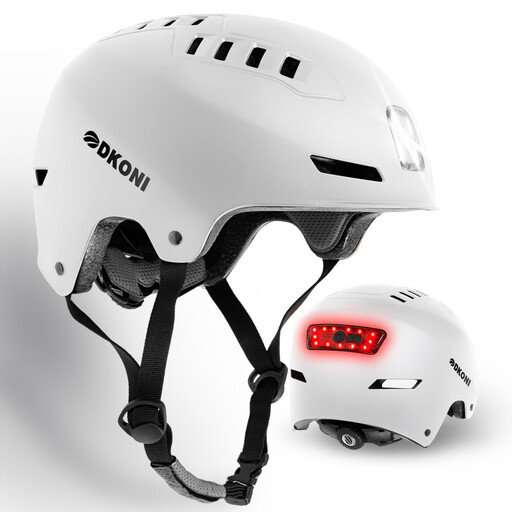
Why This Fits Their Persona: Designed for urban commuters and adults who want built-in front and rear lighting, a washable lining and one-hand adjustment for frequent journeys.
It specifies five white front LEDs, 13 red rear LEDs, four rear modes and USB recharging, making the lighting arrangement easier to assess before purchase.
20 ventilation holes, removable washable mesh lining, adjustable side straps and listed CPSC, CE and ASTM standards.
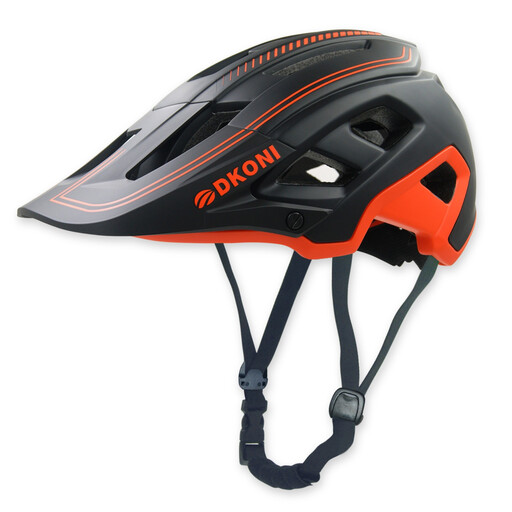
Why This Fits Their Persona: A practical match for mountain cycling and riders who prefer extra side and rear coverage with a removable visor.
The product description gives a specific 380 g weight, 17 ventilation openings and a removable ABS visor instead of relying only on “lightweight” or “all-terrain” wording.
PC and EPS in-mould construction; one-hand adjustment wheel; visor coverage for sun, rain, mud and branches.
We have compiled a complete, real-time list of products that fully satisfy these strict selection criteria and UK safety regulations.
A built-in light improves visibility, but it may not replace the front and rear lamps, reflectors or other equipment appropriate for your bicycle and road conditions. Check current UK Highway Code guidance and ensure your main bicycle lights are suitable for the route.
Runtime depends on the selected mode, battery condition and temperature. The DKONI HS-086 listing states approximately three to five hours, while other models specify multiple modes without giving one universal runtime. Charge the light before each longer journey and check the charging indicator where provided.
Replace it after any significant impact or crash, even if the shell appears intact. Also inspect the EPS liner, straps, buckle, adjustment dial and light housing regularly. If components are damaged, loose or no longer hold a secure fit, discontinue use and choose a replacement.