
24/7 Customer Support

Free returns

Same-day & Next-day Delivery

Quality Guaranteed

Unlock Your Welcome Offers: FREE Delivery | Up to 80% OFF | Free 30-day JoyPlus trial
Download the APP
Categories
As a Joybuy Product Recommendation Officer, I often speak with UK residents who are looking for ways to make their daily commutes and recreational rides safer and more convenient. One of the most common topics is visibility. Juggling separate lights can be a hassle, and ensuring you are seen by traffic is a top priority, especially on grey mornings or during evening rides home.
An adult bike helmet with light offers a streamlined solution, integrating visibility directly into your most essential piece of safety equipment. This guide is designed to help you understand the key features to look for and to highlight a few noteworthy options available right now, so you can make an informed choice without the marketing jargon.
Navigating the market can be tricky. Here are a few practical points to consider before you decide, helping you focus on what truly matters for safety and comfort.
Before looking at any other feature, check for safety certifications. In the UK, helmets should meet specific standards. Look for a CPSC certified helmet (a common US standard widely respected here) or an ASTM certification. These labels indicate that the helmet has undergone testing for impact protection. A helmet is a piece of safety equipment first and foremost, so this non-negotiable feature provides a baseline of protection.
A helmet only works correctly when it fits properly. A poor fit can compromise its protective qualities in a crash. Look for an adjustable bike helmet with a dial system at the back. This allows you to fine-tune the fit with one hand for a snug, secure feel. Adjustable chin and side straps are also crucial for preventing the helmet from shifting while you ride. A well-fitting helmet is not only safer but also significantly more comfortable on longer journeys.
The main appeal of these helmets is the integrated light. Consider the specifics: Is it a rear light for visibility, or does it include a front light as well? Is it a rechargeable helmet light, typically via a common USB port, or does it use replaceable batteries? Look at the different modes offered—such as steady, flashing and pulse—as flashing modes are particularly effective at catching the attention of drivers. The goal of an integrated light is to make you more visible to others, a key feature for any commuter helmet.
Here are a few helmets that offer a compelling combination of safety, features and practicality for different types of riders.
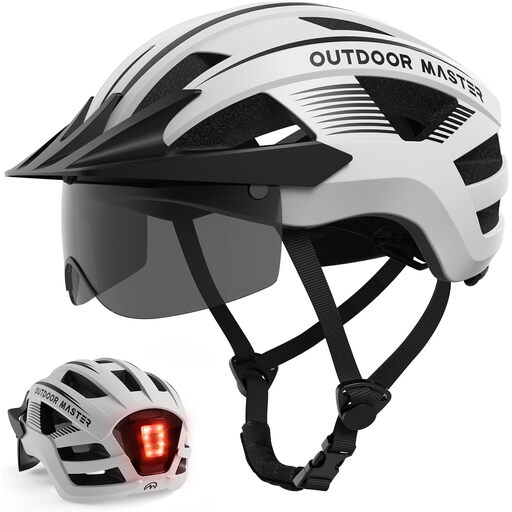
Why It Stands Out: This helmet is a versatile option designed for cyclists who do a bit of everything. It combines features typically found on both a road bike helmet and a mountain bike helmet, such as a removable helmet with visor for sunny days and magnetic goggles for eye protection from wind and debris.
Pros:
Who is it for? This is an excellent choice for the all-rounder cyclist who splits their time between urban commuting, weekend road rides and light trail adventures.
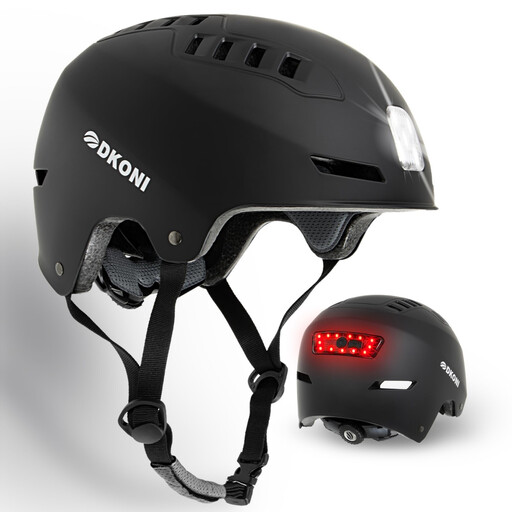
Why It Stands Out: The DKONI HS-158 places a strong emphasis on 360-degree visibility with its dual lighting system. It features five white LEDs on the front to help illuminate your path and thirteen red LEDs on the back with four distinct flashing modes, making it a standout commuter helmet.
Pros:
Who is it for? This helmet is particularly well-suited for the dedicated men's bike helmet or women's urban cycling helmet market, especially for those who regularly commute before sunrise or after sunset and require maximum visibility.
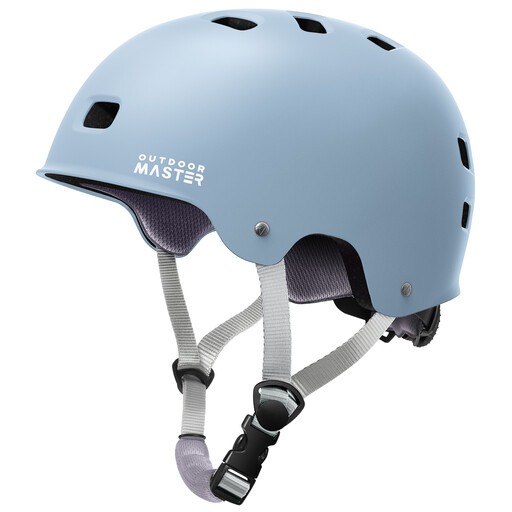
Why It Stands Out: While this model does not have an integrated light, it's an important inclusion for those who prioritise durability for multi-sport use. The classic skateboard helmet design features a tough reinforced ABS shell and a thick EPS foam core, offering a different style of protection suited for skating, scootering and casual cycling. Many users pair this style of helmet with clip-on lights.
Pros:
Who is it for? This helmet is for the multi-sport enthusiast who wants one durable, certified helmet for their bike, skateboard and scooter, and prefers the flexibility of adding their own lighting accessories.
The helmets highlighted here represent just a few of the choices available. If your needs are different, or if you'd like to explore a wider range of styles and features, we have a broader selection to consider.
Browse our full collection of bike helmets with lights to find the perfect match for your ride.
Are integrated helmet lights bright enough for night riding? Integrated lights are primarily designed to make you seen by others, which is a critical safety function in urban and suburban environments. Their brightness is generally sufficient for this purpose. However, if you are riding on completely unlit paths or country lanes, it is often advisable to supplement your helmet light with a more powerful, handlebar-mounted front light to better illuminate the way ahead.
How do I know what size bike helmet to get? Finding the right size is crucial. Use a soft tape measure to measure the circumference of your head, positioning the tape about one centimetre above your eyebrows and ears. Once you have your measurement, compare it to the sizing guide provided on the specific product page, as sizing can vary between brands and models.
Can I use a road bike helmet for mountain biking? While you can, there are key differences. A dedicated mountain bike helmet typically offers more coverage at the back of the head and almost always includes a visor to shield from sun and trail debris. Some versatile helmets, like the OutdoorMaster RhinoUrban, are designed to bridge this gap. For serious or frequent trail riding, a helmet specifically designed for that discipline is generally recommended.