
24/7 Customer Support

Free returns

Same-day & Next-day Delivery

Quality Guaranteed

Unlock Your Welcome Offers: FREE Delivery | Up to 80% OFF | Free 30-day JoyPlus trial
Download the APP
As a cat owner, navigating the aisles of adult cat food can feel overwhelming. With countless brands, flashy packaging and enticing claims, it's difficult to know if you're making the right choice for your feline companion's health and your budget. Many products promise premium quality, but the reality can fall short, leading to wasted money and a fussy, unsatisfied cat.
As the Joybuy Product Recommendation Officer, my role is to help you see past the marketing clutter. Let's break down the common pitfalls UK shoppers face and identify the key factors that genuinely matter when selecting the right food for your adult cat.
Before you add anything to your basket, be aware of these widespread marketing tactics that can be misleading:
To make an informed decision, focus on these three non-negotiable parameters. They will give you a much clearer picture of what you're actually buying.
The choice between wet cat food and dry cat food impacts your cat's hydration, dental health and your convenience.
This is perhaps the most important label to understand.
The ingredients are listed by weight, so the first few items make up the bulk of the food. Here’s what to look for:
To help you apply this knowledge, we've matched some popular options to different types of cat owners.
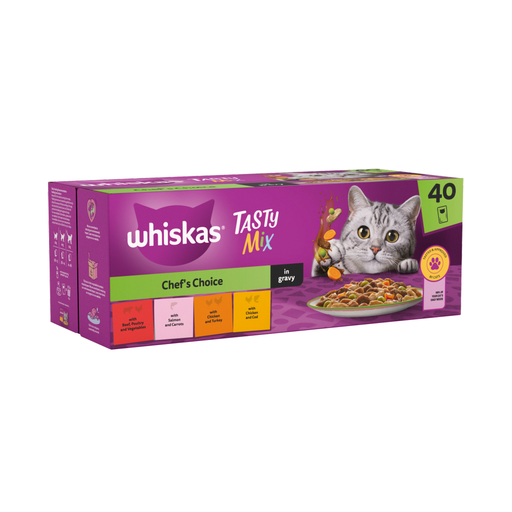
Why This Fits Their Persona: For busy households, this cat food multipack offers convenience and value. It provides a variety of flavours to keep mealtime interesting and removes the need for frequent shopping trips. It's a straightforward, reliable choice for daily feeding.
This is clearly labelled as a complete and balanced food, ensuring your cat gets all necessary nutrients without needing supplements. The large pack size offers great economy of scale.
Fortified with Vitamin C to support natural defences and zinc for a healthy skin and coat. The 40-pouch bulk cat food format is cost-effective and convenient.

Why This Fits Their Persona: This owner prioritises palatability. The unique "savoury cake" texture is designed to tempt cats who may turn their noses up at standard p?té or chunks. The "Gourmet" branding appeals to those looking for a more refined mealtime experience.
While it uses the "Gourmet" name, it backs this up with a unique texture and is clearly stated as a complete pet food. It also contains no added artificial colourants, flavourings or preservatives.
The novel cake texture can stimulate a fussy cat's appetite. It offers a high protein content (17%) and high moisture (74%) in a variety of meat flavours.
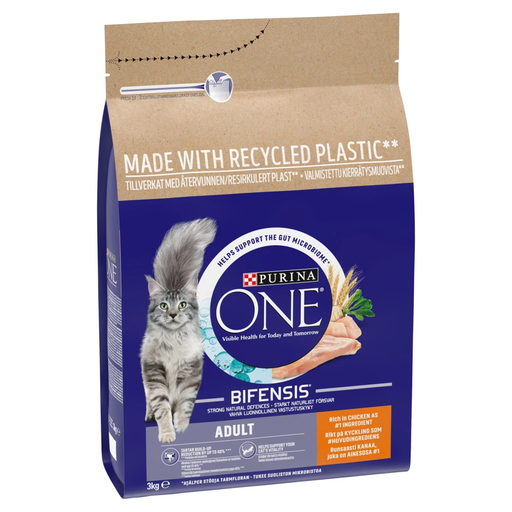
Why This Fits Their Persona: This owner reads labels and looks for functional benefits. This Purina cat food is a dry cat food formulated with specific health supports in mind, such as digestive and immune health, which appeals to those wanting to provide proactive care for their pet.
It moves beyond vague claims by listing Chicken as the #1 ingredient, addressing the protein quality concern. It also specifies functional ingredients like chicory for gut health, providing tangible substance to its health claims.
Formulated to support a healthy urinary system and contains chicory, a natural prebiotic, to improve gut microbiome balance. The brand also states its formula is proven to help reduce tartar build-up.
We have compiled a complete, real-time list of products that fully satisfy these strict selection criteria and UK safety regulations.
1. How much should I feed my adult cat? The correct amount depends on your cat's weight, age and activity level, as well as the type of food (wet or dry). Always check the feeding guide on the packaging as a starting point. For an average 4kg adult cat, this is often around 3-4 wet food pouches or 50-60g of dry food per day, but this varies. Adjust the amount to maintain a lean, healthy body condition.
2. Is it better to feed a cat wet or dry food? Both have their benefits. Wet cat food is great for hydration and is often more palatable. Dry cat food is convenient and can help with dental hygiene. Many vets and owners in the UK recommend a mixed-feeding approach, which provides the benefits of both. This can also be helpful if your cat develops a preference for one type, ensuring they are still open to eating the other.
3. How do I switch my cat to a new food without upsetting their stomach? A sudden change in diet can cause digestive upset. You should transition your cat to a new food gradually over 7-10 days. Start by mixing a small amount of the new food (around 25%) with their old food (75%). Every couple of days, increase the proportion of the new food until you have fully switched over.