
24/7 Customer Support

Free returns

Same-day & Next-day Delivery

Quality Guaranteed

Unlock Your Welcome Offers: FREE Delivery | Up to 80% OFF | Free 30-day JoyPlus trial
Download the APP
Choosing adult cat food can look straightforward until you compare ingredient lists, textures, pack sizes and life-stage labels. Marketing language can make a product sound more suitable than it really is, while a low price may become less attractive if your cat refuses the food or the pack is impractical to store.
This guide from the Joybuy Product Recommendation Officer focuses on the details that matter when comparing wet cat food pouches, dry cat food, multipacks and specialist formulas for UK households.
A product described as “chicken”, “salmon” or “poultry” may contain only a stated percentage of that ingredient. For example, some wet recipes specify 4% chicken, tuna or salmon in the chunks. This is not necessarily a problem, but it is important to read the full composition rather than judging the recipe by its front-of-pack flavour name.
Look for the statutory wording “complete pet food for adult cats” or an equivalent complete-and-balanced statement. Complementary food is designed to be fed alongside another diet and should not automatically replace a complete meal.
A large cat food multipack can reduce shopping frequency, but it may waste money if your cat rejects the texture or flavour. Jelly, gravy and dry kibble offer noticeably different eating experiences. If your cat has not tried a recipe before, a smaller pack can be a sensible starting point.
Adult formulas are generally intended for cats aged around one year and above, but the exact wording varies. Kitten food is formulated for growth, while senior cat food is intended for older cats and may have different nutritional specifications. Do not assume an adult recipe is suitable for kittens simply because it contains meat or fish.
For cats with a diagnosed condition, food intolerance or ongoing digestive symptoms, consult a vet before changing diet. A product labelled sensitive digestion cat food may contain ingredients selected for easier digestion, but it is not a substitute for veterinary advice.
A complete product should provide the nutrients required for everyday feeding when served according to the label. Compare the analytical constituents, including:
Wet products often contain around 80% or more moisture, while dry products contain considerably less. This means the protein percentage printed on the label cannot be compared directly between wet and dry food without accounting for moisture.
Cat food in jelly is usually portioned into pouches or tins, while cat food in gravy may appeal to cats that prefer a softer, saucier meal. Pouches are convenient for portion control and reduce the need to store an opened tin. Once opened, follow the label’s refrigeration and use-within guidance.
Dry food is easier to store in a sealed bag, but it should be kept away from humidity and direct sunlight. Always provide fresh drinking water, especially when feeding a dry diet. For a multi-cat household, compare the pack size with the recommended daily portion rather than choosing purely by the headline kilogram price.
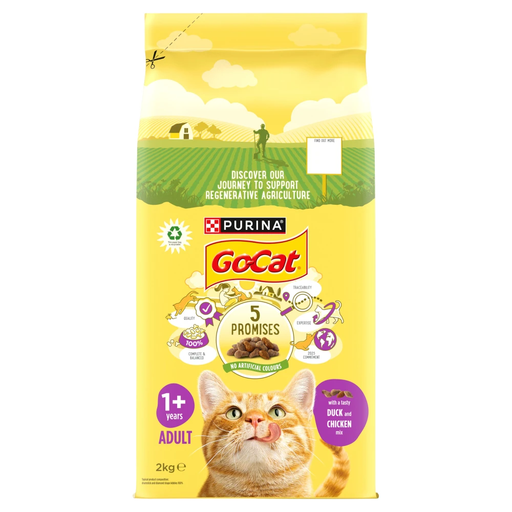
Why This Fits Their Persona: A practical 2kg dry-food format for owners seeking a straightforward everyday meal and easy cupboard storage.
The product is labelled as complete pet food for adult cats, with feeding guidance and composition details available for checking before purchase.
2kg quantity; 30% protein and 11% fat listed; includes chicken and duck in the recipe.

Why This Fits Their Persona: Suitable for owners who prioritise a grain-free wet recipe with clearly stated meat proportions and smaller portions for freshness.
The selection pack states its ingredients, moisture and portion guidance rather than relying only on flavour-led packaging.
8 x 85g pouches; chicken and chicken-and-turkey recipes; grain-free and no added sugar or salt according to the product description.
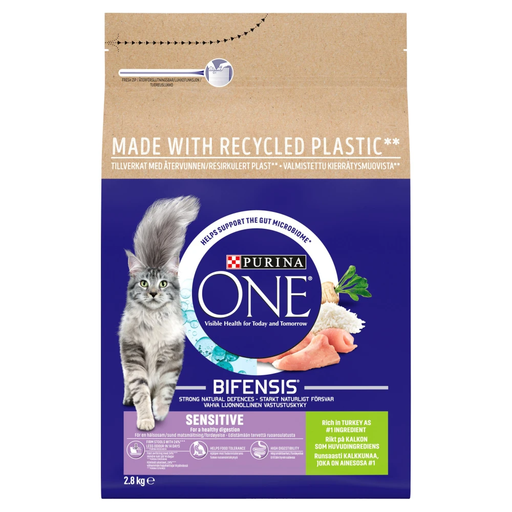
Why This Fits Their Persona: A larger dry-food bag for households looking for a recipe marketed for sensitive digestion and regular daily feeding.
The ingredient list identifies turkey at 18%, rice at 15% and no added wheat, allowing shoppers to check the formula against their cat’s known preferences.
2.8kg pack; 36% protein and 16% fat listed; includes chicory and added lactobacillus powder.
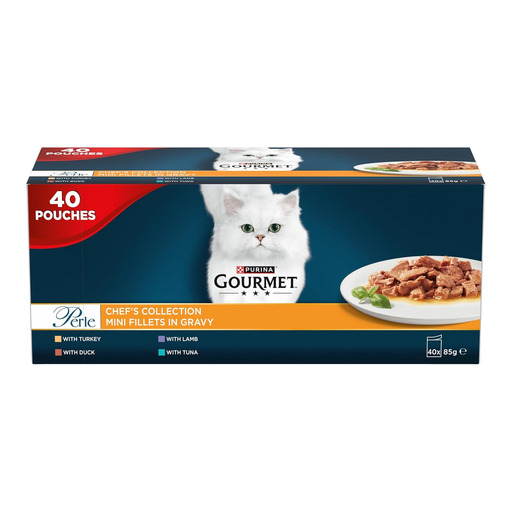
Why This Fits Their Persona: A substantial wet multipack for owners who need regular portioned meals and flavour variety across several cats.
The pack provides individual 85g pouches, reducing the need to keep opened tins and making daily portions easier to track.
40 x 85g pouches; turkey, duck, lamb and tuna varieties; product description states no artificial colourings, flavour enhancers or preservatives.
We have compiled a complete, real-time list of products that fully satisfy these strict selection criteria and UK safety regulations.
It depends on the product, pack size and daily serving. Dry food is usually easier to store and portion by weight, while wet food is sold in ready-to-serve portions. Compare the cost per day rather than only the price per pouch or kilogram.
Divide the total number of pouches by the number your cat eats each day. A 40-pouch pack fed at four pouches daily would last approximately ten days for one cat, although the label’s feeding guide should take priority.