
24/7 Customer Support

Free returns

Same-day & Next-day Delivery

Quality Guaranteed

Unlock Your Welcome Offers: FREE Delivery | Up to 80% OFF | Free 30-day JoyPlus trial
Download the APP
As a Joybuy Product Recommendation Officer, my role is to help you navigate the crowded market of pet supplies. Choosing the right adult cat food can feel overwhelming, with endless options and persuasive marketing. Many UK cat owners find themselves confused by packaging claims that don't always match what's inside. This guide will help you sidestep common purchasing mistakes and focus on what truly matters for your cat's daily nutrition.
Before you add anything to your basket, be aware of these frequent pitfalls that can lead to wasted money and an unhappy feline.
To make an informed choice, focus on these three practical parameters. They will help you match a product to your cat's needs and your lifestyle.
The debate between wet cat food and dry cat food (kibble) comes down to a few key points:
This is perhaps the most important factor for your cat's health.
Cats are known for their particular tastes. A cat food multipack is an excellent way to offer variety and discover what your cat prefers. Whether it's fine flakes in jelly or tender slices in gravy, having a selection on hand can prevent mealtime boredom. Single-serve pouches also ensure freshness and portion control, reducing waste.
Based on providing clear nutritional value and catering to specific needs, here are a few recommendations for different types of cat owners.

Why This Fits Their Persona: This owner wants great value without compromising on variety. A 40-pouch mega-pack is cost-effective and ensures they are always stocked up, while the poultry selection in jelly caters to cats who can be particular about their meals.
It is clearly labelled as a "complete" food, not a "gourmet" supplement. The packaging provides a full nutritional breakdown and ingredient list, avoiding the vague claims trap.
Excellent value from a large cat food multipack. The variety of poultry flavours helps keep fussy eaters interested in their food day after day.
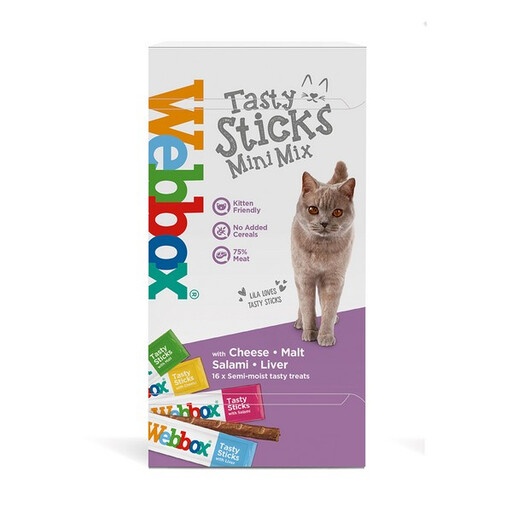
Why This Fits Their Persona: This owner looks for products with functional benefits. These treats go beyond a simple reward, offering support for dental health and a calming effect, which is ideal for managing daily stress or promoting good oral hygiene.
This product is clearly positioned as a complementary treat, not a complete meal. Its functional claims are tied to specific ingredients (e.g., chamomile for calming) and physical properties (fibrous texture for cleaning teeth).
These are functional dental cat treats with a dual purpose. The unique crunchy-chewy texture helps reduce plaque, while the addition of chamomile extract helps promote calm behaviour.

Why This Fits Their Persona: This owner needs a diet specifically tailored to the changing needs of an older cat. This food is formulated for cats aged 7+, addressing common senior issues like muscle tone, heart health and vision.
It moves beyond a generic "adult" label to a targeted senior cat food. The benefits are linked to specific nutritional components, such as high-quality protein for muscle tone and added Taurine for heart and eye health.
This is a 100% complete and balanced dry cat food specifically formulated for the reduced energy needs and health requirements of senior cats, supporting their vitality in their later years.
We have compiled a complete, real-time list of products that fully satisfy these strict selection criteria and UK safety regulations.
1. How much wet food should I feed my adult cat? Feeding amounts vary based on your cat's weight, age and activity level. As a general guideline, an average 4 kg adult cat typically requires around 3 to 4 85g pouches per day, usually split into at least two meals. Always check the feeding guide on the specific product packaging and adjust as needed to maintain a healthy body weight.
2. Is it okay to mix wet and dry cat food? Yes, many owners choose to mix-feed. It provides the dental and cost benefits of dry food with the hydration and palatability of wet food. When combining them, you need to reduce the portion of each to avoid overfeeding. For example, you could replace one 85g pouch of wet food with approximately 15-20g of dry kibble.
3. How do I introduce a new cat food to my pet? To avoid digestive upset, you should transition your cat to a new food gradually over a period of 7-10 days. Start by mixing a small amount of the new food (around 25%) with their old food (75%). Every few days, slowly increase the proportion of the new food while decreasing the old, until you have fully switched over.