
24/7 Customer Support

Free returns

Same-day & Next-day Delivery

Quality Guaranteed

Unlock Your Welcome Offers: FREE Delivery | Up to 80% OFF | Free 30-day JoyPlus trial
Download the APP
Whether you're navigating city streets on your daily commute, tackling rugged trails or enjoying a leisurely ride through the park, a reliable helmet is the most important piece of gear you can own. But with so many styles, features and technical terms, choosing the right one can feel overwhelming. The ideal helmet isn't just about safety; it's about comfort, visibility and finding a model that suits your specific activity.
As the Joybuy Product Recommendation Officer, my role is to help you sort through the options. This guide offers practical advice and highlights a few standout choices to help you find an adult cycling helmet that provides the protection and features you need for your rides.
Before looking at specific models, it helps to understand the key factors that differentiate them. Focusing on these three areas will ensure you select a helmet that’s right for you.
Different types of riding expose you to different risks and require specific features.
In the UK and Europe, all cycling helmets must meet the EN 1078 safety standard. This certification ensures the helmet has passed tests for impact absorption, construction and its retention system (straps and buckles). Beyond the sticker, a proper fit is critical for the helmet to do its job. Look for an adjustable cycle helmet with a rear dial system that allows you to fine-tune the fit with one hand. The chin straps should form a 'Y' shape just below your earlobes and be snug enough that you can fit no more than two fingers between the strap and your chin.
Modern helmets come with a variety of features designed to improve comfort and convenience. Excellent ventilation is a must for any activity to prevent overheating. For those who ride in varying conditions, a removable visor or integrated goggles can be incredibly useful. If you often ride at dawn, dusk or at night, a helmet with a built-in rechargeable light significantly boosts your visibility to others on the road.
Here are a few recommendations that cater to different riders, selected for their practical features, construction and user-focused design.
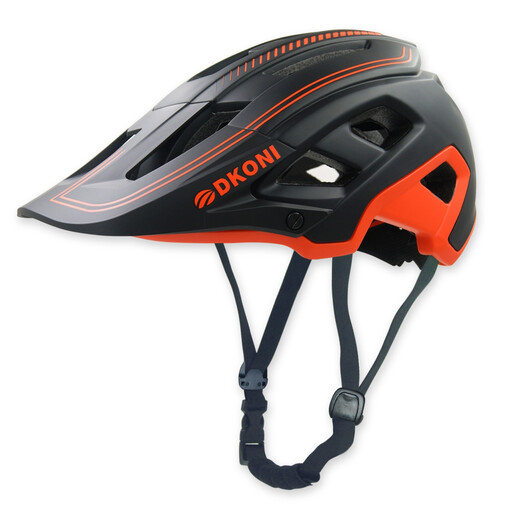
Why It Stands Out: This helmet is built specifically for the demands of trail riding. It uses an in-mould construction, bonding the tough polycarbonate shell to the shock-absorbing EPS foam liner for durability. Its standout feature is the extended, removable visor, which offers substantial protection from sun and trail debris.
Pros:
Who is it for? This is an excellent choice for mountain bikers and trail riders who need robust protection and a large visor. Its adjustable fit makes it a great option for both a men's bike helmet and a women's bike helmet.
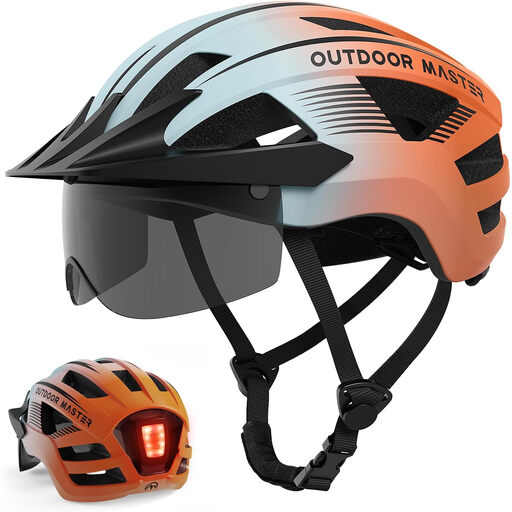
Why It Stands Out: The RhinoUrban is a versatile helmet packed with features ideal for the modern commuter helmet user. Its main attractions are the integrated, Type-C rechargeable rear light for enhanced safety and the magnetic, detachable goggles that protect your eyes from wind, dust and UV rays.
Pros:
Who is it for? This helmet is perfect for city commuters, e-bike riders and road cyclists who value visibility, convenience and all-weather protection in a single package.
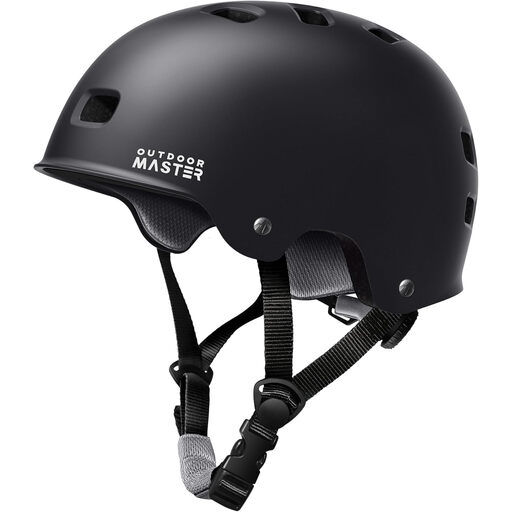
Why It Stands Out: Unlike single-impact cycling helmets, the Oryx is a multi-sport model built with a reinforced ABS shell and a thick EPS core. This construction is designed to handle the multiple, lower-speed knocks common in skateboarding and scootering. It also includes two different removable liners, allowing you to customise the fit and easily wash them.
Pros:
Who is it for? Ideal for skateboarders, scooter riders and BMX riders. It's also a popular choice for casual urban cyclists who prefer the robust build and timeless style of a skateboard helmet.
Our recommendations cover a range of activities, but if you're specifically focused on hitting the trails, you might want to explore more specialised options. For a wider selection of dedicated off-road protection, you can browse our full collection of mountain bike helmets.
How do I know what size bike helmet to get? To find your size, use a flexible measuring tape to measure the circumference of your head. The tape should be positioned about one inch (or 2.5cm) above your eyebrows and wrap around the largest part of your head. Compare this measurement to the manufacturer's sizing chart (e.g., L: 56-61cm). An adjustable cycle helmet with a dial system will help you achieve a snug and secure fit.
Can I use a skateboard helmet for cycling? It depends on the helmet's certification. Skateboard helmets are typically designed to withstand multiple small impacts, whereas cycling helmets are designed to absorb the force of a single, major impact. Some multi-sport helmets, like the OutdoorMaster Oryx, are certified for both activities. Always check that the helmet meets the EN 1078 standard if you plan to use it for cycling in the UK.
How often should I replace my cycling helmet? The standard recommendation is to replace your helmet immediately after any significant crash or impact, even if there is no visible damage, as its protective integrity may be compromised. Otherwise, it's advisable to replace it every 3-5 years. Over time, materials can degrade due to exposure to sunlight, sweat and general wear and tear, reducing their effectiveness.