
24/7 Customer Support

Free returns

Same-day & Next-day Delivery

Quality Guaranteed

Unlock Your Welcome Offers: FREE Delivery | Up to 80% OFF | Free 30-day JoyPlus trial
Download the APP
Buying an adult cycling helmet should be straightforward, but product listings often focus on appearance and extra features while leaving practical details unclear. A helmet that looks modern may still fit poorly, feel hot on longer rides or include a light that is inconvenient to recharge.
For UK commuters, leisure cyclists, e-bike users and mountain bikers, three common buying traps deserve attention:
Measure around the widest part of your head, approximately 2–3 cm above your eyebrows. Keep the tape level and avoid pulling it tight. Compare the result with the product’s actual centimetre range rather than relying on “men’s” or “women’s” labels.
An adjustable adult bike helmet should sit level, with the front edge a short distance above the eyebrows. The rear dial should secure the helmet without creating pressure points. Side straps should meet just below each ear, and the chin strap should be firm without restricting normal movement.
For example, the DKONI HS-158 is listed in several ranges, including 48–55 cm, 52–58 cm and 56–61 cm, depending on the selected size. Check the specific variant before ordering.
Many cycling helmets use a PC outer shell and EPS foam liner. In-mould construction bonds these layers together, creating a design that can combine impact-management material with a relatively low weight. The presence of these materials does not, by itself, confirm compliance with a particular standard.
Look for clear certification information and check that the marking applies to the exact model and market. The HS-158 listing states CPSC, CE and ASTM certification. These are named standards or regulatory markings from different jurisdictions; they should not be treated as interchangeable proof of every UK requirement. UK buyers should also check the product listing, packaging and supplied documentation for relevant CE marking and applicable cycling helmet information, such as EN 1078, where specified.
No helmet should be treated as reusable after a serious impact. Damage may not always be visible.
A ventilated cycling helmet can be more comfortable during summer commutes or uphill riding. However, compare the number of vents with the rest of the design. The HS-158 has 20 ventilation holes and connected air channels, while the HS-086 has 15 vents. The HS-062 mountain bike model lists 17 aerodynamic ventilation openings and a weight of approximately 380 grams.
Extra features should match your route:
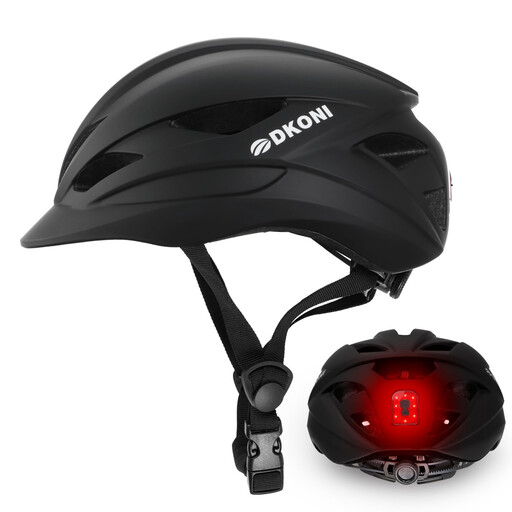
Why This Fits Their Persona: A practical option for new riders and city commuters who want a straightforward helmet with rear visibility lighting and ventilation.
The removable USB rechargeable rear light has two modes and a stated lighting time of approximately 3–5 hours, making the feature easier to maintain than a permanently fitted battery unit.
PC and EPS in-mould construction; 15 vents; available in 55–58 cm and 58–61 cm ranges, subject to the selected variant.
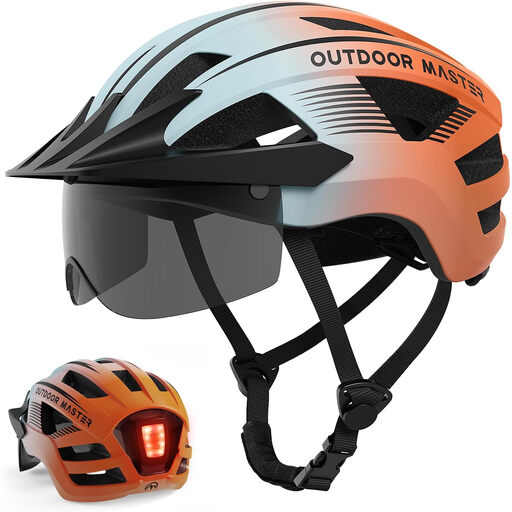
Why This Fits Their Persona: Suits riders who want integrated eye coverage and a rechargeable light for road, urban, e-bike or occasional off-road use.
The light uses Type-C charging, while the goggles and visor are detachable, so riders can remove features they do not need for a particular journey.
Lists CPSC and ASTM certification; includes 17 vents, an adjustable dial, detachable goggles and a removable sun visor.
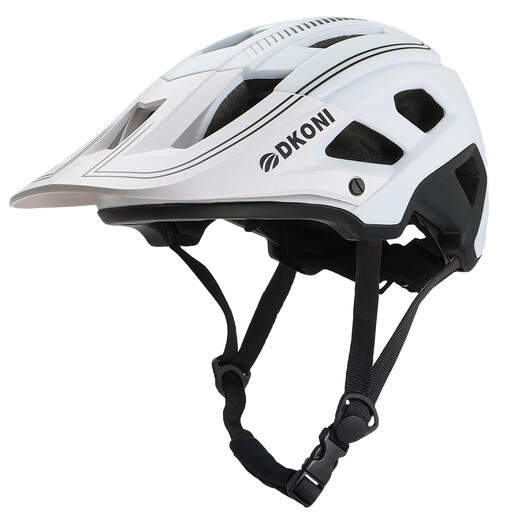
Why This Fits Their Persona: Designed for mountain bikers and leisure riders who value a visor, extended side and rear coverage and washable comfort padding.
The large ABS visor is removable, and the soft inner pads can be removed and washed, addressing common concerns about restricted vision and long-term hygiene.
Approximately 380 grams; 17 vents; one-hand adjustment wheel; medium and large head-size options.
We have compiled a complete, real-time list of products that fully satisfy these strict selection criteria and UK safety regulations.
Before your first ride:
Avoid solvents, harsh chemicals, high heat and unauthorised modifications. Do not drill additional vents or replace padding with unsuitable materials.
It should feel secure without causing pain or a headache. When fastened, the helmet should not rock noticeably from side to side or slide backwards. The front should remain level and the chin strap should allow normal breathing and movement.
There is no single lifespan that applies to every helmet. Replace it immediately after a significant impact, even if the shell appears undamaged. Otherwise, inspect the shell, EPS liner, straps, buckle and adjustment system regularly, and follow the manufacturer’s replacement guidance.