
24/7 Customer Support

Free returns

Same-day & Next-day Delivery

Quality Guaranteed

Unlock Your Welcome Offers: FREE Delivery | Up to 80% OFF | Free 30-day JoyPlus trial
Download the APP
Buying an adult cycling helmet should not come down to colour or headline features alone. A helmet may look lightweight in an online image yet feel unstable, trap heat or require frequent charging once it is in daily use. For UK commuters, road cyclists, mountain bikers and e-bike riders, the practical details matter more than marketing language.
The most common buying traps include:
Measure around the widest part of your head, approximately 2–3 cm above the eyebrows, and compare the result with the manufacturer’s size chart. For example, several medium helmets in this selection cover approximately 54–58 cm, while other models begin at 48 cm or extend to 61 cm.
An adjustable bicycle helmet should include a rear dial or equivalent fit system, adjustable side straps and a fastened chin strap. Once fitted, the helmet should sit level, remain stable when you gently shake your head and leave enough room for comfortable movement. It should not be worn tilted backwards.
Coverage also depends on the riding style. A mountain bike helmet often extends further over the rear and sides of the head, while a road cycling helmet may prioritise lower weight and airflow. For BMX, skating and casual multi-sport use, a rounder shell may be more suitable than an elongated road profile.
Common construction materials include a polycarbonate or ABS outer shell combined with an EPS foam liner. In-mould construction bonds the shell and foam into a compact structure, while ABS designs may use a more traditional hard outer shell.
The supplied product information should clearly state the applicable certification. The products featured below include references to CPSC certified bike helmet and ASTM certified bike helmet standards. Some also list CE certification. These are not interchangeable labels, so check the product details and packaging for the marking relevant to your intended use in the UK.
A MIPS cycling helmet includes a rotational-impact management system designed for certain impact conditions. It is a feature to consider, not a reason to ignore fit, correct fastening or the helmet’s stated certification.
A rechargeable cycling helmet with a rear LED can be convenient for commuting, particularly when charging via USB or Type-C is already part of your routine. Check the number of lighting modes, charging connection and whether the light is removable. Remember to inspect the charge before leaving home.
Ventilation is especially relevant for longer rides. A breathable bicycle helmet with 15–25 vents can help air move across the head, although more vents do not automatically mean a better fit or greater protection.
A cycling helmet with visor may reduce glare and help shield the face from light rain, mud or branches. A cycling helmet with goggles can also be useful on exposed roads or trails, but magnetic or detachable accessories must be firmly attached before riding and should not obstruct your vision.
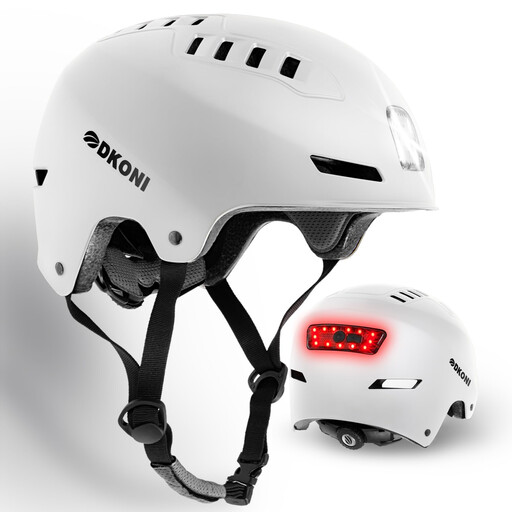
Why This Fits Their Persona: A practical option for new commuters, occasional riders and adults who want front and rear LEDs without adding a separate visibility accessory immediately.
It lists a one-hand adjustment dial, adjustable side straps, CPSC, CE and ASTM references, plus removable washable lining.
USB-rechargeable front and rear lighting, four rear light modes and 20 ventilation holes.
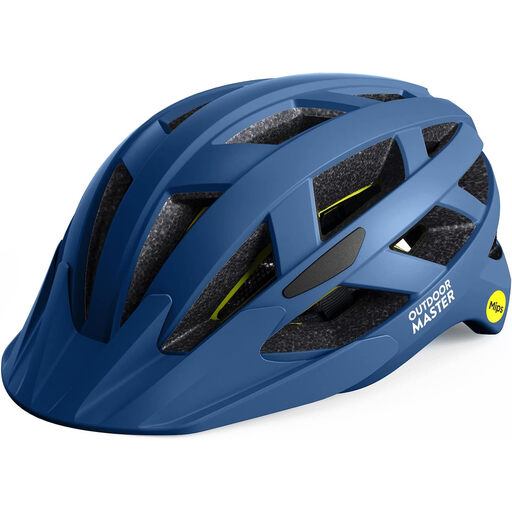
Why This Fits Their Persona: Suitable for riders moving between road cycling, MTB, BMX and skating who value adaptable fit and a rotational-impact feature.
The double adjustment system and two removable liners allow a closer fit than relying on shell size alone.
MIPS system, 25 vents, a removable visor and PC shell with EPS foam interior.
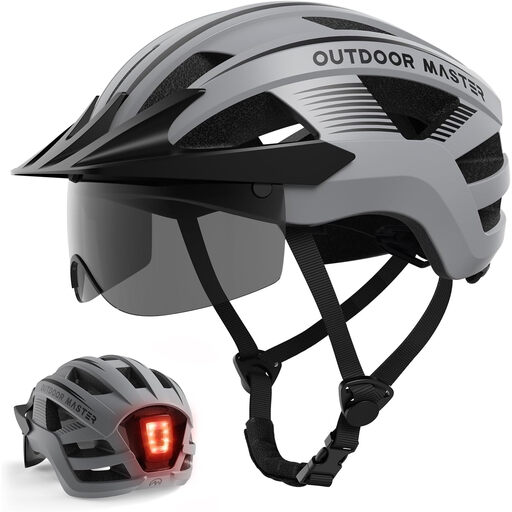
Why This Fits Their Persona: Well suited to frequent commuters, e-bike riders and trail users who want integrated eye protection, a visor and rear visibility in one setup.
The product specification states CPSC and ASTM certification, a fit dial, chin strap and detachable accessories rather than relying on appearance alone.
Type-C rechargeable rear light with multiple modes, 17 vents, magnetic goggles and a removable sun visor.
Adjust the dial and straps every time, particularly if you change clothing or liners. Keep vents clear, clean the shell with a soft damp cloth and follow the charging instructions for any LED. Do not modify padding or straps. Replace the helmet immediately after a significant impact, even when there is no visible damage.
We have compiled a complete, real-time list of products that fully satisfy these strict selection criteria and UK safety regulations.
It should sit level, cover the forehead without blocking your view and remain stable when you move your head. The chin strap should be snug but comfortable, with the side straps forming a balanced V around each ear.
Replace it after any significant crash or impact. Even without an incident, inspect the shell, EPS foam, straps, dial and padding regularly. Damage, deformation, loose components or degraded materials are reasons to stop using it and consult the manufacturer’s replacement guidance.
No. A helmet light is an additional visibility aid. For UK riding, use suitable bicycle lights and reflectors where required and position them so that other road users can see you clearly.