
24/7 Customer Support

Free returns

Same-day & Next-day Delivery

Quality Guaranteed

Unlock Your Welcome Offers: FREE Delivery | Up to 80% OFF | Free 30-day JoyPlus trial
Download the APP
Buying one of the many adult cycling helmets available online can seem straightforward until you compare sizing systems, safety labels, lights, visors and ventilation. A helmet that looks suitable may still be uncomfortable, poorly adjusted or designed for a different activity.
This guide explains the practical details to check before buying, whether you need bike helmets for adults for commuting, a road cycling helmet, a mountain bike helmet or a multi-sport option for cycling and skating.
Small, medium and large labels are not consistent between manufacturers. A medium helmet may suit a 54–58 cm head, while another medium starts at 55 cm or finishes at 58 cm. Measure around the largest part of the head, approximately 2–3 cm above the eyebrows, and compare the result with the product’s stated range.
A helmet should sit level, with the front edge above the eyebrows. It should feel secure without creating pressure points. An adjustable cycling helmet is useful, but the dial cannot compensate for a fundamentally unsuitable shell size.
A road cycling helmet prioritises low weight and airflow, while skateboard helmets generally have a deeper, more rounded profile and can suit several wheeled activities. A multi-sport helmet may work for casual cycling, BMX, skating and scooters, but it may not offer the same design as a dedicated mountain or road cycling model.
Check the manufacturer’s recommended uses rather than relying on appearance. For children aged five and over, ensure the product is specifically suitable for the child’s head size and activity.
A cycling helmet with light can make a rider more noticeable, but a rear LED does not replace front and rear bicycle lights, reflective clothing or sensible road positioning. Rechargeable bike helmet lights also need regular charging.
A MIPS cycling helmet includes a rotational-impact management system designed for certain impact conditions. It is an additional design feature, not a guarantee against injury and not a substitute for a correct fit or cautious riding.
Look for an adjustment dial, secure side straps and a chin buckle that stays comfortably below the ears. After fastening, the helmet should not move significantly when you shake your head. The chin strap should be snug without restricting normal movement.
Removable liners are practical for regular commuters because they can be washed separately. Two liner thicknesses, as included with some multi-sport models, can help fine-tune the fit.
Common materials include a polycarbonate or ABS outer shell with an EPS foam liner. The shell helps form the external structure, while EPS is designed to absorb energy in certain impacts. In-mould construction fuses the outer shell and foam during manufacture and is frequently used in road and urban cycling helmets.
No helmet protects against every type of accident. Always replace it after a significant crash, even if there is no visible damage. Avoid modifying the straps, shell or padding.
Product pages may list CPSC- and ASTM-certified helmet specifications. These are recognised US safety standards, so UK buyers should also check the product listing and supplied labelling for the conformity information relevant to the item’s intended market. Do not assume that a certification mentioned online automatically confirms every requirement for UK use.
Other practical features include:
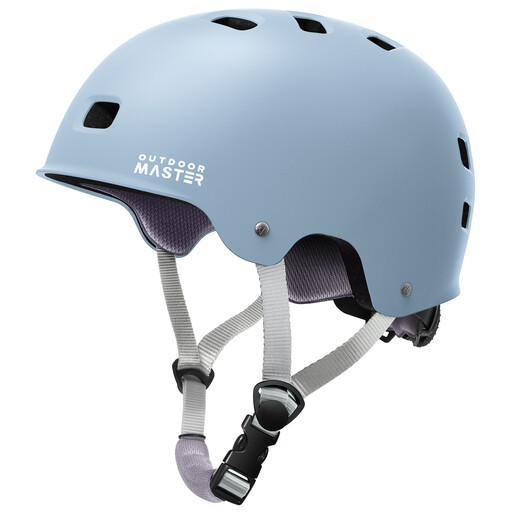
Why This Fits Their Persona: A practical option for casual cycling, skating, BMX, scooters and inline activities, with a stated 51–58 cm medium size range.
The size range and adjustable dial make measurement more useful than choosing by a generic S, M or L label.
Reinforced ABS shell, EPS core, ventilation system and two removable washable liners.
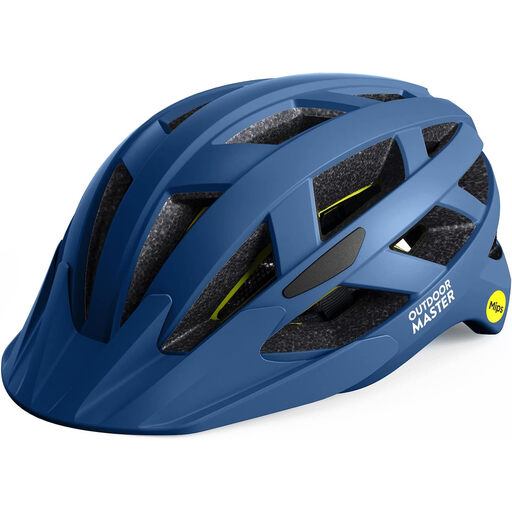
Why This Fits Their Persona: Suits riders seeking a MIPS cycling helmet for recreational road cycling, mountain biking, BMX or skating.
Its listed MIPS system is presented as a design feature rather than a replacement for secure fitting and safe riding.
Twenty-five vents, removable visor, PC shell, EPS interior and two removable liners.
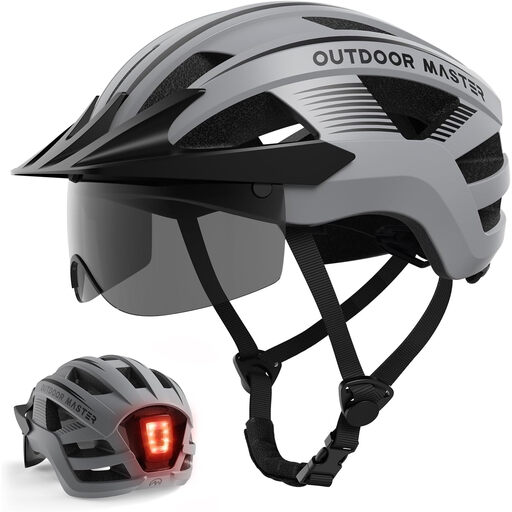
Why This Fits Their Persona: Designed for city commuting, mountain biking, road riding and e-bike use where airflow, eye coverage and rear visibility are useful.
The product specifies its size range, adjustment system, certification claims and rechargeable light rather than relying only on promotional styling.
PC and EPS in-mould construction, 17 vents, Type-C rechargeable rear light, detachable goggles and sun visor.
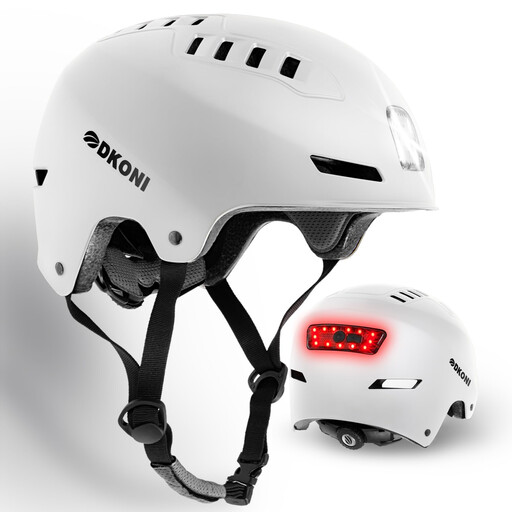
Why This Fits Their Persona: Suitable for regular urban cycling and commuting when front and rear visibility, ventilation and easy cleaning are priorities.
It lists the light configuration, charging method, size ranges and ventilation count, making running requirements easier to assess.
USB-rechargeable front and rear LEDs, four rear light modes, 20 vents and removable washable lining.
We have compiled a complete, real-time list of products that fully satisfy these strict selection criteria and UK safety regulations.
It should sit level, cover the forehead without obstructing vision and remain stable when you move your head. The straps should form a comfortable V around the ears, with the chin buckle fastened securely. Measure your head before ordering and use the manufacturer’s centimetre range.
Replace it immediately after a significant impact. Even without a crash, inspect the shell, EPS liner, straps and adjustment system regularly. Heat, chemicals, direct sunlight and everyday wear can affect materials, so follow the care instructions and replace the helmet when it becomes damaged, loose or difficult to adjust.
The main ongoing requirement is electricity for USB or Type-C charging. Running time varies by model and lighting mode; for example, one listed bicycle helmet specifies approximately three to five hours of lighting. Charge the light before low-light journeys, but continue using legally required bicycle lighting rather than treating the helmet light as a complete lighting system.