
24/7 Customer Support

Free returns

Same-day & Next-day Delivery

Quality Guaranteed

Unlock Your Welcome Offers: FREE Delivery | Up to 80% OFF | Free 30-day JoyPlus trial
Download the APP
As a Product Recommendation Officer at Joybuy, my role is to help you navigate the crowded market of adult dry dog food. Choosing the right kibble can feel overwhelming, with every bag making bold claims. Many owners find themselves confused by marketing jargon, leading to choices that might not be ideal for their dog's health or their budget. This guide will help you understand what truly matters, so you can make a confident and informed decision for your companion.
Before we look at what to choose, let's identify the common traps that can lead to a poor purchase. Being aware of these will help you see past the marketing and focus on the quality of the food itself.
To choose a suitable food, focus on these key parameters. They provide a much clearer indication of quality than the marketing claims on the front of the bag.
Ingredients are listed by weight in descending order before cooking. The first few ingredients make up the bulk of the food.
This is a critical distinction. A complete dog food is formulated to provide all the nutrients your dog needs in its daily diet. In contrast, a "mixer" or "complementary" food is designed to be fed alongside wet food to provide texture and additional nutrients. Feeding a mixer alone will not provide a balanced diet. Always check the packaging to ensure you are buying a "complete" food if it's intended to be your dog's sole diet.
A hypoallergenic dog food is designed for dogs with common food allergies or a sensitive stomach. These formulas typically exclude ingredients known to cause reactions, such as wheat, soya, dairy and sometimes beef or chicken. Instead, they often use a single, less common protein source (like white fish or duck) and a gentle carbohydrate like potato or rice. If your dog suffers from itchy skin, digestive upset, or frequent ear infections, a hypoallergenic formula may be worth considering.
We've matched some popular choices to different owner needs, helping you find a food that fits your dog's lifestyle and your priorities.
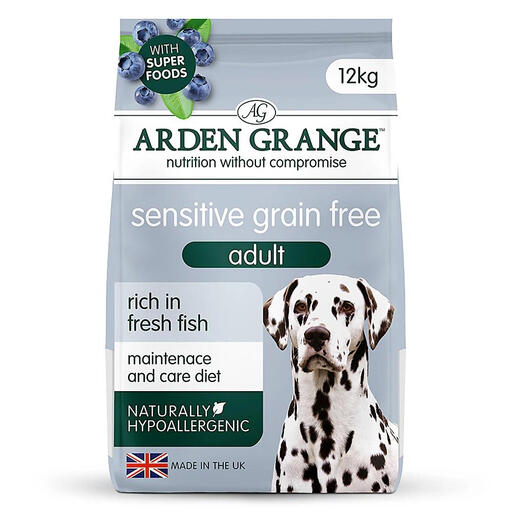
Why This Fits Their Persona: This is an ideal choice for UK dog owners dealing with common skin or digestive issues. The use of ocean white fish as the primary protein and potato as the carbohydrate source avoids typical allergens like chicken, beef, and grains.
It moves beyond the "grain-free" hype by offering a genuinely hypoallergenic formula for dogs that need it. It is transparent about its protein sources, listing both fresh ocean white fish (22%) and ocean white fish meal (18%) for a concentrated, high-quality protein base.
Formulated specifically for sensitive digestion and skin. Contains prebiotics, joint support and cranberry extract for urinary health.
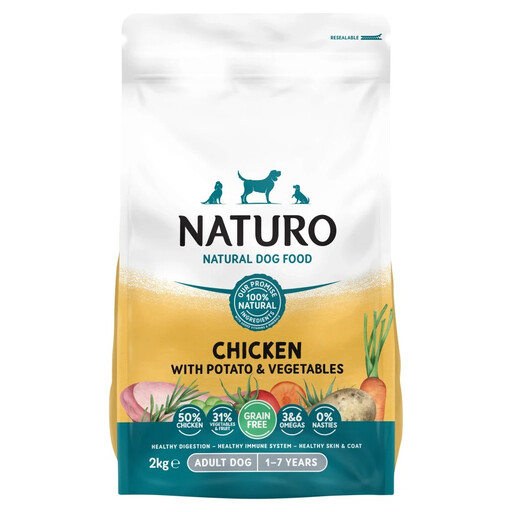
Why This Fits Their Persona: For those who prioritise high meat content and a clean ingredients list. This food is great for owners who want to feed a diet that closely mirrors a natural philosophy, with plenty of protein and vegetables.
It backs up its "natural" positioning with a transparent, high-quality ingredients list. It clearly states 50% chicken content, broken down into 28% chicken meat meal and 20% fresh chicken, avoiding the "fresh meat" water content trap and showing a strong, protein-rich base.
High protein content (30%) for muscle health. Grain-free recipe with added prebiotics for digestive support and Omega 3 & 6 for a healthy coat.
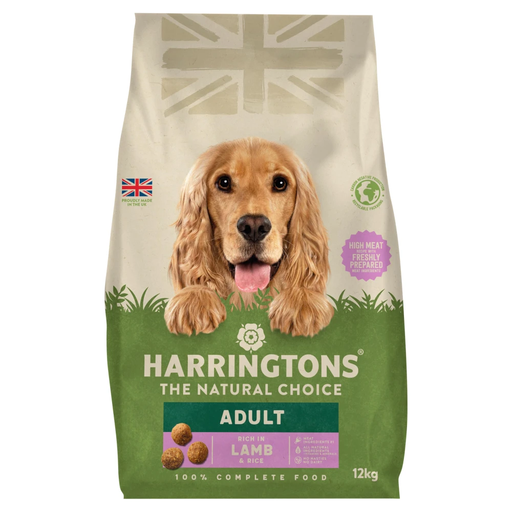
Why This Fits Their Persona: A solid, no-fuss option for owners seeking a reliable and affordable complete food from a well-known UK brand. It provides balanced nutrition without the premium price tag of specialist diets.
This is a complete food, not a mixer, ensuring dogs get balanced nutrition. It avoids the grain-free bandwagon by using beneficial grains like rice and oats, which are great for most dogs, and is upfront about its protein source (Lamb & Meat Meals 28%).
Great value for a 12kg bag. Made in the UK with no artificial colours or flavours, and includes prebiotics and yucca extract for digestive health.
We have compiled a complete, real-time list of products that fully satisfy these strict selection criteria and UK safety regulations.
To avoid digestive upset, you should transition your dog to a new food gradually. Start by mixing a small amount of the new food (around 25%) with their old food (75%). Over 7 to 10 days, slowly increase the proportion of the new food while decreasing the old food until you are feeding 100% of the new diet.
The correct amount depends on the specific food's calorie density, as well as your dog's age, breed, weight and daily activity level. Always check the feeding guide on the packaging, which provides recommendations based on your dog's weight. These are just a guide, so monitor your dog's body condition and adjust the portion size as needed to maintain a healthy weight.
Not necessarily. Grain-free diets are essential for dogs with a specific allergy or intolerance to grains. For most dogs, however, high-quality whole grains like rice, oats and barley are a beneficial source of energy, fibre and nutrients. The quality of the ingredients is more important than simply whether the food contains grain or not. If you suspect a food sensitivity, it is always best to consult with your vet.