
24/7 Customer Support

Free returns

Same-day & Next-day Delivery

Quality Guaranteed

Unlock Your Welcome Offers: FREE Delivery | Up to 80% OFF | Free 30-day JoyPlus trial
Download the APP
Choosing adult wet pet food can seem straightforward until you compare cans, pouches, textures and pack sizes. Gravy, jelly and pâté recipes may look similar, yet their nutritional status, serving guidance and value can differ considerably.
For UK dog and cat owners, the most practical approach is to ignore exaggerated front-of-pack language and check three things first: whether the food is complete, whether it suits the correct species and life stage, and whether the format works for your household.
Some wet foods are designed as treats, toppers or occasional meals. They may be appealing, but they are not necessarily suitable as the main source of daily nutrition for adult pets.
Look for wording such as “complete pet food for adult dogs” or “complete pet food for adult cats”. “Complete and balanced wet food” should provide the nutrients needed when fed according to the manufacturer’s guidance. If the label says “complementary”, use it alongside a suitable complete food rather than replacing meals.
“Chicken wet food”, “beef wet food” or “salmon wet food” may contain only a stated percentage of that named ingredient. For example, some recipes list 4% chicken or beef while the rest of the composition includes meat and animal derivatives, cereals, minerals or other ingredients.
This does not automatically make a product unsuitable. It does mean you should compare the composition, not just the flavour printed on the front. A recipe with a clearly declared ingredient profile, analytical constituents and feeding guide gives you more useful information than vague claims about richness or quality.
A 40-pouch or 12-can pack can reduce shopping frequency, but it is poor value if your pet refuses the texture. Cats can be particularly selective between chunks, gravy, jelly and pâté wet food.
Large packs also need sensible storage. Keep unopened products in a cool, dry place, refrigerate unused contents after opening where instructed, and follow the label’s time limit for consumption. Smaller 85g portions can help maintain freshness, while larger cans may suit households feeding a bigger dog or several pets.
Choose a recipe specifically labelled for adult animals. Adult dog food is not interchangeable with adult cat food: cats and dogs have different nutritional requirements, so always check the target species.
Some products specify an age range, such as adult dogs from 1–7 years. Others are suitable for adult cats from one year onwards. If your pet is a puppy, kitten, senior or has a diagnosed health condition, seek appropriate veterinary guidance rather than relying on general adult food.
Wet food commonly contains around 80% moisture. This contributes to its soft texture and can be useful for pets that prefer moist meals, but it also means comparing protein and fat percentages requires care. A recipe showing 8% protein on an “as fed” basis is not directly equivalent to a dry food showing 25% protein.
Use the manufacturer’s feeding table as a starting point, then adjust for weight, activity and other food given. For example, the guidance for Morrisons Tasty Chunks in Jelly lists different amounts for toy, small, medium and large dogs. Treats and mixers should also be included when considering total daily intake.
Check whether the product contains cereals if you are specifically seeking grain-free cat food. “Grain-free” is a preference or dietary requirement for some households, but it should not be treated as a universal health claim.
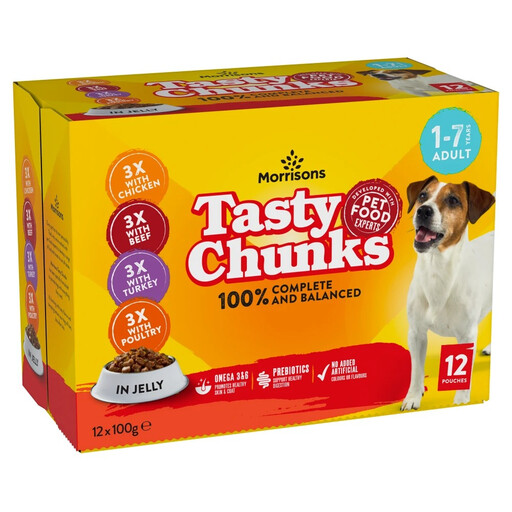
Why This Fits Their Persona: A practical starter pack for UK households wanting portioned adult dog food in chicken, beef and turkey varieties.
It is identified as complete and balanced for adult dogs, with feeding guidance and a 12 x 100g format that limits opened leftovers.
Three flavours, 6% crude protein, 3% crude fat and 81.5% moisture listed for the recipes.

Why This Fits Their Persona: Suitable for adult cat owners seeking a grain-free, chicken-led selection with neatly portioned pouches.
The product information identifies it as complete for adult cats and clearly lists ingredients, moisture and feeding amounts rather than relying only on front-of-pack claims.
Eight 85g pouches, two chicken-based recipes, 14% crude protein and no added sugar or salt according to the listing.
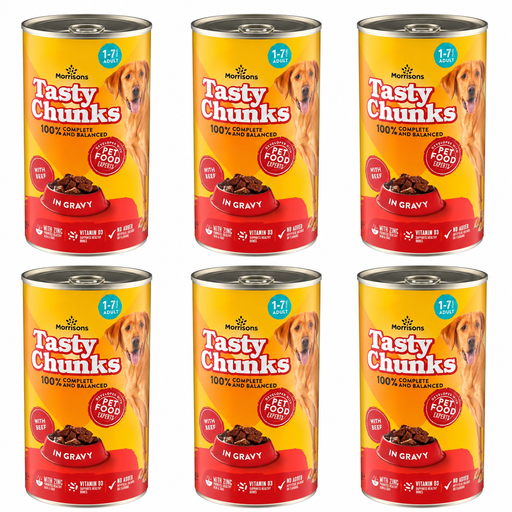
Why This Fits Their Persona: Designed for larger dogs, multi-dog homes or owners who prefer fewer supermarket-style food runs.
The listing states the total contents clearly: six 1.2kg cans and 7.2kg overall, making storage and cost per kilogram easier to assess.
Chunks in beef gravy, complete adult dog nutrition and storage guidance for unused contents.
We have compiled a complete, real-time list of products that fully satisfy these strict selection criteria and UK safety regulations.
Serve wet food at room temperature unless the packaging says otherwise. Introduce a new recipe gradually over several days to reduce the chance of digestive upset. Keep fresh drinking water available, even when feeding moisture-rich meals.
Once opened, cover and refrigerate cans or pouches where required. Follow the product label for the consumption window, as this varies by format. Discard food if the packaging is damaged, swollen or past its use-by guidance.
Yes, if it is labelled as a complete pet food for the correct species and life stage. Complementary products should not normally replace the main diet.
Neither texture is automatically more suitable. Gravy may appeal to pets that enjoy a sauce, while jelly provides a firmer set texture. Choose according to your pet’s preference, feeding routine and the product’s complete nutritional status.
They can offer better value per pouch, can or kilogram, but compare the total weight rather than the pack headline. Also consider storage space, use-by dates and whether your pet will eat every flavour included.