
24/7 Customer Support

Free returns

Same-day & Next-day Delivery

Quality Guaranteed

Unlock Your Welcome Offers: FREE Delivery | Up to 80% OFF | Free 30-day JoyPlus trial
Download the APP
Selecting an adults cycling helmet can feel like a complex task. With a vast market of different styles, safety features and technical jargon, it's easy to feel overwhelmed. Whether you're navigating city streets on your daily commute, tackling challenging trails or enjoying a long-distance road ride, the right helmet is a non-negotiable piece of kit.
As your Joybuy Product Recommendation Officer, my role is to help you cut through the jargon. This guide offers straightforward, practical advice to help you understand the key considerations and find a helmet that suits your specific needs, ensuring you can ride with greater confidence.
Before looking at specific models, it's helpful to understand what sets different helmets apart. Focusing on these three areas will help you narrow down your options effectively.
The ideal helmet for a mountain biker is very different from one designed for a road cyclist.
Beyond the basic hard shell and foam liner, modern helmets incorporate advanced safety systems.
One of the most significant is the MIPS cycling helmet. MIPS stands for Multi-directional Impact Protection System. It's a low-friction layer inside the helmet designed to allow a slight sliding motion during an angled impact. This movement is intended to help reduce the rotational forces that can be transferred to the brain. While all helmets sold in the UK must meet specific safety standards, MIPS is an additional feature many riders look for.
A helmet can only provide its intended protection if it fits correctly. An adjustable bike helmet is essential. Most quality helmets feature a dial-fit system at the back, allowing you to fine-tune the fit for a snug and secure feel. The helmet should sit level on your head, with the front edge about two finger-widths above your eyebrows and the straps should form a 'V' shape around your ears without being too tight.
Here are a few standout options that cater to different types of cyclists, selected for their features, construction and user-focused design.
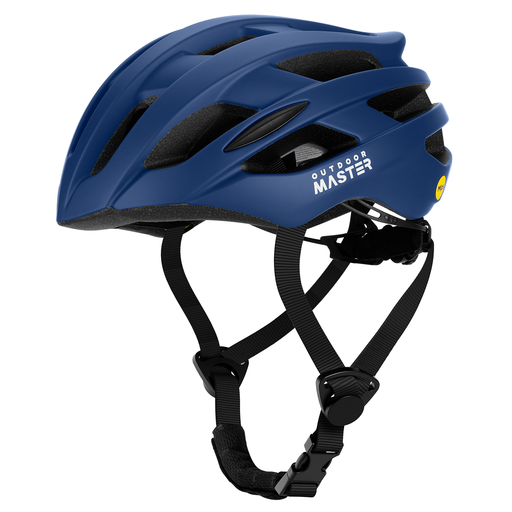
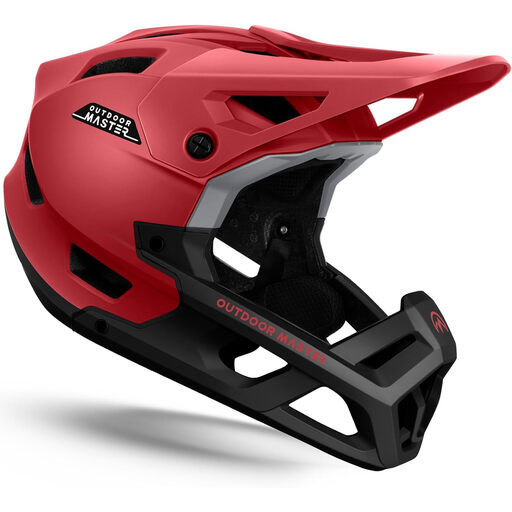
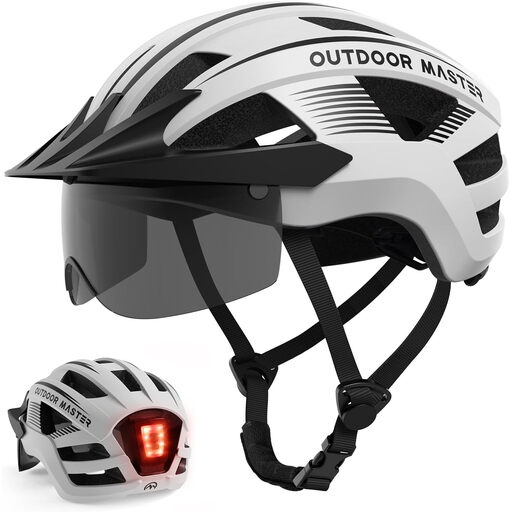
A helmet is your most important accessory, but carrying your essentials safely is a close second. If you need a reliable way to transport your laptop, change of clothes or repair kit, explore our curated selection of cycling backpacks to find the perfect partner for your ride.
The general recommendation from most manufacturers is to replace your helmet every 3 to 5 years. Over time, materials like the EPS foam liner can degrade due to exposure to UV light and general wear, reducing their protective qualities. More importantly, you must replace your helmet immediately after any crash or significant impact, even if there is no visible damage.
MIPS, or the Multi-directional Impact Protection System, is a safety feature found in many modern helmets. It consists of a thin, low-friction layer that allows the helmet to slide 10-15mm relative to the head during an angled crash. This is designed to reduce the rotational motion that can be transferred to the brain. While standard helmets provide good protection, many riders feel the potential added safety from MIPS is a worthwhile investment.
To find the right size, use a flexible tape measure to measure the circumference of your head. Wrap it about 2cm above your eyebrows and just above your ears, keeping the tape level. Compare this measurement to the manufacturer's sizing chart. Most helmets are sold in ranges (e.g., 54-58cm). An adjustable bike helmet with a rear dial will allow you to fine-tune the fit for optimal security and comfort.