
24/7 Customer Support

Free returns

Same-day & Next-day Delivery

Quality Guaranteed

Unlock Your Welcome Offers: FREE Delivery | Up to 80% OFF | Free 30-day JoyPlus trial
Download the APP
Choosing aeroplane toys for kids can be more complicated than it first appears. A product may look impressive in a listing photo but prove unsuitable once it arrives: the build may be too difficult, the aircraft may need more space than expected, or the ‘ready-to-fly’ features may still require considerable adult help.
This guide filters the main buying considerations for UK families, from LEGO aeroplane toys and airport playsets to remote control aeroplanes for kids. The aim is to help parents, grandparents and gift buyers match the toy with the child’s age, available space and preferred style of play.
A toy marked for ages 6+ may still contain many small pieces or require patience with multi-stage instructions. Conversely, a younger child may quickly lose interest in a simple push-along aeroplane. Check the stated age, piece count, assembly complexity and whether an adult should supervise use.
Small parts are particularly important. Building sets and some aviation toys for children carry choking warnings and should not be given to children below the stated age.
A remote control aeroplane for kids can include helpful functions such as altitude hold, one-key take-off and landing, or headless mode. However, these features do not remove the need for space, practice and supervision. Indoor flight can be affected by furniture, ceilings and fragile objects, while outdoor use depends on a suitable open area and calm conditions.
Also check the full power arrangement. A rechargeable aircraft battery may be included, while the remote control requires separate AAA batteries.
Lights, sounds, flips and multiple vehicles can make a product attractive, but they are not equally useful for every child. A child who enjoys storytelling may gain more from an airport playset with figures and accessories than from a stunt-flying toy. A LEGO fan may prefer an aeroplane building set that can be rebuilt or displayed.
Consider where the toy will be stored, how often it is likely to be used and whether replacement parts, batteries or charging time could affect play.
Always read the manufacturer’s age guidance and warnings rather than relying only on the product title. For UK purchases, look for clear manufacturer or responsible-person details, safety instructions and the relevant conformity marking shown on the packaging or listing. A CE or UKCA mark, where applicable, should not be treated as a substitute for checking age suitability and supervision requirements.
For children aged 3 to 5, larger pieces, push-along vehicles and simple role play are generally easier to manage. Children aged 6 to 9+ may be ready for more detailed aeroplane building blocks, mechanical functions or remote control features, depending on their experience.
Compare both the packaged dimensions and assembled dimensions. A large airport scene may offer more imaginative play but need a dedicated floor or table area. A compact aircraft can be easier to store and transport.
For flying toys for children, check whether the product is described for indoor, outdoor or both types of use. Propeller guards and lightweight construction may be useful in beginner-friendly designs, but children should still fly under adult supervision and away from people, pets and obstacles.
Building sets that require no batteries can be convenient for travel and quiet play. Remote-controlled products need closer attention to:
These details make a greater difference to everyday use than decorative claims alone.
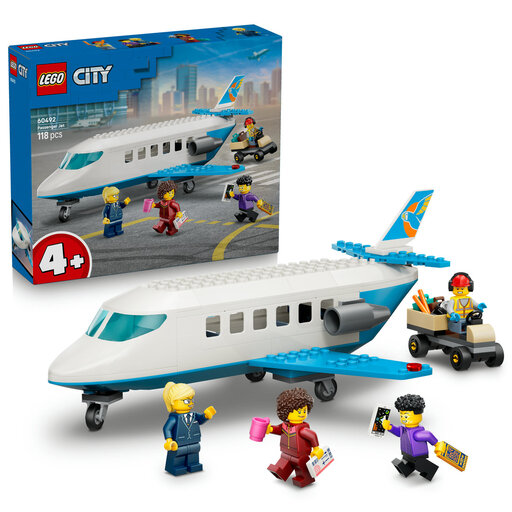
Why This Fits Their Persona: A practical starting point for children aged 4+ who enjoy travel role play and manageable LEGO aeroplane toys. The Starter Brick and pictorial guide support beginners.
It focuses on building and pretend play rather than battery-operated effects, with 118 pieces and no batteries required.
Includes a pilot, airport worker and two passengers, plus a baggage trolley, opening fuselage and accessories.
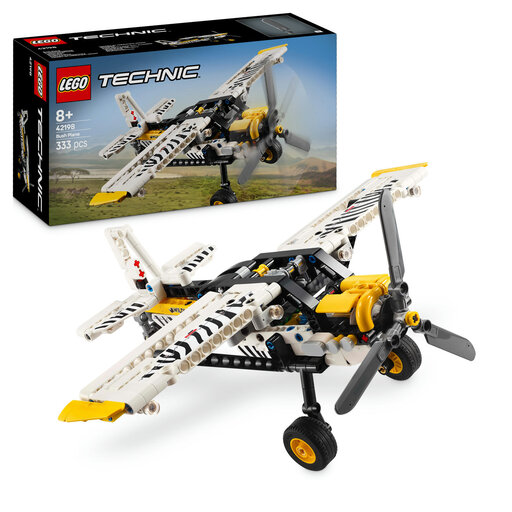
Why This Fits Their Persona: Suits children aged 8+ who want a more detailed aeroplane building set with visible mechanisms and display value.
The appeal comes from manual functions and construction, not unsupported flight-performance promises or disposable batteries.
Features a spinning propeller, visible four-cylinder piston engine and adjustable ailerons; it requires no batteries.
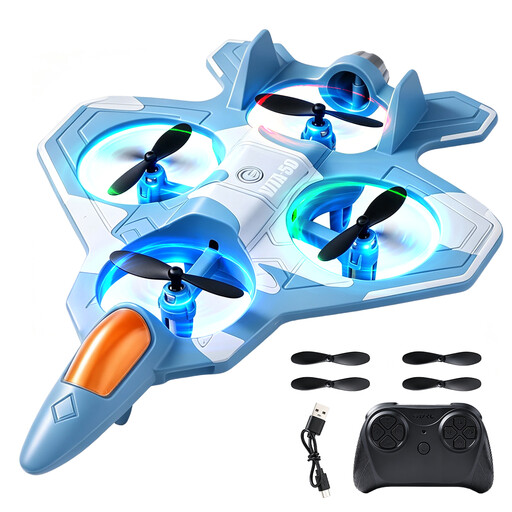
Why This Fits Their Persona: Designed for children aged 6+ who specifically want an interactive toy fighter jet and have a suitable indoor or outdoor practice area.
The listing clearly identifies the included 3.7V 500mAh rechargeable battery, separate AAA controller batteries and spare propellers.
Includes altitude hold, one-key take-off and landing, headless mode, LED lights, 360-degree flip and a propeller guard.
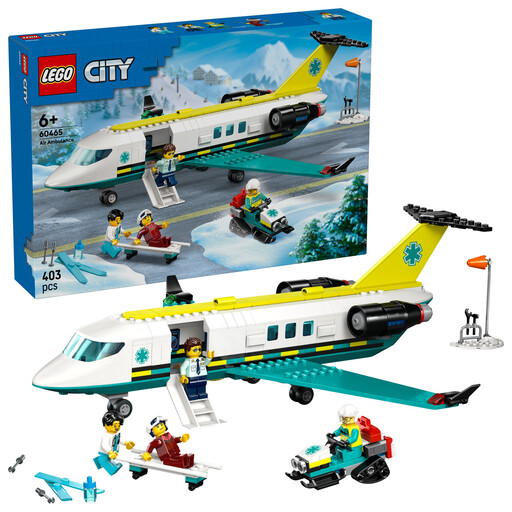
Why This Fits Their Persona: A strong match for children aged 6+ who prefer mission-based storytelling, figures and accessories over remote-controlled flight.
It provides a defined rescue scenario with a 403-piece build, rather than relying only on visual aircraft styling.
Includes an opening fuselage, fold-out medical laboratory, boarding stairs, snow scooter, airport scene and four minifigures.
We have compiled a complete, real-time list of products that fully satisfy these strict selection criteria and UK safety regulations.
Some are, but suitability depends on the design. Building sets, airport playsets and push-along aircraft are generally easier to use indoors. Remote-controlled aeroplanes need clear space and should be kept away from windows, lamps, pets and other people. Always follow the product instructions.
The running time varies by battery capacity, flying style and product design. Check the stated flight duration and whether the aircraft uses a removable rechargeable battery. Keep charging cables and spare batteries away from young children, and allow the battery and motor to cool if instructed by the manufacturer.
Start with the child’s preferred activity rather than gender. LEGO aeroplane toys suit children who enjoy building; an airport playset supports collaborative storytelling; and a beginner remote-controlled aircraft may appeal to children interested in controls and flying. Age guidance, storage space and supervision needs should determine the final choice.