Choose an after-school nut snack by the protein in the portion the child will actually eat, then check its ingredients, salt, the child’s age and where it will be eaten. Marks & Spencer lists 10g protein in a 30g nut-and-seed mix pack, Tesco lists 6.3g in a 30g serving of plain almonds, and Tesco’s listing for KP salted peanut snack packs gives 9g per 30g pack. These figures do not make the products interchangeable: the NHS says children under 5 should not be given whole nuts, and a school’s allergy arrangements need checking before a nut snack goes onto its premises.
Who is choosing the snack?
Parents of children aged 5 and over
If the snack will be eaten at home, after school or before a club, compare the protein in a realistic portion rather than relying on a claim on the front of the pack. Check the setting’s rules before packing nuts to take elsewhere.
Families preparing food for under-5s
Texture changes the choice. The NHS says not to give whole nuts or peanuts to children under 5 because they can choke on them; where nuts are appropriate for the child, crushed or ground nuts can be added to food.
Families navigating allergy rules
Check the current pack for ingredients and allergen warnings, and ask the school or club about its arrangements before sending a nut snack. Department for Education guidance says schools in England must publish an allergy safety policy; it does not mean every setting has the same rules for snacks brought in.
What should you check first?
Start with the serving the child is likely to eat, then check whether that format works for their age and the place they will have it. Protein is one part of the label, not a substitute for checking ingredients, salt and allergens.
| Priority | What to check | Your needs |
|---|
| Protein per portion |
Compare protein for the pack or serving you plan to offer, using the same portion size where possible. Marks & Spencer lists 10g per 30g nut-and-seed mix pack; Tesco lists 9g per 30g KP salted peanut pack and 6.3g per 30g serving of plain almonds. |
I want to know how much protein is in the amount that will be eaten, not just the figure per 100g. |
| Pack and ingredients |
Decide whether a single 30g pack or a portion measured from a larger bag is more practical. Read what is in a mix: the M&S product includes nuts, seeds and roasted edamame soybeans, so it is not a nuts-only snack. |
A ready-measured pack would be useful before a club; at home, I can measure a portion from a larger bag. |
| Salt per serving |
Compare the salt line for the same serving size. Tesco’s listings give 0.36g salt per 30g KP salted peanut pack and less than 0.01g per 30g serving of Tesco plain almonds. |
If salt matters for this choice, I would rather compare the declared amounts than assume all nut snacks are alike. |
| Allergens and setting |
Read the current ingredient list and precautionary allergen statements. Before taking nuts to school, check that school’s policy; Department for Education guidance on published allergy safety policies applies to schools in England. |
I need to know whether the child can have the ingredients and whether nuts can be brought to the place where the snack will be eaten. |
| Age and texture |
Check whether the product contains whole nuts or peanuts. The NHS says children under 5 should not be given them whole; crushed or ground nuts can be added to food where nuts are appropriate for that child. |
For a younger child, the form of the nut matters more than the convenience of a ready-to-eat whole-nut pack. |
What can be easy to overlook?
-
Choosing by a protein claim alone
The M&S nut-and-seed mix lists 10g protein per 30g pack, but its ingredients include almonds and roasted edamame soybeans. Marks & Spencer states that it is unsuitable for people with a nut or peanut allergy.
Read the ingredients and allergen statement before comparing protein figures, especially if the snack will be shared or taken to a group activity.
-
Offering whole nuts to an under-5
The NHS warns that children under 5 can choke on whole nuts and peanuts. A smaller pack does not change the texture of what is inside.
Do not serve whole nuts to an under-5. Where nuts are appropriate for the child, use crushed or ground nuts added to food instead.
-
Assuming a portioned pack has little salt
Tesco’s product listings show 0.36g salt in a 30g KP salted peanut pack, compared with less than 0.01g in a 30g serving of its plain almonds.
Read the salt value per serving if it affects your choice; portioning and seasoning are separate decisions.
-
Relying on an old product listing
Ingredients, nutrition information and allergen statements can change when a food is reformulated. An earlier listing may not describe the pack in your hand.
Check the on-pack information each time you buy, particularly when an allergen warning affects whether the snack can be served.
Which product lines provide useful comparisons?
These product examples show how serving format, ingredients and salt can change the decision; a brand name alone does not establish which snack suits a child.
KP
KP’s salted peanut snack packs are an example of individually portioned whole peanuts.
- Tesco lists 9g protein and 2.6g fibre per 30g pack of KP Salted Peanuts Snack Packs.
- The same listing gives 0.36g salt per pack and warns that the product may contain other nuts, milk, soya and gluten. Whole peanuts must not be given to children under 5, according to the NHS.
M&S
M&S offers a 30g Protein Packed Nut and Seed Mix containing more than nuts alone.
- Marks & Spencer lists 10g protein per pack; the mix includes roasted edamame soybeans, pumpkin seeds, almonds and sunflower seeds.
- Marks & Spencer states that this product is unsuitable for people with a nut or peanut allergy. Check the current pack for its full ingredient and allergen information.
Tesco
Tesco’s plain almonds and ground almonds illustrate two different formats for portions prepared at home.
- Tesco lists 6.3g protein per 30g serving of its whole almonds and 8.3g per 30g of its Organic Ground Almonds; both listings give less than 0.01g salt per 30g.
- Whole almonds are not for children under 5 under NHS choking guidance. Check the relevant pack for precautionary allergen statements before serving either product.
Joybuy nut-snack options
These Joybuy options include portioned peanuts and larger bags of flavoured nuts. Compare each pack’s current label with the child’s needs rather than treating similarly named products as having the same nutrition or ingredients.
 No image available
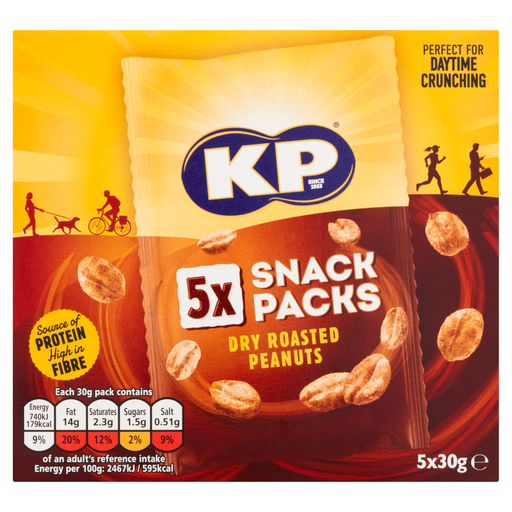
KP Snacks Dry Roasted Peanuts 5 × 30g
Five 30g packs offer a ready-measured peanut snack for a setting where nuts are permitted. These are dry-roasted peanuts, not the KP salted peanut packs used in the nutrition comparison above: check this product’s own protein, salt and allergen information on the pack. The NHS says whole peanuts must not be given to children under 5.
View on Joybuy
 No image available
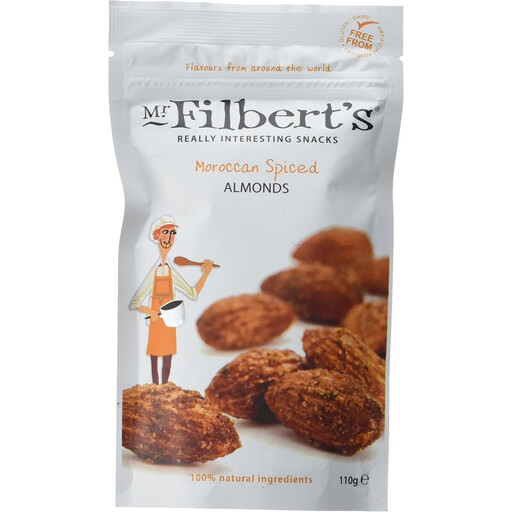
Mr Filbert's Moroccan Spiced Almonds 100g
This 100g bag contains spiced almonds for portions measured at home, rather than individual snack packs. Check its own nutrition and allergen label: figures for Tesco’s plain almonds do not describe this seasoned product. As whole nuts, almonds must not be given to children under 5 under NHS guidance.
View on Joybuy
 No image available
Mr Filbert's Italian Herb Peanuts & Hazelnuts 100g
This 100g Italian herb mix combines peanuts and hazelnuts, making its ingredients an important check before sharing. Measure a portion if a fixed amount matters, and read this mix’s own nutrition and allergen label. The NHS advises against giving whole nuts or peanuts to children under 5.
View on Joybuy
 No image available
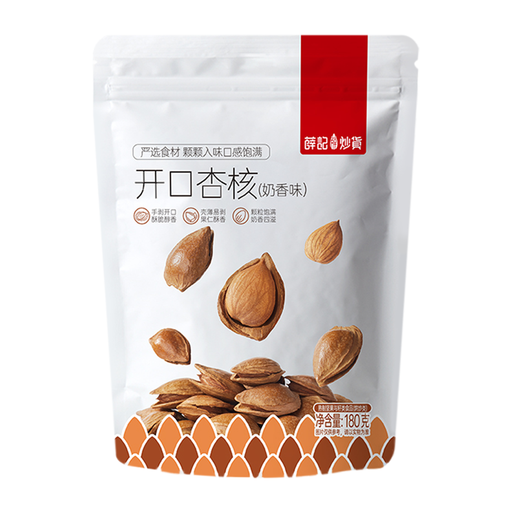
Xue Ji Roasted Almond Kernels with Milk Flavor 180g
Do not select this 180g product as a child’s snack on the basis of its name: it calls the contents almond kernels, while its accompanying ingredient description identifies apricot kernels. Confirm the ingredients and consult appropriate food-safety guidance before considering it. Do not give whole kernels to a child under 5.
View on Joybuy
 No image available
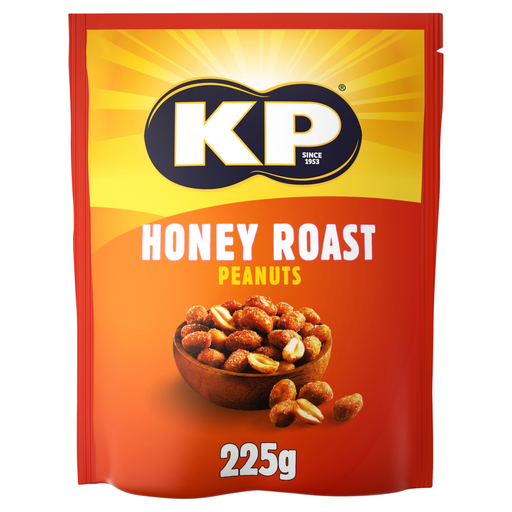
KP Snacks Honey Roast Peanuts 225g
This 225g bag is a honey-roasted peanut option from which to measure a serving at home. Check its own protein, sugars, salt, ingredients and allergen information rather than applying figures from a different KP peanut product. Whole peanuts must not be given to children under 5, according to the NHS.
View on Joybuy
Questions about after-school nut snacks
Can I send nuts to school for an after-school club?
Check the school’s arrangements and the club’s rules before sending them. Department for Education guidance says schools in England must publish an allergy safety policy to reduce contact with known allergens; it does not establish one rule permitting or banning every nut snack at every setting.
Can a child under 5 have whole nuts?
No. The NHS says not to give whole nuts or peanuts to children under 5 because they can choke on them. Where nuts are appropriate for the child, crushed or ground nuts can be added to food instead.
How should I compare protein in nut snacks?
Compare the amount in the pack or portion likely to be eaten. Marks & Spencer lists 10g protein in its 30g nut-and-seed mix pack; Tesco lists 9g per 30g KP salted peanut snack pack and 6.3g per 30g serving of plain almonds. Check ingredients, allergens and salt separately rather than using protein alone to decide suitability.
Is an online ingredient list enough to decide?
Use it to narrow down options, then read the pack you buy before serving. Ingredients, nutrition information and allergen warnings can change, so an earlier retailer listing should not replace the current label.


