What should you check before choosing?
Choose the flavour you want to serve first, then check how the particular tea is prepared and whether its ingredients meet your guests’ needs.
| Priority |
What to check |
Your needs |
| Flavour and serving |
Compare the listed tea leaves and flavourings. Check whether the maker suggests milk or a particular afternoon-tea pairing. |
I want a familiar black-tea pot, or perhaps bergamot or floral notes to serve with cakes and scones. |
| Brewing a pot |
Read the pack’s leaf quantity per cup, water temperature and infusion time. The UK Tea & Infusions Association suggests one rounded teaspoon per cup, but the product instructions should guide the particular blend. |
When I make several cups, I want to measure enough leaf for the whole pot and follow a repeatable brewing method. |
| Caffeine |
Check whether the product is conventional tea, decaffeinated tea or an infusion labelled caffeine-free. Twinings notes that tea type, water heat and brewing time affect caffeine in the finished cup. |
For a later serving, I need to know whether a lighter-tasting blend still contains caffeine. |
| Water hardness |
If hard water affects the tea you make at home, look at the exact blend rather than assuming every product from a brand is formulated for it. Yorkshire Tea identifies a separate hard-water blend. |
My tap water is hard, so I want to check whether the tea is intended for those conditions. |
Brand ranges to consider
These ranges offer different starting points for flavour and serving style; check the individual tea rather than applying one product’s ingredients or instructions to the whole brand.
Twinings
Its loose-tea range includes familiar styles such as English Breakfast and Earl Grey.
- Twinings lists its 125g English Breakfast as 100% black tea, with instructions to brew for 2–3 minutes.
- That composition and brewing time apply to the cited English Breakfast product, not every Twinings loose tea.
Yorkshire Tea
Yorkshire Tea and Yorkshire Gold are offered in loose form, alongside a separately identified hard-water blend.
- The separate hard-water option gives shoppers a condition to check if their tap water affects the tea they make.
- Do not assume every loose-leaf product in the range is the hard-water blend.
Whittard
Its range includes Earl Grey and a separately named Afternoon Tea loose blend.
- Whittard lists black tea, orange peel and bergamot flavouring in its Earl Grey; it describes its Afternoon Tea as a blend of black, green and oolong teas.
- The two products have different compositions, so choose by the particular blend rather than the shared brand.
Fortnum & Mason
Its named Afternoon Blend is a Ceylon tea blend positioned for traditional serving, including with a splash of milk.
- Fortnum & Mason describes the 125g loose-leaf blend as light and refreshing with body and gives a 3–5 minute brewing instruction.
- Those descriptions express the maker’s intended flavour and serving style, not a comparison with other afternoon blends.
Bettys
Bettys offers a Tea Room Blend alongside other loose teas, with separate soft-water and hard-water Tea Room Blend listings.
- Bettys describes its Tea Room Blend, made with teas from Africa and India, as strong and rich.
- Check the specific water-version listing and ingredients; the maker’s flavour description does not establish how every guest will prefer it served.
Ringtons
Its loose-tea range includes breakfast blends as well as other tea styles.
- Ringtons lists its 250g Breakfast Loose Tea as black tea and describes its flavour as strong and malty.
- Check the ingredients and preparation directions of the individual pack rather than assuming other Ringtons teas share that profile.
Loose leaf tea options on Joybuy
These options cover a floral black tea, an Earl Grey and a White Peony tea. They offer different flavour directions for an afternoon pot; check each product’s ingredients and brewing instructions against the food and guests you have in mind.
 No image available
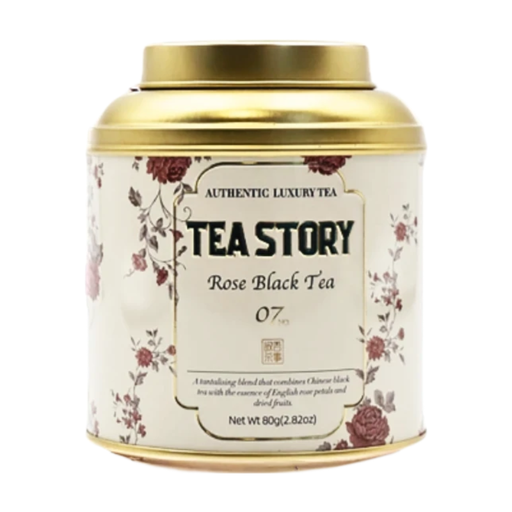
Tea Story Rose Black Tea, loose leaf 80g
This rose black tea is an option when you want a floral direction for the pot. Check its exact ingredients and brewing instructions before serving; as a conventional black tea, it contains naturally occurring caffeine.
View on Joybuy
 No image available
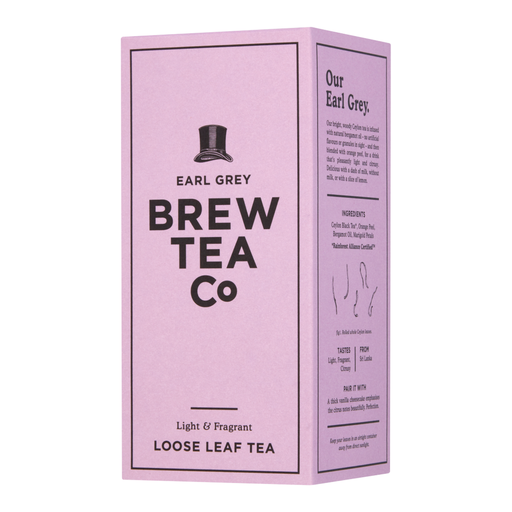
Brew Tea Co Earl Grey, loose leaf 113g
This Earl Grey offers the bergamot-led style to consider when you want a citrus-flavoured tea rather than a conventional breakfast blend. Check the product’s ingredients and pack directions for its particular composition and brew.
View on Joybuy
 No image available
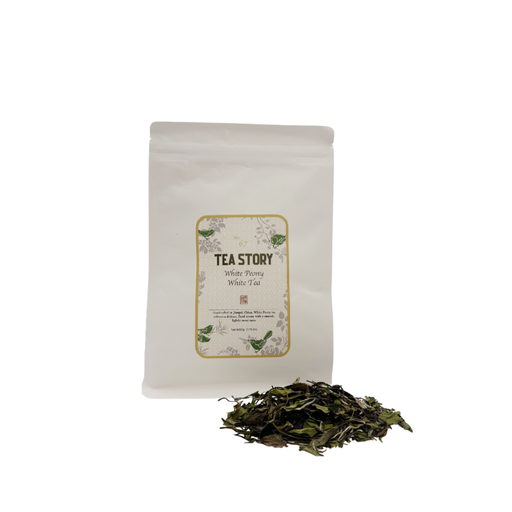
Tea Story White Peony, loose leaf 100g
This White Peony tea offers a different leaf style from a breakfast blend or Earl Grey. Check its brewing directions and decide whether its flavour suits the food you plan to serve; do not assume that a pale tea is caffeine-free.
View on Joybuy
Afternoon tea questions
Which loose leaf tea should I serve with cakes and scones?
Choose by the flavour you want alongside the food: a named afternoon blend is one option if its ingredients appeal, while a breakfast blend offers a more conventional black-tea pot. Whittard positions its mixed-leaf Afternoon Tea for classic afternoon tea; Fortnum & Mason describes its Ceylon Afternoon Blend as suitable with a splash of milk. Neither description guarantees a match for every menu or guest.
How much loose tea should I use for a pot?
Follow the pack’s directions for the particular tea and measure for the number of cups. The UK Tea & Infusions Association suggests one rounded teaspoon of loose tea per cup; increasing the leaf quantity for a larger pot is more useful than relying solely on a longer steep.
Should I use boiling water for every afternoon-tea blend?
No single temperature applies to every blend. The UK Tea & Infusions Association advises 90–98°C for black tea and around 80°C for green tea, while also advising readers to follow the pack. Check the particular instructions for a mixed-leaf blend rather than applying a black-tea temperature to it automatically.
Can I choose a light-tasting tea to avoid caffeine?
No: a lighter flavour does not establish that a tea is caffeine-free. Twinings explains that tea from Camellia sinensis naturally contains caffeine and that the amount in the cup varies with tea type and brewing conditions. If avoiding caffeine is important, check for an explicit decaffeinated or caffeine-free designation on the exact product.
Should I check allergens in flavoured loose tea?
Yes, read the ingredient and allergen information for the exact tea, particularly when choosing a flavoured blend. For loose food sold unpackaged in the UK, the Food Standards Agency says businesses must provide allergen information if the item contains any of the 14 specified allergens; that information may be supplied in writing or verbally. For a packaged tea, check its listing and pack rather than assuming another blend from the same brand has identical ingredients.


