Drinkers who want a traditional organic tea
If a familiar black-tea cup is the priority, look for an organic claim on the particular product. Clipper lists organically grown black tea as the ingredient in its Organic Everyday Tea.


Choose an organic black tea for a familiar afternoon cup when caffeine is not a concern; choose an organic, naturally caffeine-free herbal infusion when avoiding tea caffeine matters more than traditional black-tea flavour. A decaf black tea offers another route if that flavour matters, but check the individual pack for both its caffeine wording and an organic claim rather than assuming one implies the other.
If a familiar black-tea cup is the priority, look for an organic claim on the particular product. Clipper lists organically grown black tea as the ingredient in its Organic Everyday Tea.
For a later afternoon drink, a herbal infusion may suit someone who wants to avoid naturally occurring tea caffeine. Twinings labels its Organic Pure Camomile and Organic Pure Peppermint infusions naturally caffeine free; neither is a conventional black tea.
Serving time may matter as well as the tea chosen. University Hospitals Coventry and Warwickshire NHS Trust advises people following its iron-deficiency anaemia guidance not to drink tea within one hour before or after a meal.
Start with the kind of drink the person enjoys, then check the individual pack for its organic claim, caffeine wording and ingredients.
| Priority | What to check | Your needs |
|---|---|---|
| Organic claim | Look for ‘organic’ on the individual tea product and check its label and ingredient information. The Department for Environment, Food & Rural Affairs says UK foods may use the organic label only when they meet organic production rules; an ethical-sourcing claim is not the same claim. | I want the tea I serve to carry an organic claim, rather than relying on the brand’s general sustainability messaging. |
| Tea type and flavour | Check whether the ingredients describe black tea or a herbal infusion. Clipper Organic Everyday Tea lists organically grown black tea; Twinings Organic Pure Camomile and Organic Pure Peppermint are separate herbal options. | For a traditional afternoon cup, I would choose black tea. If a camomile or mint infusion sounds more appealing, I would not expect it to taste like black tea. |
| Caffeine | Read the caffeine wording for the exact product. Black tea contains naturally occurring caffeine, while Twinings labels its cited organic camomile and peppermint infusions naturally caffeine free. A decaf black tea is a different option from a naturally caffeine-free infusion. | If caffeine affects my sleep, I want to take the serving time into account; NHS Borders advises avoiding caffeinated drinks that may disrupt sleep. |
| Mealtime | For someone following iron-deficiency anaemia advice, check how afternoon tea fits around meals. University Hospitals Coventry and Warwickshire NHS Trust advises leaving one hour between tea and a meal, before or after eating. | If I am arranging tea for someone following that advice, I would plan the drink around their mealtime and any individual guidance they have received. |
A sustainability or sourcing statement does not by itself tell you that this tea meets UK organic food-labelling rules.
Check for an organic claim on the individual product. The Department for Environment, Food & Rural Affairs says food labelled organic must meet organic production rules.
Organic black tea still contains naturally occurring caffeine, so the organic label does not answer a caffeine-related serving question.
If avoiding tea caffeine is the priority, look for an explicitly naturally caffeine-free infusion and check the exact product wording.
For a person following iron-deficiency anaemia advice, the time tea is served can affect how it fits their dietary guidance.
University Hospitals Coventry and Warwickshire NHS Trust advises avoiding tea for one hour before or after meals in its iron-deficiency anaemia guidance. Follow any individual clinical advice.
A shared brand and flavour do not establish that two packs have the same ingredients, organic claim or quantity.
Before ordering, compare the full product name, pack size, ingredient list and caffeine wording on the product page and pack.
These examples describe particular products and ranges, not an organic claim across everything each brand sells.
Clipper’s Organic Everyday Tea and Organic & Fairtrade Everyday Tea provide black-tea examples for a traditional afternoon cup.
Twinings’ Organic Pure Peppermint and Organic Pure Camomile are herbal alternatives to black afternoon tea.
Yorkshire Tea presents its Decaf range as an option for people seeking a lower-caffeine traditional tea.
Tetley is a conventional tea reference, with a decaf option described in the cited retailer information.
The cited PG Tips Original product is a conventional black tea, rather than an identified organic option.
The cited Typhoo Original product is another conventional black-tea reference.
These options cover mint and other herbal infusions alongside black-tea and decaf black-tea styles for an afternoon cup. Check the individual pack’s organic wording and ingredients before choosing.
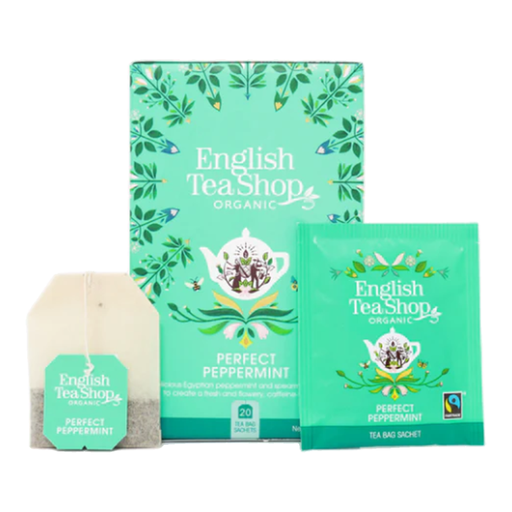 No image available
A peppermint option for someone who would rather serve a mint-led infusion than traditional black tea.
Check the pack’s ingredients, organic wording and caffeine information if those details determine your choice.
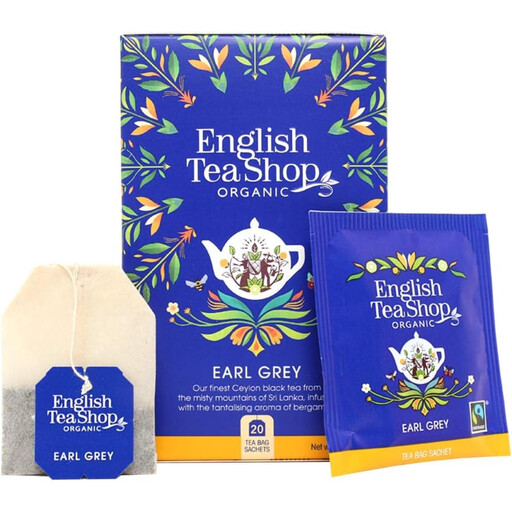 No image available
An Earl Grey option when the afternoon drinker prefers a black-tea style to a herbal infusion.
The title specifies 20 tea-bag sachets and 45g. Check the pack’s organic information and caffeine wording if either is important to the choice.
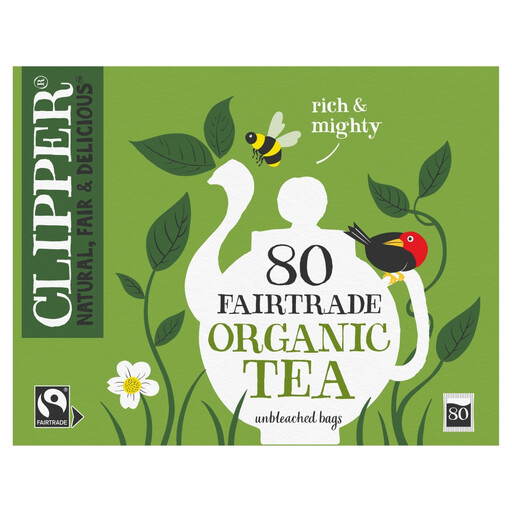 No image available
A black-tea option for a traditional afternoon cup when avoiding caffeine is not the priority.
The Joybuy product information identifies 80 bags, 232g and organically grown black tea. Black tea contains naturally occurring caffeine; check the individual pack’s organic information.
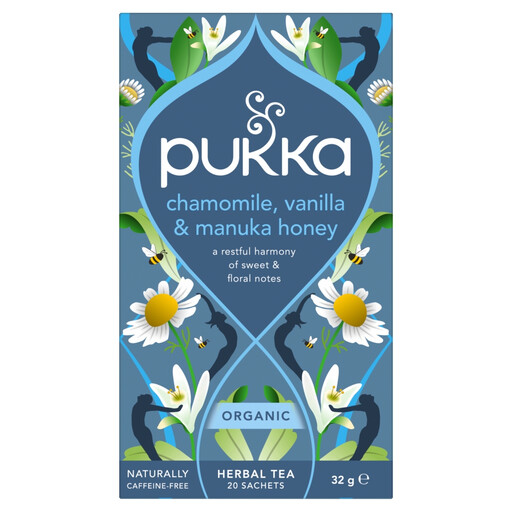 No image available
A camomile-led herbal option for someone who prefers an infusion to black afternoon tea.
The title specifies 20 sachets and 32g. The product information also identifies liquorice root among the ingredients; check the full ingredient list and pack advice for individual suitability.
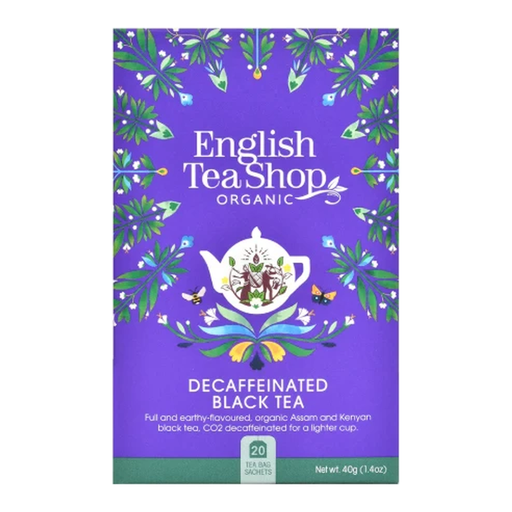 No image available
A decaffeinated black-tea option when a traditional tea style matters but reducing caffeine is also a consideration.
The title specifies a 20g pack. Decaffeinated does not mean naturally caffeine free; check the pack if a precise caffeine amount or its organic information matters.
It is a regulated food-labelling claim, not a general description of sustainability. The Department for Environment, Food & Rural Affairs says products may be labelled organic only if they meet organic production rules, so check the claim on the individual product.
No. Black tea contains naturally occurring caffeine regardless of its organic claim. For a different type of drink, Twinings labels its Organic Pure Camomile and Organic Pure Peppermint infusions naturally caffeine free.
Consider one when avoiding tea caffeine matters more than having a traditional black-tea flavour, particularly if caffeine affects sleep. NHS Borders advises avoiding caffeinated drinks that may disrupt sleep; check the infusion’s own caffeine wording.
Yes, it may affect when afternoon tea is served. University Hospitals Coventry and Warwickshire NHS Trust advises people following its iron-deficiency anaemia guidance not to drink tea within one hour before or after meals; individual clinical advice takes priority.
No. Rainforest Alliance sourcing and UK organic food labelling are different claims. If organic tea is required, check the individual pack for its organic claim rather than relying on an ethical-sourcing logo.