
24/7 Customer Support

Free returns

Same-day & Next-day Delivery

Quality Guaranteed

Unlock Your Welcome Offers: FREE Delivery | Up to 80% OFF | Free 30-day JoyPlus trial
Download the APP
Whether you're a footballer aiming for sharper turns, a sprinter looking to shave seconds off your time or a fitness enthusiast wanting to boost your explosive power, an agility training set is a fundamental part of your toolkit. However, the market is flooded with options that look promising online but fail to deliver in practice. Choosing the wrong kit can lead to frustration and wasted money.
As a Joybuy Product Recommendation Officer, my role is to help you navigate the options and identify the features that truly matter. This guide will highlight the common purchasing traps and break down the essential specifications to look for, ensuring you invest in equipment that supports your training goals.
Many promising-looking kits fall short in key areas. Being aware of these common issues is the first step towards making a smarter purchase.
A common complaint is equipment that simply doesn't last. Many budget sets use brittle, low-grade plastic for their sports training cones and ladder rungs. After a few sessions on a cold, damp morning at the local park, these components can crack or shatter when stepped on. The fabric on a resistance parachute for running might also be thin, with weak stitching that tears under the strain of a full sprint.
A kit might be advertised as an all-in-one solution, but its lack of adjustability can severely limit its use. A footwork ladder with fixed, non-movable rungs prevents you from customising drill difficulty or spacing. Similarly, a resistance parachute with a one-size-fits-all, non-adjustable belt will be ineffective or uncomfortable for many users, rendering a key piece of the athletic conditioning set useless.
Portability is crucial. A fantastic set of equipment is impractical if it's a nightmare to transport to and from your training location. Many manufacturers treat the carry bag as an afterthought, providing a flimsy, undersized bag with weak seams and straps. It might look fine in the product photo, but it often tears after just a few uses, forcing you to find an alternative way to carry your gear.
To avoid the traps above, focus on these non-negotiable features. They are the difference between a kit that hinders your progress and one that helps you achieve it.
The materials dictate the lifespan and performance of your equipment.
Your training needs will evolve, and your equipment should adapt.
A well-designed speed and agility training kit should be simple to pack up and carry. A durable carry bag made from strong fabric with reinforced handles or straps is a core component, not an accessory. It should be large enough to hold all the equipment without straining the zips or seams.
Based on these practical criteria, here are some recommendations matched to different user needs.
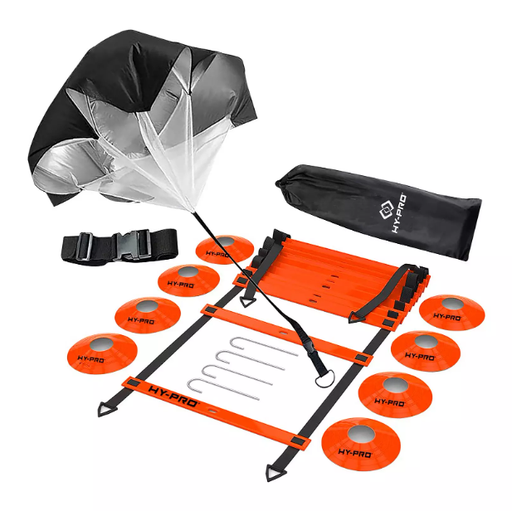
Why This Fits Their Persona: This user needs a complete, straight out of the box solution for varied training sessions, whether for football, athletics or general fitness. This set provides all the core components needed for a comprehensive workout without needing to buy items separately.
It directly addresses the pitfalls by including an adjustable agility ladder for versatile drills, durable components built for intense use and a dedicated carry bag that makes transport simple and practical.
A comprehensive kit that includes a resistance parachute, adjustable ladder and cones. All components fit neatly into the included carry bag for excellent portability.
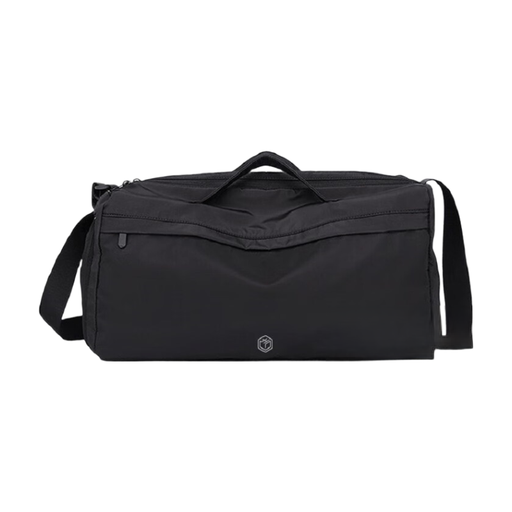
Why This Fits Their Persona: This user, often a coach or dedicated athlete, may already own some training gear but needs a superior way to organise and transport it. They value practicality, especially for separating muddy boots or sweaty gear from clean items after a session.
It solves the "afterthought carry bag" problem by being a purpose-built, durable transport solution. Its intelligent wet/dry separation system is a feature rarely found in the basic bags included with agility kits.
Features a dedicated ventilated compartment to keep wet or dirty gear separate. The durable construction and spacious main compartment can easily hold football training equipment, cones and other essentials.
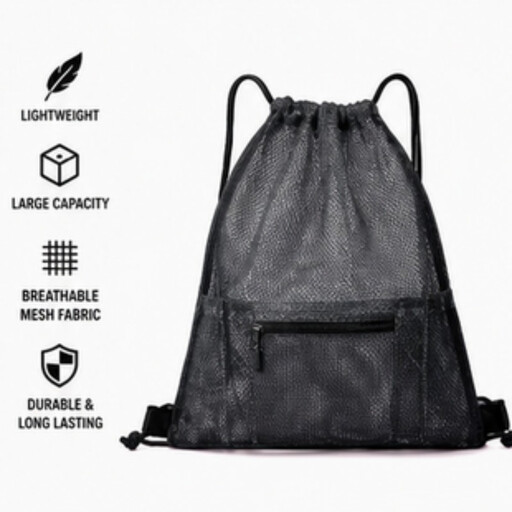
Why This Fits Their Persona: Ideal for the individual who travels light, perhaps cycling to the park or using public transport. They need a simple, no-fuss bag to carry essential items like cones, a skipping rope or resistance bands, without the bulk of a full gym bag.
This provides a durable and practical alternative to the poor-quality bags that come with many kits. The mesh design allows damp equipment to air out, while the zip pocket secures small valuables like keys and a phone.
Extremely lightweight and portable. The mesh construction is enduring and provides ventilation for gym gear and the added zipper pocket is a practical touch for organisation.
If you need a reliable bag to carry your new or existing equipment, we have compiled a complete, real-time list of products that satisfy these strict selection criteria.
Lay the ladder flat on your chosen surface, ensuring the straps are straight and untangled. If your ladder has adjustable rungs, space them evenly to a distance that suits your drill—typically around 40cm apart for standard agility work. For more advanced drills, you can create uneven patterns. Ensure the ladder is secured with the provided pegs if you are training on grass.
Yes, most quality agility training sets are designed for use on a variety of surfaces. On grass, you can use ground stakes (if included) to hold the agility ladder in place. On artificial turf, hard courts or indoor surfaces, the weight of the ladder is usually sufficient to keep it in position, though you should always ensure it lies flat to prevent tripping. Cones and parachutes are suitable for all these environments.
The lifespan of a kit depends entirely on its material quality and how it is cared for. A set made from brittle plastic and thin fabric may only last a single season, especially with frequent use. A kit built with durable, flexible plastics (like PE and PP) and reinforced fabrics can last for several years. To maximise its life, always clean and dry your equipment before storing it in its carry bag.