
24/7 Customer Support

Free returns

Same-day & Next-day Delivery

Quality Guaranteed

Unlock Your Welcome Offers: FREE Delivery | Up to 80% OFF | Free 30-day JoyPlus trial
Download the APP
For UK cyclists, AI AR smart glasses for cycling promise a more connected ride: navigation in your field of view, hands-free recording, music, calls and sports data without reaching for a phone. However, the category includes very different products. Some are full smart glasses with cameras and displays, while others are conventional cycling sunglasses with UV protection and adaptive lenses.
The right choice depends on how you ride, what your phone supports and whether you genuinely need connected features. Before buying, watch for these common pitfalls.
Product listings may use terms such as “HUD”, “smart cycling glasses” or “AR-ready” even when the glasses only provide audio. A genuine AR HUD cycling glasses model should state the display type, field of view and resolution.
For example, the LAWK ONE lists a binocular waveguide display with a 30° display field of view and 640 × 480 px resolution. That is materially different from photochromic or polarised cycling sunglasses, which have no digital screen.
A display should support glanceable information rather than encourage constant viewing. Keep your attention on traffic, junctions and trail conditions, and use a phone or bike computer when detailed route planning is necessary.
“Long battery life” does not mean the same thing for every rider. Camera recording, navigation, Bluetooth audio and repeated AI requests can reduce operating time compared with occasional music playback.
The LAWK ONE specification lists up to 8 hours of usage and a 300mAh battery, with approximately one-hour charging through a magnetic interface and USB connection. Actual results will depend on display brightness, recording length, calls and mobile connectivity. Check whether the charging method is convenient before a long ride.
Weather resistance ratings have limits. The LAWK ONE is listed as IPX4 water resistant and IP5X dust resistant, but its safety information says not to immerse it or use it in damp conditions. IPX4 generally indicates resistance to water splashes, not protection against submersion or prolonged downpours.
For changeable UK weather, carry a protective case or waterproof pouch. Never charge wet glasses, and check the manufacturer’s instructions before using them in persistent rain.
For navigation glasses for cyclists, check whether directions appear visually, arrive through audio, or both. A binocular waveguide display can place basic prompts in view, while Bluetooth cycling glasses without a screen normally rely on spoken instructions.
Also check:
Real-time translation and notifications can be useful off the bike, but they should not become a distraction in traffic.
Cycling glasses with camera functions vary considerably. Look for the camera pixel count, field of view, video resolution and recording duration rather than relying on phrases such as “first-person recording”.
The LAWK ONE has an 8MP camera, a 120° wide-angle field of view and 4K Ultra HD video. It supports clips from 15 seconds to five minutes, which may suit short ride highlights. Before purchase, check how files are transferred, how much storage is available and whether recording indicators are visible.
Respect privacy when using hands-free ride recording glasses. Avoid filming people unnecessarily, particularly in private spaces, and follow applicable UK privacy requirements when sharing footage.
Comfort affects whether sports smart glasses are used regularly. The LAWK ONE weighs 80g or more without lenses, while conventional options can be considerably lighter. For comparison, the OutdoorMaster LARK SV is listed at 25.5g, and several Revoray designs weigh approximately 30–33g.
For ordinary cycling sunglasses, prioritise:
Polarised lenses can reduce reflected glare from wet roads and vehicles, although some riders may find certain digital displays harder to read depending on their orientation. If you use a bike computer, test display visibility before committing to polarised lenses.
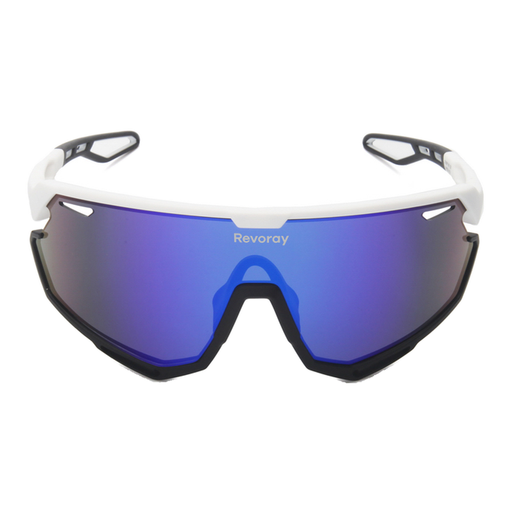
Why This Fits Their Persona: A straightforward option for commuters, weekend road riders and newcomers who need eye protection without paying for connected features.
It does not imply AR or AI capability. The listing clearly specifies a PC integrated lens, approximately 30g weight and UV400 protection.
One-piece impact-resistant PC lens, TR90 frame, aerodynamic shape and anti-slip nose and temple sections.
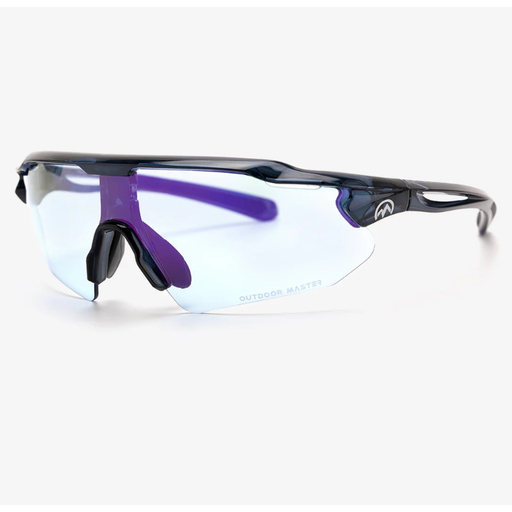
Why This Fits Their Persona: Suitable for riders covering mixed UK routes where sunlight, cloud and shade can change within the same journey.
The listing states the lens technologies and weights separately, rather than relying only on broad performance language. It also notes that photochromic lenses may not darken sufficiently behind vehicle windscreens.
TR90 frame, adjustable nose pads, UV400 protection, impact-resistant PC lenses and listed 26–29g weight range.
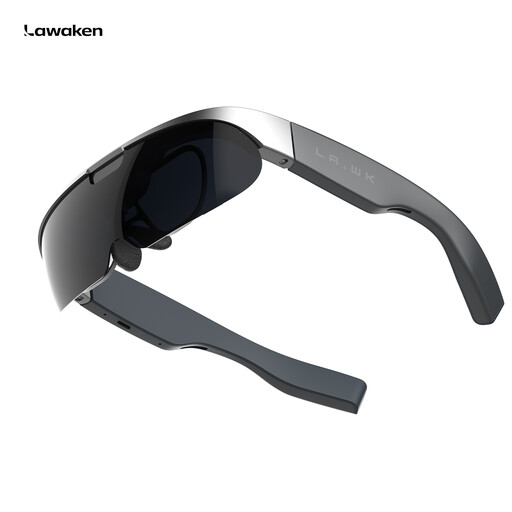
Why This Fits Their Persona: Designed for tech-focused cyclists who want navigation prompts, ride recording, calls, open-ear audio and AI assistance in one wearable system.
Its specification identifies the display, camera, battery, Bluetooth version, operating systems and IP ratings. Buyers can compare these concrete details instead of relying on the word “smart”.
8MP camera, 4K video, 120° camera FOV, Bluetooth 5.3, open-ear speakers, dual microphones and prescription-lens compatibility.
We have compiled a complete, real-time list of products that fully satisfy these strict selection criteria and UK safety regulations.
Before your first ride, fully charge smart glasses and pair them with your phone at home. Install required apps, download routes where supported and check whether navigation or AI functions depend on mobile data. Adjust the nose bridge and temples while stationary, then test audio at a safe volume.
Open-ear audio glasses can help you remain aware of surrounding sounds, but they do not replace normal road awareness. Do not use a camera or display while handling a junction, descending technical terrain or riding in conditions where visibility is already limited.
For longer ownership, clean lenses with water and a soft cloth, store the glasses in their case and avoid high temperatures. Replace scratched lenses promptly. Prescription smart glasses users should confirm the exact lens process, frame measurements and whether an inner prescription frame is included.
They can be used as a hands-free accessory, but safety depends on behaviour. Keep visual prompts brief, maintain awareness of traffic and avoid interacting with AI, recording controls or messages while moving. Open-ear audio should be kept at a level that allows surrounding sounds to remain audible.
Compatibility varies by model and app. The LAWK ONE listing specifies support for iOS and Android, Bluetooth 5.3 and LE Audio compatibility. Check your phone’s operating system, Bluetooth version and required application before ordering.
There is no universal figure because recording, display brightness, calls and navigation affect consumption. The LAWK ONE lists up to 8 hours of usage, but treat this as a stated specification rather than a guaranteed result for every ride. For touring or all-day events, confirm charging access and consider carrying a suitable power bank.