
24/7 Customer Support

Free returns

Same-day & Next-day Delivery

Quality Guaranteed

Unlock Your Welcome Offers: FREE Delivery | Up to 80% OFF | Free 30-day JoyPlus trial
Download the APP
For chess enthusiasts in the UK, the dream of a physical board that can think, play and teach is now a reality. An AI chess robot offers a unique way to sharpen your skills without more screen time. However, the market is filled with devices that promise much but deliver little, often becoming expensive novelties that gather dust.
Before you make a significant investment, it’s crucial to understand the common pitfalls. Many buyers find themselves disappointed by sluggish mechanics, limited AI or unexpected ongoing costs. Here are the key issues to watch out for:
To ensure your investment is a powerful training partner rather than a disappointment, focus on these core technical specifications.
The heart of any AI chess robot is its engine. This is typically measured by an ELO rating, which indicates playing strength. A board with a narrow or low-level ELO range will quickly become obsolete as your skills improve. Look for a wide range (e.g., from ELO 200 for absolute beginners to 2900+ for grandmaster-level challenges). Equally important is the built-in training content. A quality chess training robot should include a substantial library of drills, puzzles and an advanced chess endgame trainer without requiring extra payment.
How the board communicates moves is a defining feature. Basic electronic chess boards use LED lights to show you where to move the pieces yourself. While functional, this lacks the immersive experience of a true robotic opponent. A robotic arm chess set physically moves the pieces across the board, simulating a real-life game. Check the specifications for the arm's precision and speed; a well-engineered arm moves smoothly and quietly, enhancing the feeling of playing against a human opponent. This is the key difference between a simple electronic board and a genuine screen-free chess computer.
For many players, the ability to connect their physical board to the digital world is a game-changer. The most sought-after feature is integration with online chess platforms. The option to play Lichess on a physical board, for example, allows you to compete against human opponents from around the globe while the robot moves their pieces for you. This bridges the gap between over-the-board and online play, offering a rich and varied experience.
We've analysed the market based on the criteria above. Instead of a single "top pick," we've matched different products to the distinct needs of UK buyers.
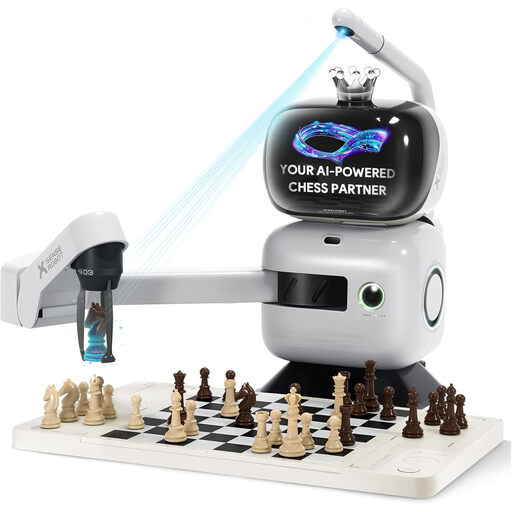
Why This Fits Their Persona: This is for the dedicated player who wants a comprehensive training partner. It's ideal for those looking to analyse their games, practise specific scenarios with voice coaching and challenge a powerful AI without being tied to a screen. The Lichess integration makes it perfect for serious online competitors in the UK.
It offers lifetime access to over 1,200 exercises with no subscription fees. After a one-time setup, it operates completely screen-free. The robotic arm is engineered for precision and a human-like pace.
A vast, subscription-free training library and seamless integration with Lichess.org for online play on a physical board.
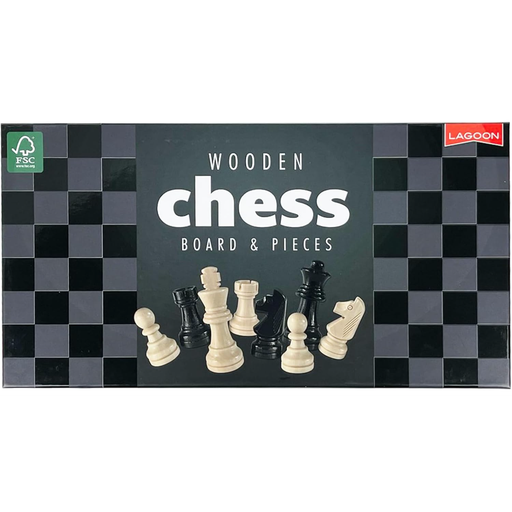
Why This Fits Their Persona: For the player who values the timeless, tactile feel of wood and wants a complete escape from technology. This is perfect for family game nights, quiet study in the park or anyone in the UK who believes the classic game needs no digital enhancement.
This set sidesteps all technology-related pitfalls. There are no subscriptions, no electronics to fail, no screens and no AI. It is a pure, classic chess experience.
Crafted from sustainable wood, it offers a durable and portable distraction-free game. It provides a pure, strategic challenge without any technological barriers.

Why This Fits Their Persona: Buying a high-tech gift like an AI chess robot is risky. This is for the person who wants to give a meaningful present but doesn't want to guess the recipient's technical preferences. It allows the chess player in their life to choose the exact equipment they need.
It completely removes the risk of purchasing an expensive but unsuitable piece of technology. The recipient can apply the value towards the AI robot that best fits their skill level and training goals.
Offers complete flexibility and ensures the gift is wanted and will be used. The card can be delivered instantly by email, making it a convenient option.
We have compiled a complete, real-time list of products that fully satisfy these strict selection criteria and UK safety regulations.
Most modern AI chess robots are designed for straightforward setup. Typically, it involves unboxing the unit, plugging it into a power source and connecting it to your home Wi-Fi via a companion app for a one-time configuration. After that initial step, high-quality models can operate independently without needing a phone or computer.
Yes, this is a key feature of many advanced models. Through Wi-Fi connectivity, they can integrate with popular online chess platforms like Lichess.org. When you play an opponent online, the robot's arm will automatically make your opponent's moves on your physical board, allowing you to enjoy a tangible, over-the-board experience while competing globally.
It can be an excellent tool for beginners, provided you choose the right one. A model with a wide range of AI difficulty levels, starting from a very low ELO, can act as a patient tutor. Features like move hints, take-backs and built-in lessons can help new players learn the fundamentals and build confidence. It provides a non-judgmental opponent that is always available for a game.