
24/7 Customer Support

Free returns

Same-day & Next-day Delivery

Quality Guaranteed

Unlock Your Welcome Offers: FREE Delivery | Up to 80% OFF | Free 30-day JoyPlus trial
Download the APP
AI smart glasses are moving beyond simple Bluetooth audio. Depending on the model, they can translate speech, answer calls, play music, record video, display navigation information or connect you with AI assistants. However, impressive feature lists can make it difficult to judge what will genuinely suit life in the UK.
Before buying, consider how the glasses handle battery use, privacy, prescription lenses, weather and mobile connectivity. These details often matter more than the number of languages or artificial intelligence tools advertised on the product page.
A listing may advertise 128 or 145 languages, but real-time translation usually depends on a companion app, smartphone connection and cloud services. Check whether the glasses require Android or iOS, whether translation works offline and whether additional usage limits apply.
For travellers, also consider how the translation is delivered. Audio translation may be useful in a conversation, while an in-view translation display can be easier to read discreetly. Neither should replace a qualified interpreter for legal, medical or safety-critical communication.
Many AI glasses are audio wearables with microphones and speakers but no visual display. This is useful for music, calls and voice-activated glasses functions, but it will not provide floating directions or on-screen captions.
If you want navigation prompts, teleprompting or visible translation, look specifically for AR display glasses or a micro-LED display. Camera-free display models may also be more acceptable in offices and social settings where recording could cause concern.
Smart glasses with a camera can capture photos and video from a first-person viewpoint. Meeting recording glasses may also collect voices, notes and transcriptions through an app or cloud platform. Always tell other participants before recording where appropriate and follow UK data protection and workplace policies.
Camera-free options reduce one obvious privacy concern, but microphones can still record audio. Review app permissions, account requirements, storage arrangements and deletion controls before use.
Open-ear smart glasses use directional speakers so you can hear music or calls while remaining aware of traffic and other surroundings. This is particularly relevant for commuters, cyclists and pedestrians. Keep the volume low enough to hear approaching vehicles and follow the manufacturer’s safety guidance.
Bluetooth version, device compatibility and microphone configuration also affect everyday use. Bluetooth 5.3 models may support efficient connections and simultaneous pairing with two phones, while dual microphones can assist call clarity and voice commands. Check whether the glasses work with your specific handset rather than relying on a general iOS or Android statement.
Battery figures normally refer to a particular usage pattern. Music streaming, calls, translation, camera recording and display functions can consume power at different rates. Compare the stated active-use time with your routine, not only the standby figure.
For example, the Lawaken AI Chat City range lists up to 12 hours of use and a one-hour charging time. The Verbex T5 lists an eight-hour battery and a two-hour charging time. Even G2 models list up to two days of regular use, with additional charging capacity in the supplied case. These figures should be treated as product specifications rather than a guarantee of your actual result.
Weight, temple shape and nose-pad adjustment determine whether smart glasses remain comfortable during a full working day. Lawaken AI Chat City models are listed at approximately 33g without lenses, while Even G2 models are listed at 36g. The LAWK ONE sports model is listed at more than 80g, reflecting its camera, display and outdoor-focused design.
Prescription-compatible smart glasses need careful checking. Some models accept prescription lenses, but the lenses may be customised and sold separately. Have replacements fitted by a qualified optician where required, particularly when the frame contains electronics.
IP ratings also need practical interpretation. IPX4 indicates limited protection against splashing, while IP65 indicates dust protection and resistance to water jets under specified test conditions. Neither rating means the glasses are suitable for swimming or submersion.
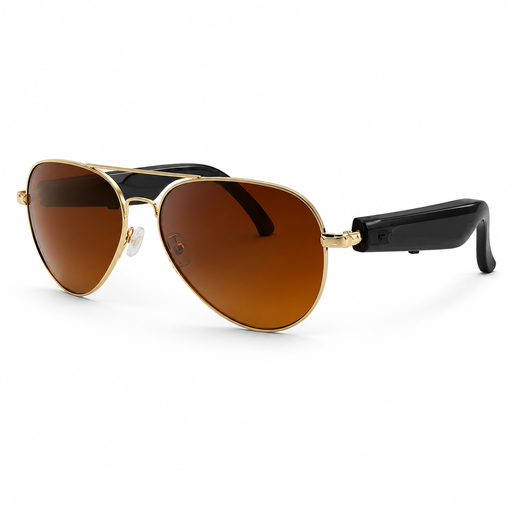
Why This Fits Their Persona: A practical introduction to Bluetooth audio glasses for calls, music, voice control and translation through a paired Android or iOS phone.
Its listed functions make the audio-only format clear, helping buyers avoid assuming it includes an AR visual display.
Supports translation in 125 languages, voice activation, calls, music and ChatGPT access; listed wireless distance is 10m or more.
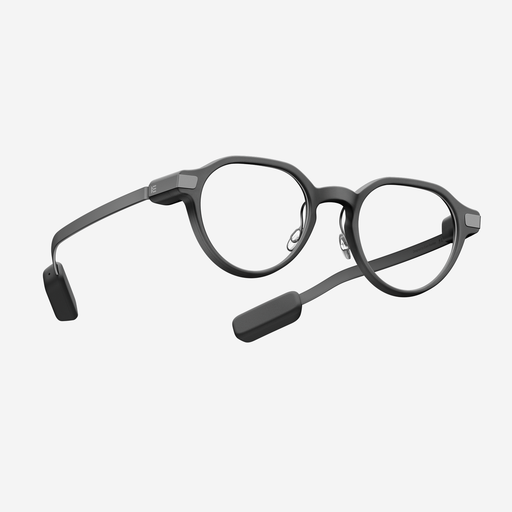
Why This Fits Their Persona: Suits professionals, presenters and privacy-conscious users who want discreet visual information without a camera.
The camera-free design makes the privacy approach explicit, while prescription lenses are identified as a separate custom purchase.
Micro-LED display, teleprompter, navigation and translation in 35+ languages; listed IP65 protection and 36g weight.
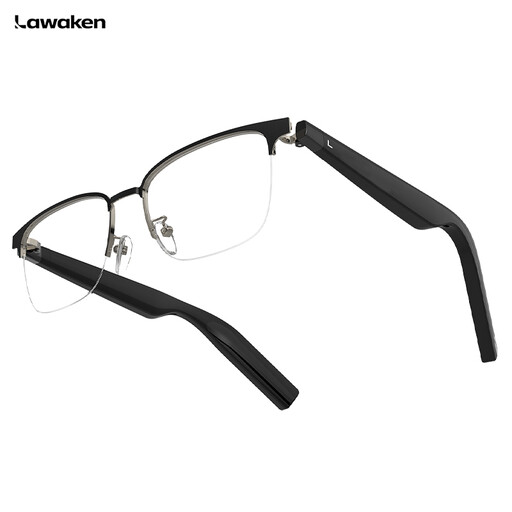
Why This Fits Their Persona: Designed for frequent travellers, commuters and professionals needing open-ear calls, AI assistance and meeting support.
The listing states the need for a phone connection and identifies prescription-lens fitting, privacy and volume awareness as practical considerations.
Lists 128-language translation, AI Note meeting summaries, ChatGPT, Gemini and Claude agents, plus 12-hour use.
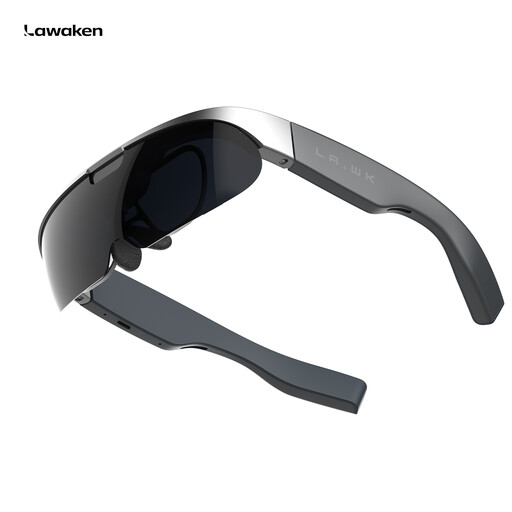
Why This Fits Their Persona: Made for cyclists and outdoor enthusiasts seeking an AR display, ride recording, navigation prompts and open-ear audio.
The product specification separates display, camera and battery details, making it easier to assess the trade-off between features and an eight-hour listed use time.
Lists a 4K camera, 120° camera field of view, 640 × 480 display resolution, UV380 protection and IPX4 water resistance.
We have compiled a complete, real-time list of products that fully satisfy these strict selection criteria and UK safety regulations.
Most models need a smartphone for setup, Bluetooth connectivity, translation services, AI assistants and app-based controls. Confirm the required app, operating system and account before purchase. A phone connection may also be needed for mobile data when travelling.
Battery life varies by activity. Audio-only use may last longer than camera recording, translation or AR display functions. The listed figures in this range include approximately eight hours, 12 hours or up to two days of regular use, depending on the model. Charging cases and magnetic charging systems can help during commuting or travel.
Some models are prescription-compatible, but replacement lenses may be customised and sold separately. Check the frame specification and have lenses fitted by an optician where appropriate. Do not assume that a standard pair of prescription lenses will fit an electronic frame safely.