
24/7 Customer Support

Free returns

Same-day & Next-day Delivery

Quality Guaranteed

Unlock Your Welcome Offers: FREE Delivery | Up to 80% OFF | Free 30-day JoyPlus trial
Download the APP
AI smart glasses promise a future of seamless, hands-free interaction with the digital world. For busy professionals, international travellers and tech enthusiasts, the appeal is undeniable: instant language translation, on-the-go meeting notes and a personal AI assistant, all housed in a discreet pair of spectacles. However, the market is filled with devices that over-promise and under-deliver.
Before you invest, it is crucial to see past the marketing hype. Many buyers find themselves disappointed by products that fail on fundamental features. Here are the most common pitfalls to watch for.
wearable AI assistant should provide advanced functions like summarising conversations, answering complex queries independently or integrating with powerful models like ChatGPT.open-ear audio glasses concept is brilliant for maintaining situational awareness. However, poorly designed models suffer from significant sound leakage, meaning your private calls or music are broadcast to everyone around you on the train or in the office.prescription smart glasses UK models that are genuinely compatible can be a challenge.To avoid disappointment, focus your attention on a few key technical specifications. These are the non-negotiable elements that separate a genuinely useful tool from a costly gadget.
The most important question to ask is: what does the AI actually do? Look for specifics. Does the device offer smart glasses with ChatGPT or other large language model integration? This is the difference between asking your glasses for the weather and having them draft an email or summarise a meeting for you. A key feature for many is a built-in real-time translator, so check the number of languages supported and the mechanism it uses. A device that processes requests on-board or through a dedicated service will always outperform one that just piggybacks on your phone's standard voice assistant.
For audio glasses for calls or smart glasses for meetings, the audio system is paramount. High-quality models use directional audio technology, which focuses the sound towards your ears and minimises leakage. This ensures your conversations remain private. Equally important is the microphone array. Look for devices with dual microphones and noise-cancellation technology. This allows your voice to be picked up clearly, even in a bustling city street or a noisy café, making hands-free communication practical and reliable.
Comfort and practicality are essential for any wearable. Check if the frames are made from lightweight yet durable materials like TR90, which can withstand daily use without feeling heavy. More importantly, verify that the model is explicitly compatible with prescription lenses. This usually means you can take the frames to your local optician to have custom lenses fitted. Some models also offer a modular design with interchangeable frames, allowing you to switch between clear lenses for the office and sunglasses for outdoors.
Instead of a one-size-fits-all approach, we have matched our recommendations to specific user needs. This ensures you get a device that genuinely enhances your daily routine.
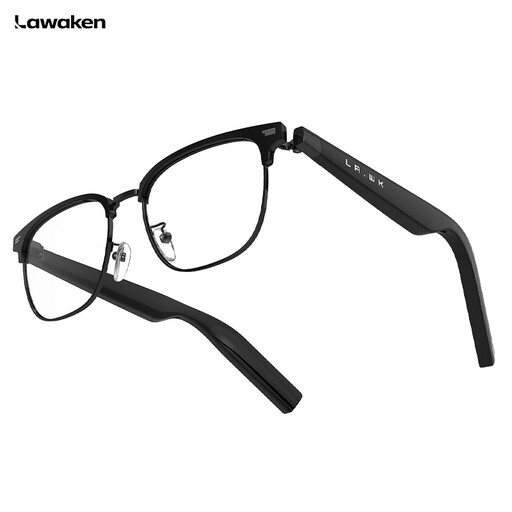
Why This Fits Their Persona: For professionals frequently navigating different countries, this device acts as a personal interpreter. The ability to handle conversations in 128 languages and generate meeting summaries directly addresses the core needs of international business.
It moves beyond the "AI illusion" by offering a dedicated AI Note function for meeting summaries and genuine integration with AI agents like ChatGPT, Gemini and Claude.
Extensive real-time translation capabilities and compatibility with prescription lenses make it a highly practical tool for global use.
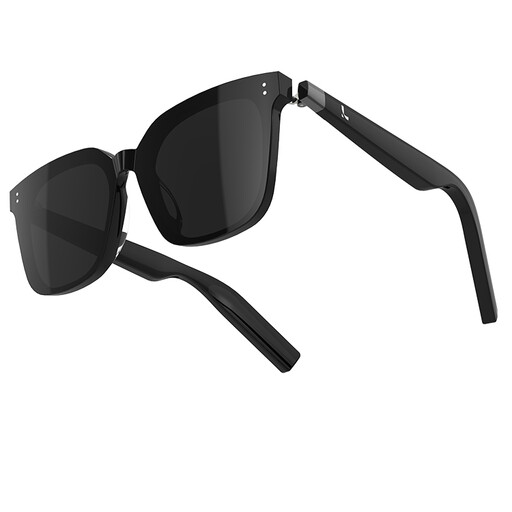
Why This Fits Their Persona: Perfect for the professional who is always on the move. The open-ear audio allows for taking calls and listening to music while staying aware of traffic and the hands-free AI assistant helps manage tasks without ever reaching for a phone.
The dual-speaker and dual-microphone system is designed for clear audio with minimal leakage, directly addressing the "public broadcast" problem common in lesser audio glasses.
A long usage time of up to 12 hours and a lightweight, modular design ensure it is comfortable and reliable for all-day wear during a busy work week.
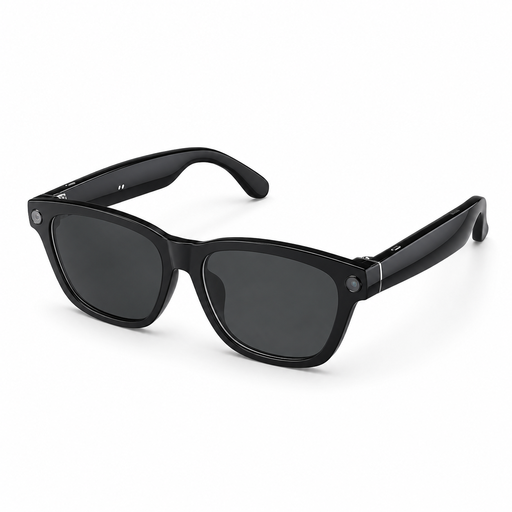
Why This Fits Their Persona: For early adopters and creators who want to capture life from a first-person perspective, the integrated camera for photos and videos is a standout feature. It combines media capture with the full suite of smart functions.
This device integrates multiple functions—camera, translation and ChatGPT access—into one package, avoiding the trap of being a single-purpose gadget with limited utility.
Voice-activated controls for shooting video and taking photos offer a truly hands-free content creation experience, complemented by AI translation and assistant features.
We have compiled a complete, real-time list of products that fully satisfy these strict selection criteria and UK safety regulations.
Battery life varies significantly based on usage. For most models, you can expect around 8 to 12 hours of mixed use, which includes listening to music, taking calls and using AI features. On standby, many can last for several days. Features like real-time translation or video recording will consume power more quickly, so it is wise to check the manufacturer's specifications for different usage scenarios.
Yes, but only for specific models. It is essential to check that the product is listed as "prescription compatible" before you buy. This means the frame is designed to allow an optician to replace the default lenses with your custom prescription lenses. You will need to purchase the frames first and then take them to your preferred optical store for fitting.
High-quality open-ear audio glasses use directional sound technology to focus audio towards your ear canal, which greatly minimises how much sound escapes. In a moderately noisy environment like an office or a city street, your audio should be largely private. However, in a very quiet room, a person sitting right next to you might hear a faint sound. They are designed for privacy in everyday situations, not for complete silence like in-ear headphones.