
24/7 全天候客户支持

免费退货

当日/次日达

品质保障

开启新人专享福利: 全场免邮 | 低至 2 折 | 免费试用 30 天 JoyPlus 会员
下载 Joybuy
For dedicated tennis players in the UK, finding consistent, challenging practice is key to improving your game. Solo drills can only take you so far, and coordinating with a hitting partner of the right skill level isn't always possible. This is where the modern AI tennis ball machine steps in, transforming how players train. Far from the simple launchers of the past, today's smart tennis trainers offer a level of customisation and realism that can genuinely elevate your performance.
As the Joybuy Product Recommendation Officer, my role is to help you navigate the options. This guide will walk you through the key features to consider and present our top recommendations for 2026, helping you find a training partner that’s ready whenever you are.
Selecting the right tennis practice robot involves looking beyond ball capacity. For the serious player, the intelligence and adaptability of the machine are what truly matter. Here are a few key factors to consider.
The main advantage of an AI-powered machine is its ability to simulate real match play. Look for a customisable tennis drills machine that allows you to program sequences. A quality tennis ball launcher with app control is now standard, offering an intuitive interface to adjust speed, spin, trajectory and placement for each shot. For ultimate convenience during a session, a voice controlled tennis machine allows you to make adjustments hands-free, keeping you in the flow of your practice without reaching for your phone.
Your training shouldn't be limited by logistics. A portable tennis ball machine is essential for players who practise at different clubs or courts. Check the weight and design—some models feature integrated wheels or a suitcase-style build for easier transport. Battery life is equally important. A machine should offer at least three to four hours of playtime on a single charge to cover a full training session. Models with swappable batteries offer even greater flexibility.
A machine's ability to replicate a wide range of shots is crucial. Pay attention to the specifications for maximum ball speed and spin rate (measured in RPM). Higher-end models can deliver everything from flat, powerful serves to heavy topspin groundstrokes and sharp slices, challenging your reaction time and footwork just like a human opponent. Some advanced systems even use camera modules to analyse your position and shot returns, adapting their patterns in real-time.
Here are our standout selections for players looking to invest in an advanced tennis training partner this year.
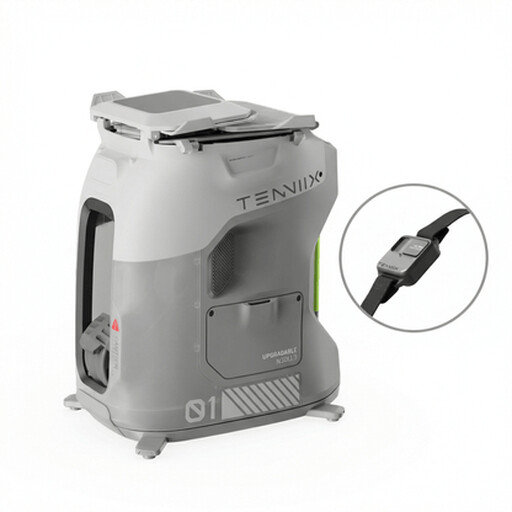
Why It Stands Out: The TENNIIX Basic offers a fantastic entry point into the world of AI-driven training without compromising on core features. Its standout feature is the modular design, allowing you to upgrade to the Pro version later by adding the AI camera module. The smart LED display is another unique touch, providing at-a-glance information on the upcoming shot type and direction.
Pros:
Who is it for? This is an excellent choice for ambitious beginners and intermediate club players who want a powerful, portable and intelligent training tool with the option to upgrade to more advanced features in the future.
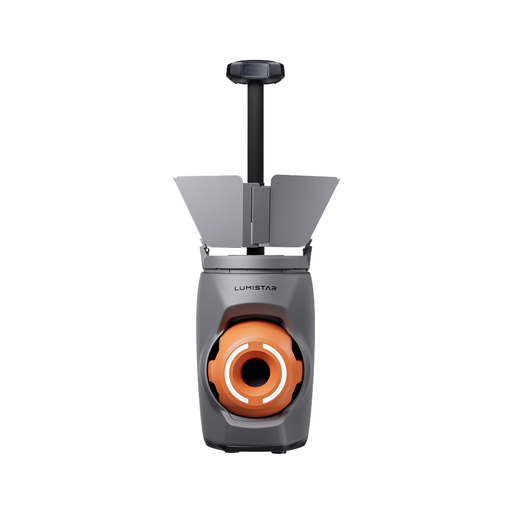
Why It Stands Out: The Lumistar Tero is engineered for performance and convenience. Its all-in-one suitcase design is a major practical advantage, allowing you to pack the machine, balls and even a racket into a single, easy-to-move unit. It also boasts an impressive top speed, making it suitable for advanced players looking to practise against high-pace shots.
Pros:
Who is it for? Players who prioritise convenience and high-performance serving will find the Lumistar Tero very appealing. Its combination of power, portability and intelligent modes makes it a formidable tennis robot trainer for competitive practice.
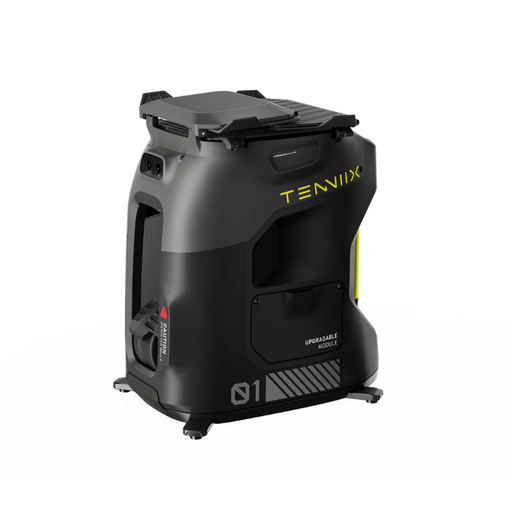
Why It Stands Out: The TENNIIX Pro represents the next level of solo training. By integrating a dual-camera Vision Module (shipped separately), this machine moves beyond pre-programmed drills. It actively tracks the ball and analyses your shots in real-time, creating a responsive and dynamic training session that feels like playing against a real person.
Pros:
Who is it for? The TENNIIX Pro is designed for serious competitive players and professional coaches. If you are looking for a training partner that can analyse, adapt and push you to your limits, this is a leading option.
If the models above don't perfectly match your needs, or if you're interested in exploring a wider variety of training aids, we have a curated collection of equipment.
? Explore our full range of professional trainers here.
A regular tennis ball machine typically offers basic controls for speed, frequency and sometimes oscillation in a fixed pattern. An AI tennis ball machine uses advanced software, often paired with an app, to create complex, customisable drills. They can randomise shot placement, speed and spin to simulate a real match, and some high-end models use cameras to react to your position and shots.
Yes, the technology has become quite robust. Modern voice control systems, usually operated via a wristband or armband, are designed to recognise simple, clear commands like "start," "stop" or instructions to change a drill. This allows for a seamless training experience where you can stay in position and maintain your rhythm without fiddling with a remote or phone.
Portability varies, but manufacturers have made it a key focus. Many leading models weigh between 8 kg and 15 kg and often include features like built-in wheels, telescopic handles or suitcase-style designs. Always check the product weight and dimensions to ensure it fits your transport and storage needs. Battery life is also a component of portability, with most offering 3-4 hours of use away from a power source.