
24/7 Customer Support

Free returns

Same-day & Next-day Delivery

Quality Guaranteed

Unlock Your Welcome Offers: FREE Delivery | Up to 80% OFF | Free 30-day JoyPlus trial
Download the APP
AI translation earbuds can make conversations across languages more convenient, while still working as everyday Bluetooth audio devices. However, the translation function is rarely contained entirely within the earbuds. Most models rely on a smartphone app, an internet connection and compatible language software.
That makes careful selection important for UK travellers, international professionals, students and commuters. A product with an impressive language count may not suit a noisy railway station, a long flight or a full working day. The following guide explains what to check before buying and highlights suitable options for different lifestyles.
Many real-time translation earbuds use Bluetooth to connect to an Android phone, iPhone or tablet. The app then processes speech and delivers translated audio through the earbuds or phone. Check whether:
For business, medical or legal conversations, translation earbuds should not replace a qualified interpreter. AI translation can be affected by accents, slang, specialist terminology and background noise.
A listing that states support for 130 or 150 languages describes the advertised software capability, not guaranteed accuracy in every situation. Check whether the languages you actually need are included and whether two-way translation, automatic language detection and conversation mode are supported.
For occasional holidays, a simple Bluetooth translation headset may be sufficient. For regular meetings or language study, look for a clearly explained app experience and reliable microphone performance.
Terms such as “waterproof”, “moisture-resistant” and an IP rating do not all mean the same thing. An IP55 rating, for example, indicates tested resistance to dust ingress and water jets under specified conditions; it does not mean the earbuds can be submerged. Other products may only be described as suitable for sweat or light splashes.
For running or gym use, check the stated rating and keep the charging case dry. Do not wear ordinary translation earphones in heavy rain unless the manufacturer specifically permits it.
Most smart translation earphones use Bluetooth 5.4 or Bluetooth 6.0 for the connection between the earbuds and your phone. Bluetooth version can influence pairing and power efficiency, but it does not by itself determine translation quality.
Look for useful everyday features such as:
Manufacturers commonly quote separate figures for earbuds alone and total use with the charging case. For example, some compact models provide around 5–7 hours of playback, while the case extends total listening time over several charges.
Translation, calls, high volume and noise cancellation can consume power more quickly than basic music playback. If you are selecting translation earbuds for travel, consider whether you can recharge at an airport, on a train or in a hotel. A visible battery display can also reduce uncertainty before leaving home.
In-ear, semi-in-ear and ear-hook designs suit different users. Ear-hook models can feel more secure during walking or fitness activities, while in-ear tips may provide a closer acoustic seal. If several tip sizes are supplied, try them carefully to balance comfort and sound isolation.
Noise cancellation can improve music and calls, but it is not a substitute for a high-quality translation app or a quiet speaking environment. In busy UK stations, cafés or open-plan offices, face the speaker and pause between sentences for clearer results.
Before purchase, check that the product listing provides appropriate manufacturer or UK responsible-person information, safety instructions and charging details. Also follow the supplied guidance on hearing safety, moisture and battery care.
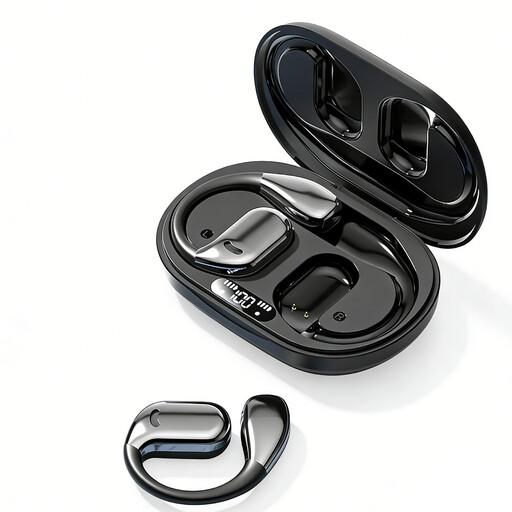
Why This Fits Their Persona: A straightforward in-ear option for first-time buyers wanting app-based translation for holidays, study sessions and everyday Bluetooth listening.
The listing states that the app is required, helping set realistic expectations rather than suggesting the earbuds work as a standalone translator.
Bluetooth 5.4, touch control, sound isolation and approximately 5–7 hours of playback.
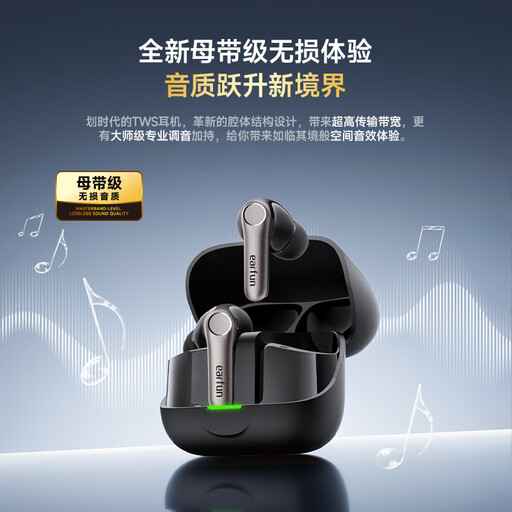
Why This Fits Their Persona: Suited to commuters, frequent flyers and professionals who want translation features alongside more advanced music, call and connectivity functions.
The product information notes that translation requires the updated app and an internet connection, rather than presenting it as an offline feature.
Adaptive hybrid ANC, Bluetooth 6.0, multipoint connection, IP55 rating and up to 54 hours with the charging case.
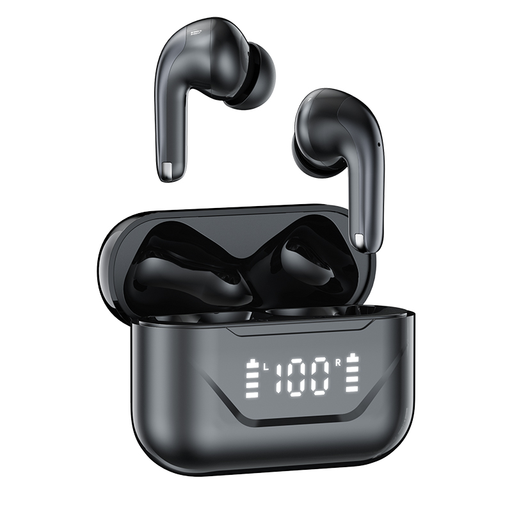
Why This Fits Their Persona: Designed for users moving between calls, meetings, language learning and translation apps on two devices.
The stated two-way translation is app-based, while the battery figures separate music playback from talk time for clearer planning.
Bluetooth 5.4, dual-device connection, touch control and approximately 7–8 hours of music playback per charge.
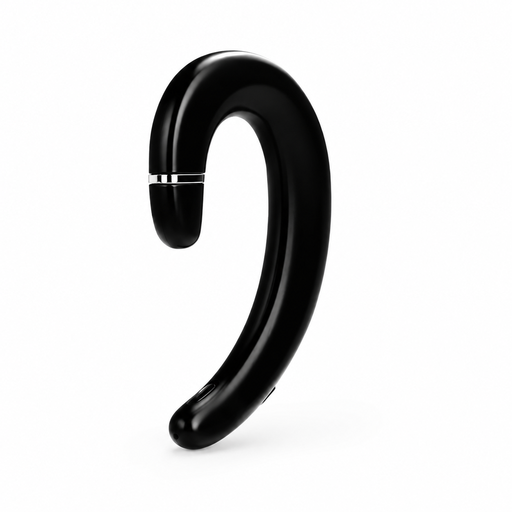
Why This Fits Their Persona: The single-ear, ear-hook style can suit travellers and commuters who want to hear nearby announcements and surroundings.
Its single-ear format makes the wearing style clear, and the listing identifies the app pairing process and approximately 5–7-hour playback range.
Bluetooth 5.4, touch control, USB-C charging and a stated translation capacity of approximately 130 languages.
We have compiled a complete, real-time list of products that fully satisfy these strict selection criteria and UK safety regulations.
Use a moderate listening volume and never wear earbuds while driving, cycling or crossing roads if they reduce your awareness.
Usually, no. Many smart translation earphones depend on a mobile app connected by Bluetooth, and some functions require internet access. Always check the individual product instructions for offline language support.
The main ongoing costs may include charging electricity, mobile data and any optional app or language-service fees. Wi-Fi can help reduce mobile data use while travelling, but check the app’s terms before relying on it overseas.
No device can guarantee perfect results in every environment. Speech may be affected by accents, slang, fast talking, specialist terms and background noise. Ask speakers to use short, clear sentences and verify important information independently.