
24/7 Customer Support

Free returns

Same-day & Next-day Delivery

Quality Guaranteed

Unlock Your Welcome Offers: FREE Delivery | Up to 80% OFF | Free 30-day JoyPlus trial
Download the APP
For travellers, international students and professionals working across languages, AI translation earbuds promise hands-free conversations without carrying a separate device. However, a high language count or a Bluetooth logo does not automatically mean a smooth translation experience.
Before buying, UK shoppers should look beyond promotional wording and check how the earbuds actually operate. App compatibility, internet requirements, microphone performance, battery life and comfort can make a greater difference than headline features. The following guide explains the main pitfalls and highlights suitable options for different users.
Many real-time translation earbuds use a companion smartphone app and an internet connection. “Supports 150 languages” may refer to the app’s online translation library rather than languages stored on the earbuds themselves.
If you are travelling through areas with limited mobile data or unreliable Wi-Fi, check whether offline translation is available and how many languages it covers. A dedicated offline translation device, such as the Rexsun Z2, may be more suitable where connectivity cannot be guaranteed.
Some Bluetooth translator earbuds are primarily wireless headphones. They may work with a phone’s translation app, but the translation processing takes place on the phone or in the app rather than inside the earbuds.
This is not necessarily a disadvantage, but buyers should understand the setup. You may need to download an app, grant permissions, select source and target languages and keep the phone nearby. Products described as an AI translator headset should still be checked for their exact app requirements.
Translation conversations can last longer than a typical music session. In-ear designs may provide a more enclosed fit, while ear-hook or open-ear styles can feel more secure for walking and commuting.
Also check the difference between earbud battery capacity and total battery life with the charging case. Water resistance varies considerably. For example, some models advise avoiding prolonged humidity, while the Lawaken smart glasses specify IPX4 water resistance and IP5X dust protection. Neither should be treated as suitable for submersion.
Look for clear information about:
A device supporting 150 languages may be useful for broad travel coverage, but highly technical jargon, slang, accents and loud surroundings can still affect results. Do not rely on a consumer translation device for medical, legal or emergency communication.
Bluetooth 5.4 appears across several VoxorAI models and supports wireless pairing with compatible phones. The listed transmission distance is up to 15 metres in suitable conditions, although walls, crowds and other wireless devices may reduce this.
Before purchasing, confirm that the companion app supports your Android or iOS phone. Also consider whether you need dual-device connection. The FITTEK model is listed with simultaneous connection to two wireless devices, which can help users switch between calls, meetings and translation apps.
For regular travel or business use, compare:
The VoxorAI M75, M112, M113, M76, V90 and XH12 models list approximately 5–7 hours of use, with a 300mAh charging case. The FITTEK earbuds list around 7–8 hours of music playback or 6–7 hours of talk time per charge. These figures are useful for comparison, but actual results vary with volume, app activity and network use.
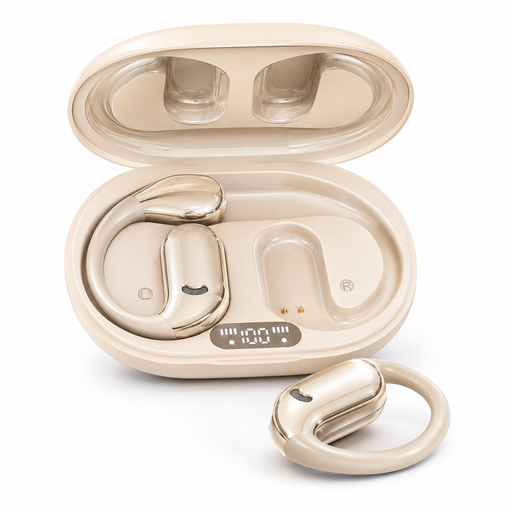
Why This Fits Their Persona: A compact in-ear option for first-time buyers who want wireless audio and app-based translation for holidays, study and everyday conversations.
The listing states the need to download a dedicated app and pair through Bluetooth, making the operating method clearer than a vague built-in translation claim.
Bluetooth 5.4, touch control, approximately 150 supported languages and around 5–7 hours of listed use.

Why This Fits Their Persona: A hands-free alternative for professionals and travellers who prefer open-ear audio, meeting notes and glasses rather than conventional earbuds.
Its specifications identify Bluetooth pairing, open-ear speakers, microphone details and IPX4 protection, so shoppers can assess the format and limitations before buying.
Supports translation in 128 languages, AI note features, dual microphones, two-phone connection and listed 12-hour usage.
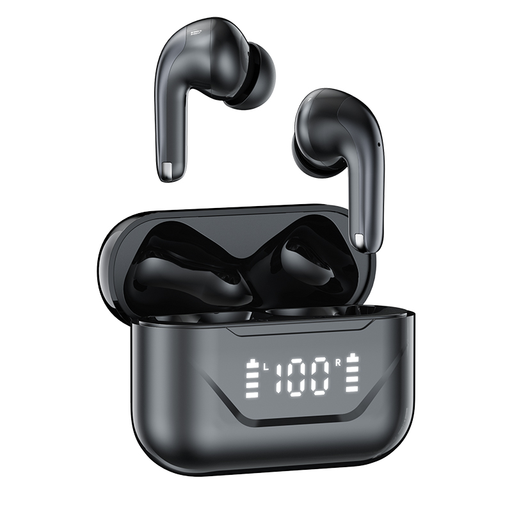
Why This Fits Their Persona: Suitable for business users, students and commuters who regularly switch between calls, music, meetings and two-way translation.
The listing separates music playback and talk-time figures and states that two-way translation operates via an app, helping set realistic expectations.
Bluetooth 5.4, 13mm dynamic drivers, dual-device connection, touch controls and approximately 6–7 hours of listed talk time.
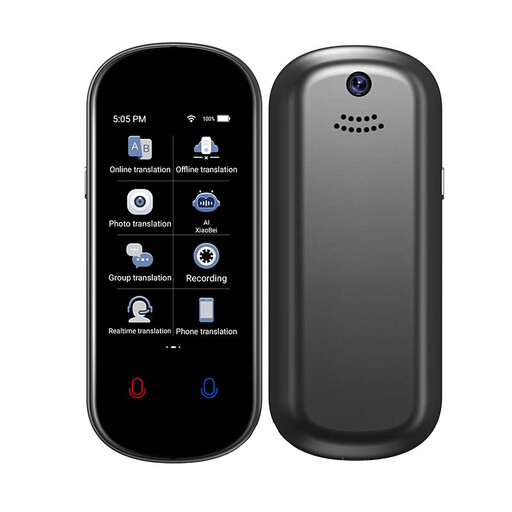
Why This Fits Their Persona: A practical choice for tourists, business travellers and language learners who want voice, photo and text translation in one separate device.
It clearly lists online coverage of 139 languages and offline support for 17 languages, rather than presenting online language coverage as universal offline access.
Supports voice, photo and text translation, Wi-Fi, mobile hotspot and offline modes in a compact metal-finish body.
We have compiled a complete, real-time list of products that fully satisfy these strict selection criteria and UK safety regulations.
Many rely on a smartphone app and online processing, so they generally need Wi-Fi or mobile data. Check the product listing carefully. Some devices offer limited offline language packs, while others are designed mainly for online translation.
Some models provide two-way translation through an app, touch mode or free-talk mode. The exact arrangement varies: both people may share one device, use separate earbuds or speak towards the phone. Confirm the supported mode before purchase.
Listed figures commonly range from around 5 to 8 hours, depending on the model and whether you are listening to music, making calls or using translation. Translation may consume more power than basic audio, so a charging case is useful for longer travel days.