
24/7 Customer Support

Free returns

Same-day & Next-day Delivery

Quality Guaranteed

Unlock Your Welcome Offers: FREE Delivery | Up to 80% OFF | Free 30-day JoyPlus trial
Download the APP
The promise of AI translation glasses is compelling: a world without language barriers, where conversations flow as freely in Tokyo as they do in London. As this technology moves from science fiction to a practical tool, many are looking to invest. However, the market is filled with devices that over-promise and under-deliver. As a Joybuy Product Recommendation Officer, my role is to help you see past the marketing claims and identify the features that truly matter.
Before you invest in a pair of these smart glasses, be aware of the common pitfalls that can lead to disappointment and a wasted purchase.
To ensure you get a device that enhances your productivity rather than hindering it, focus on these non-negotiable parameters.
The "brain" of the device is everything. Look beyond the language count and investigate the underlying technology. The most capable devices now function as a wearable AI assistant, integrating with powerful models like ChatGPT, Gemini or Claude. This transforms them from a simple real-time language translator device into a powerful work tool. A key feature to look for is a hands-free meeting summary tool, which can record discussions and generate concise notes, saving you valuable time.
The physical design dictates daily usability. Open-ear music glasses are a prime example of good design, allowing you to hear your audio clearly while maintaining full awareness of your surroundings—a crucial safety feature in busy urban environments. Key hardware specifications to check include:
Seamless operation depends on a stable connection and reliable power. Bluetooth 5.3 is the current standard to look for, offering improved stability, range and energy efficiency. For battery, don't just look at the standby time. The "active usage" time is the real metric. A good benchmark is 8-12 hours of continuous use, which should cover a full workday or a long-haul flight. Fast charging is also a significant plus, allowing you to top up the battery quickly when needed.
We've analysed the market based on the critical parameters above. Here are our recommendations, matched to specific user needs.
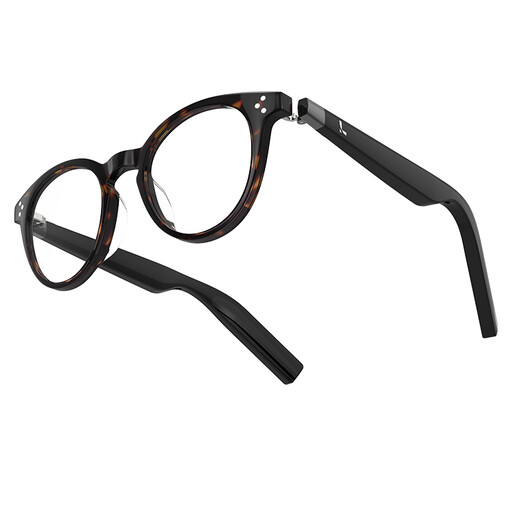
Why This Fits Their Persona: This device is built for the international business traveller or remote professional who relies on seamless communication and efficiency. Its integration with multiple AI agents (ChatGPT, Gemini, Claude) and the dedicated AI Note feature for meeting summaries directly address high-stakes professional needs.
It specifies a practical 12-hour usage time, is lightweight at 33g and explicitly states compliance with UKCA and RoHS standards, ensuring safety and transparency. The focus is on powerful AI integration, not just a high language count.
The standout AI Note meeting summary function is a genuine productivity multiplier. It also supports prescription lenses and features a modular design with interchangeable frames for personalisation.
For those who prioritise style and daily convenience—listening to music, taking calls and using an AI assistant on the go—the key is finding a balance between aesthetics and function. Many fashion-forward smart glasses compromise on advanced AI features. You should look for models with interchangeable frames, excellent open-ear audio quality for music and a stable Bluetooth 5.3 connection. While they may not offer the deep productivity tools of a specialised device, they can serve as a great all-in-one wearable for your modern lifestyle.
If you are curious about AI glasses but have a limited budget, caution is advised. Entry-level models often make significant compromises that undermine the core experience. Be particularly wary of devices with poor microphone quality, as this will render the translation feature inaccurate and frustrating. Short battery life and a lack of clear information on software support or data privacy are also common issues. In this segment, it is crucial to verify that the product carries the necessary UKCA mark for safety and compliance.
We have compiled a complete, real-time list of products that fully satisfy these strict selection criteria and UK safety regulations.
Yes, many modern AI glasses are designed with this in mind. Models like the LAWAKEN AI Chat City are compatible with prescription lenses. Typically, you would purchase the frames and then take them to your optician to have custom lenses fitted, just as you would with a standard pair of glasses.
This varies significantly by model and usage. A high-quality pair should offer between 8 to 12 hours of active use, which includes translation, streaming music or taking calls. Standby time is often much longer, but the active usage figure is the most important one for real-world performance. Intensive tasks like continuous translation will drain the battery faster than occasional use.
This depends on the manufacturer's business model. Some glasses include all AI functionality in the purchase price. Others, especially those integrating with powerful third-party AI like ChatGPT, may offer a basic service for free but require a monthly subscription for advanced features or higher usage limits. It is essential to check the terms of service before purchasing to avoid unexpected ongoing costs.