
24/7 Customer Support

Free returns

Same-day & Next-day Delivery

Quality Guaranteed

Unlock Your Welcome Offers: FREE Delivery | Up to 80% OFF | Free 30-day JoyPlus trial
Download the APP
Hands-free language technology can make a journey, meeting or study session easier, but product pages often make translation devices sound simpler than they are. AI translation glasses and earbuds usually rely on a smartphone app, Bluetooth and, for many languages, an internet connection. The right choice depends less on the largest language number and more on how the device fits your routine.
A listing may advertise 125, 128 or 150 languages, but this does not necessarily mean every language works offline, in both directions or with the same functions. Some devices require an app and mobile data for real-time conversation. Others may offer offline support only for a smaller selection.
Before buying, check:
Real-time translation can still be affected by accents, slang, technical terms, overlapping speech and background noise. The VoxorAI M75 listing, for example, warns that highly technical jargon, heavy slang and loud environments may affect results. Treat translation gadgets for business and travel as communication aids, not replacements for a qualified interpreter in legal, medical or safety-critical situations.
A device that is uncomfortable after 30 minutes is unlikely to be useful on a long flight or at a conference. In-ear, semi-in-ear and ear-hook designs feel different, while open-ear smart glasses allow more awareness of surrounding sounds.
Also check the difference between earbud playback time, charging-case capacity and standby time. Water resistance ratings are not interchangeable: IPX4, IPX5 and “moisture-resistant” indicate different levels of protection. None should automatically be treated as suitable for immersion.
Most real-time translation earbuds connect to a mobile phone through Bluetooth and use a companion app. Bluetooth 5.4 can provide a current wireless connection, but it does not itself translate languages. Translation processing may take place through the app or an online service.
Handheld devices can be more self-contained. The Rexsun Smart Voice Translator supports online translation in 139 languages and offline translation in 17 languages, with voice, text and photo modes. This format may suit users who do not want to wear audio equipment throughout the day.
For smart translation glasses, check whether the glasses perform translation independently or pass audio through a phone. Models such as the Lawaken AI Chat City range pair with iOS and Android devices and also provide calls, open-ear audio and AI assistant functions.
For commuting, study or business travel, compare the stated working time with your actual use. The VoxorAI M75, V90 and M76 models list approximately 5–7 hours of playback, with 40mAh earbuds and a 300mAh charging case. The FITTEK Smart Translation Earbuds list approximately 7–8 hours of music playback or 6–7 hours of talk time per charge.
Smart glasses may offer longer continuous use, but their larger features can increase charging requirements. The Lawaken AI Chat City specification lists up to 12 hours of use, a one-hour charging time and a 122mAh battery. Confirm the current product listing for included cables, charging method and app requirements before travelling.
Ear-hook designs can provide a more secure fit for walking or fitness, while in-ear designs are compact for luggage. Open-ear glasses keep the ears uncovered, which may help users remain aware of announcements and traffic. However, audio should never be used in a way that blocks awareness while crossing roads, cycling or operating machinery.
Look for clearly stated ratings rather than vague waterproof wording. Lawaken AI Chat City glasses list IPX4 waterproofing and IP5X dust resistance. The HTC NE40 lists IPX5 water resistance, while the VoxorAI M75 guidance says the earbuds are not waterproof. Avoid prolonged rain, submersion and charging damp equipment.
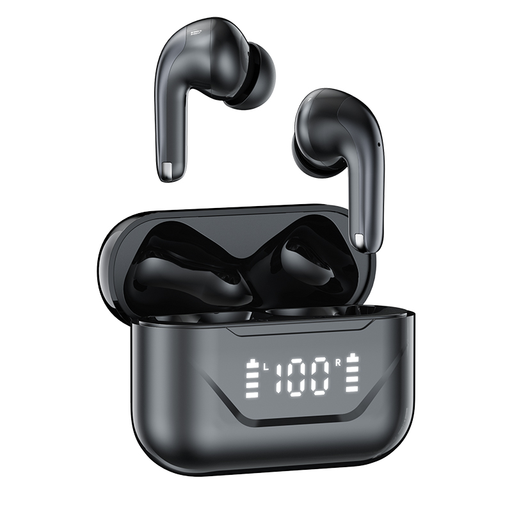
Why This Fits Their Persona: A practical starting point for travellers, students and commuters who want app-based translation alongside everyday audio without choosing a dedicated handheld translator.
The listing states that real-time two-way translation works via an app, making the phone and connection requirement clear rather than implying fully independent translation.
Bluetooth 5.4, dual-device connection, Type-C charging and approximately 7–8 hours of music playback per charge.
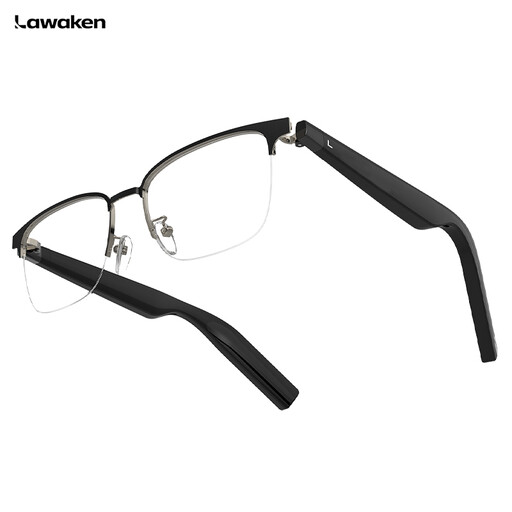
Why This Fits Their Persona: Suitable for professionals and frequent travellers wanting translation, calls, open-ear audio and AI functions in a wearable frame rather than separate headphones.
The specification identifies Bluetooth 5.3, iOS and Android compatibility, IPX4 protection and app pairing, so buyers can plan around the phone and weather limitations.
128-language translation, open-ear dual speakers, dual microphones, prescription-lens compatibility and simultaneous connection to two phones.

Why This Fits Their Persona: The ear-hook format is aimed at users who need a more secure fit for sightseeing, business travel, fitness or extended conversations.
Its listing states approximately 150 supported languages, Bluetooth 5.4 and a 5–7-hour playback range, while still requiring app installation and pairing.
Ear-hook construction, touch control, up to 15-metre transmission distance and a charging case included.
Choose smart translation glasses if you want calls, music and translation while keeping your ears open. The Verbex F18 Brown Glasses add voice commands, weather updates, image and object viewing, Wi-Fi transmission and access to ChatGPT-style AI functions. Their listed translation allowance is 1,200 minutes per month, so check whether that suits your usage.
Choose real-time translation earbuds when compact storage and private audio matter most. The VoxorAI M76, M75 and M113 models list approximately 150 languages, while the HTC NE40 and NE20 can connect to a phone and use a translation app. A handheld voice translation device, such as the Rexsun model, may be more suitable for photo menus, written signs and offline use.
We have compiled a complete, real-time list of products that fully satisfy these strict selection criteria and UK safety regulations.
Some handheld translators offer offline modes, but many Bluetooth translation earphones require a smartphone app. Check the individual specification carefully: a high language count does not confirm offline operation.
Listed figures vary by model and use. Several VoxorAI models state approximately 5–7 hours, while FITTEK lists approximately 6–8 hours depending on calls or music. Translation, microphone use and high volume may affect practical runtime.
They may support hands-free translation, calls or meeting notes, but always check consent and privacy requirements before recording. Do not rely on automated translation for contractual, legal, medical or safety-critical information.