
24/7 Customer Support

Free returns

Same-day & Next-day Delivery

Quality Guaranteed

Unlock Your Welcome Offers: FREE Delivery | Up to 80% OFF | Free 30-day JoyPlus trial
Download the APP
The promise of AI translation glasses is compelling: a world without language barriers, where you can converse as freely in Tokyo as you do in London. For international business professionals and tech-savvy commuters, this technology offers a glimpse into a more connected future. However, the market is filled with devices that over-promise and under-deliver. Before you invest, it is crucial to understand the common pitfalls that can lead to a frustrating and costly purchase.
As a Joybuy Product Recommendation Officer, my role is to help you see past the marketing hype. Here are the key issues to watch for:
To make an informed choice, focus on the functional specifications that directly impact your experience. These are the non-negotiable elements that separate a useful tool from a novelty gadget.
The "brain" of the device is paramount. Basic models simply relay audio to a smartphone app, which does the heavy lifting. More advanced AI translation glasses have deeper integration with a wearable AI assistant. Look for models that specify their AI architecture, such as those leveraging ChatGPT glasses technology. These can offer more than just word-for-word translation; they can provide context, summarise conversations and answer questions, making them powerful smart glasses for meetings and not just a simple real-time translator device.
For seamless conversation, you need to hear the translation clearly without blocking out the world around you. Most models use an open-ear audio design, directing sound towards your ears while leaving them uncovered for situational awareness. This is a key feature for smart audio glasses. However, the input is just as important as the output. Insist on a device with a dual-microphone array and effective noise-cancellation technology. This is the only way to ensure your voice, and the voice of the person you are speaking with, is captured clearly.
A wearable device is only useful if you can comfortably wear it. Pay close attention to the weight and frame material. A heavy or poorly balanced pair of glasses will become a nuisance over a long workday or flight. For UK residents, a water-resistance rating of at least IPX4 is a practical necessity to guard against unexpected rain. Finally, if you wear corrective lenses, check if the model is compatible with prescription smart glasses. Many are designed so that an optician can fit custom lenses into the frames.
Based on these practical criteria, here are a few options from our catalogue, matched to different user needs.

Why This Fits Their Persona: This user needs more than just translation; they need a productivity tool. These glasses are designed for business use, with features that support international meetings, travel and hands-free work. The classic tortoise shell design is professional and discreet.
It directly counters the "Muffled Conversations" pitfall with its dual-speaker and dual-microphone system. The AI Note feature, which records and summarises meetings, provides tangible value beyond basic translation, avoiding the gimmick trap.
Access to multiple AI agents (ChatGPT, Gemini, Claude) for versatile assistance. The AI Note meeting summary function is a standout productivity feature. It is also compatible with prescription lenses.
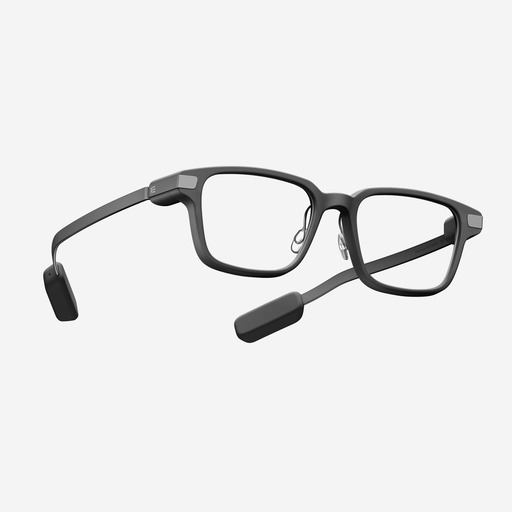
Why This Fits Their Persona: This user wants smart functionality without advertising it. The Even G2 is for those who value privacy and a minimalist aesthetic, integrating useful information like translation and navigation into a pair of glasses that do not look out of place in any social or professional setting.
Its "camera-free by design" philosophy directly addresses the privacy concerns and social friction associated with other smart glasses. The focus is on a private, glanceable display for practical tasks, not overhyped augmented reality features.
Extremely lightweight at just 36g, made from titanium and magnesium for genuine all-day comfort. The design prioritises looking and feeling like premium, conventional eyewear.
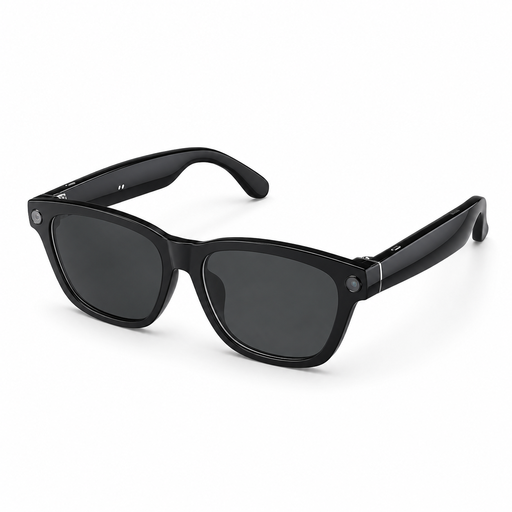
Why This Fits Their Persona: This user is a tech enthusiast keen to experience the full spectrum of what smart glasses can do. The Verbex T5 packs a wide array of functions—from translation and AI chat to video recording—into a single device, making it a compelling choice for experimentation.
It sidesteps the "Language Numbers Game" by specifying a high number of supported languages (145) while also integrating sought-after features like ChatGPT access, providing a broad and transparent feature set from the outset.
This is a multi-functional device that combines real-time translation with photo and video capture. The dual-microphone noise reduction is a key feature for ensuring its core functions work effectively.
We have compiled a complete, real-time list of products that fully satisfy these strict selection criteria and UK safety regulations.
Most AI translation glasses currently on the market require a constant Bluetooth connection to a smartphone. The glasses themselves handle the audio input/output and basic controls, but the complex processing of translation and AI queries is performed by an app on your phone. The experience is hands-free, but your phone is still an essential part of the system.
Yes, many manufacturers design their frames to be prescription-friendly. These models allow you to take the frames to your local optician to have custom lenses fitted, just as you would with a standard pair of glasses. Always check the product specifications for "prescription lens compatible" before purchasing.
Battery life varies significantly depending on the model and how you use it. Continuous translation or music streaming will drain the battery faster than intermittent use. A good benchmark to aim for is a model that offers 8-12 hours of mixed usage on a single charge, which should be sufficient to last a full workday or a long-haul flight.