
24/7 Customer Support

Free returns

Same-day & Next-day Delivery

Quality Guaranteed

Unlock Your Welcome Offers: FREE Delivery | Up to 80% OFF | Free 30-day JoyPlus trial
Download the APP
Choosing an AIO CPU cooler involves more than comparing radiator sizes or counting RGB lighting zones. A suitable cooler must match your processor socket, PC case and workload. It should also offer sensible noise control, secure mounting and a practical installation route.
From the Joybuy Product Recommendation Officer, this guide filters out common marketing distractions and focuses on the specifications that matter when comparing a 360mm AIO cooler, 240mm AIO liquid cooler or a traditional CPU air cooler.
A 360mm radiator uses three 120mm fans and can provide more radiator surface area than a 240mm design. However, it also requires a compatible front, top or side mounting position. Radiator thickness, fan clearance and the position of the motherboard’s VRM heatsinks can all affect installation.
Before buying, check your case manual for support of the required radiator format. A case may technically support a 360mm radiator but leave insufficient space for the fans, tubing or memory modules.
Noise depends on fan speed, pump operation, case airflow and the type of workload. A quoted dBA figure may be measured under a particular test condition and should not be treated as a guarantee of the sound level in your room.
A quiet CPU cooler should ideally include PWM fan control, allowing the motherboard to reduce fan speed when the CPU is cool. Pump placement and mounting can also influence vibration and audible hum.
A CPU cooler with display can show temperatures, animations or system information, but the screen may require additional software, a USB connection or internal header access. Check whether the display fits your preferred case orientation and whether its cable can reach the motherboard.
Likewise, an ARGB CPU cooler or RGB CPU cooler needs a compatible 3-pin 5V ARGB header or supplied controller. A 12V RGB header is different and should not be used interchangeably.
Socket support is non-negotiable. Modern buyers may need an Intel LGA 1851 cooler, Intel LGA 1700 cooler, AMD AM5 cooler or AMD AM4 cooler, depending on the processor and motherboard.
Confirm that the cooler includes the correct mounting hardware rather than relying solely on a retailer title. Also check for possible interference around the CPU socket, particularly with large pump heads and tall motherboard heatsinks.
A 240mm AIO liquid cooler normally uses two 120mm fans, while a 360mm model uses three. A 240mm radiator can be easier to install in mid-tower and some compact cases. A 360mm unit may be more suitable for sustained high-load systems, provided your case supports it.
Measure:
Gaming, streaming, video editing and rendering can produce different CPU loads. A mainstream processor may work well with a 240mm liquid cooler or a capable tower cooler. A high-power processor used for prolonged rendering or overclocking may justify a 360mm model, subject to case compatibility.
An air cooler has no pump or liquid loop and can be simpler to install and maintain. A liquid CPU water cooler can move heat to a radiator away from the socket area, but it introduces extra components, cables and a small potential leakage risk. Neither design should be selected without checking the processor’s power requirements and the manufacturer’s compatibility list.
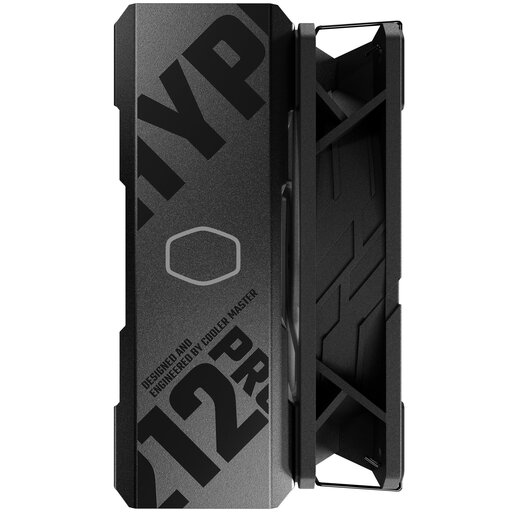
Why This Fits Their Persona: A practical air-cooling option for first-time builders, office systems and mainstream gaming PCs where straightforward installation and controlled spending matter.
It avoids unnecessary pump, radiator and liquid-loop complexity, while its stated 65–150W recommended CPU power range gives buyers a clearer usage boundary.
Four 6mm copper heatpipes, a 120mm PWM fan rated at 800–2000 RPM and support for Intel LGA 1700 and AMD AM5/AM4.
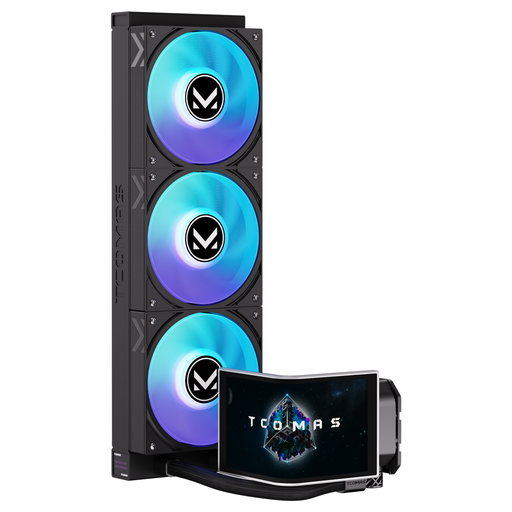
Why This Fits Their Persona: Suits enthusiasts building a visually focused gaming or creator PC with room for a 360mm radiator and an interest in system monitoring on the pump.
The display is clearly identified as a 6.67-inch curved AMOLED screen with customisable content, so buyers can weigh the feature against the extra installation and software requirements.
360mm radiator format, ARGB lighting, 3D visual effects and listed support for Intel LGA 1851/LGA 1700 and AMD AM5/AM4.
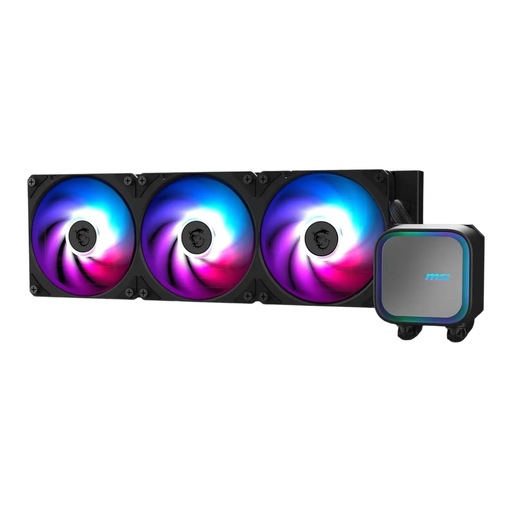
Why This Fits Their Persona: Designed for users running demanding gaming, productivity or content-creation workloads who have a compatible case and want ARGB customisation.
Its radiator-integrated pump design is specified clearly, while the installation guidance reminds buyers to check radiator position, connections and visible leaks before use.
A 360mm radiator with three fans, integrated pump design, ARGB lighting and listed compatibility with Intel LGA 1851/LGA 1700 and AMD AM5/AM4.
We have compiled a complete, real-time list of products that fully satisfy these strict selection criteria and UK safety regulations.
AIO coolers are pre-filled and sealed, so they do not normally require coolant refilling. They still need sensible maintenance:
A liquid cooler also uses a pump and additional fans, which may consume more power than a basic CPU air cooler. The difference is usually modest, but buyers running a PC for long working hours should consider fan curves, standby behaviour and electricity usage alongside the purchase price.
It can be, provided the case supports the radiator and the correct socket bracket is included. A 240mm model is often easier to position than a 360mm unit. Follow the supplied instructions, install the radiator securely and confirm pump and fan connections before powering on.
Lifespan varies by pump, fan and usage conditions. A sealed loop does not normally need refilling, but pumps and fans are mechanical components that can eventually wear. Check the stated warranty, inspect tubing and fittings during routine cleaning and replace the unit if damage or leakage is visible.
Not necessarily. It may provide greater radiator capacity and use three 120mm fans, but it also costs more and requires more case space. For a mainstream gaming PC, a compatible 240mm AIO liquid cooler or CPU air cooler may provide a more proportionate solution. Choose 360mm when your processor workload and case layout justify it, rather than selecting it solely because the number is larger.