People working in the conservatory
For desk work, calls or reading, the useful setting moves air without a constant draught across the face or distracting fan noise nearby.


Choose a pedestal or multidirectional circulator when air needs to reach several seats in a conservatory; a compact tabletop model makes more sense for one desk or seating area. Check how you can aim and slow the airflow so it does not become a persistent draught, and consider noise if people work or relax nearby. A fan moves indoor air but does not replace fresh-air ventilation.
For desk work, calls or reading, the useful setting moves air without a constant draught across the face or distracting fan noise nearby.
At meals or when several people are seated around the room, adjustable direction matters more than a breeze that reaches only the nearest chair.
If furniture moves between table and lounge arrangements, adjustable height or an easily moved fan can help. Where sockets limit placement, check whether a cordless option requires separate accessories.
Start with the seats you want the airflow to reach, then decide how much noise and floor space the occupied room can accommodate. Keep fresh-air ventilation as a separate consideration.
| Concern | What to check | Who this matters to |
|---|---|---|
| Airflow across several seats | Check horizontal movement and vertical tilt or adjustment, plus where a stable floor-standing unit could sit. | When others sit around the conservatory, I need air to reach more than my own chair without a fixed draught. Around 40% of consumers would put shared-seat airflow first. |
| Quiet occupied use | Check the setting behind a quoted noise figure and whether a quieter speed gives enough airflow at the intended seat. Consider a timer or dimmable display for evening use. | If I take calls or read here, a distracting fan defeats the purpose of running it. Roughly 30% of consumers would make unobtrusive operation their primary need. |
| Flexible placement | Check the footprint, cable route and clearance from walking paths. For cordless use, confirm the included accessories and stated runtime conditions. | I move between the table and sofa, and the socket may not be near either position. Around 30% of consumers would prioritise flexible placement. |
A circulator moves air already in the room; it does not bring in fresh outdoor air. The Health and Safety Executive advises against relying on fans to improve ventilation in a poorly ventilated workspace.
Use the fan to manage airflow around occupants, and assess windows, doors, vents or a suitable fresh-air system separately when ventilation is needed.
A minimum noise figure does not tell you how the fan will sound at the setting needed to reach your seat.
Check which speed the figure describes, then consider the available speed range and whether a quiet setting delivers useful airflow where people sit.
A floor-standing fan can obstruct a walking route or send air straight at someone if its height and direction do not suit the seating arrangement.
Measure the intended space and cable route, and check height, tilt and oscillation before choosing a larger format.
Duux describes the dock and battery pack for wireless use with its Whisper Flex Ultimate as separately available. Bundle contents can therefore change whether that model suits a position away from a socket.
Confirm the exact bundle, charging arrangement and accessible controls before ordering.
Wireless use may require a separate dock and battery pack, as well as time to charge them.
These product lines illustrate different ways to direct or reposition airflow; check the exact model and bundle rather than assuming every fan from a brand has the same features.
The MeacoFan 1056 tabletop and 1056P pedestal circulators are relevant where directional airflow and quieter settings matter.
Its AirFlo range includes a compact Mini and a Plus Smart Hybrid that can be used in desktop or pedestal form.
The Whisper Flex Ultimate offers a pedestal format with adjustable speed and oscillation options for changing seating arrangements.
These Joybuy listings include oscillating cooling-fan and air-circulator functions relevant to moving air in an occupied room. Check each model's direction, noise and placement requirements against your conservatory before choosing.
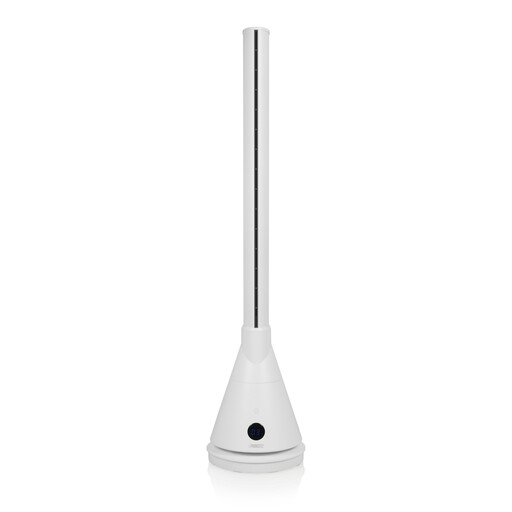 Image unavailable
Consider this tower fan if you want a cooling-fan function in a floor-standing format. Check its airflow direction and operating noise against the seats you use most; its 2000 W listing figure should not be taken as cooling-fan power.
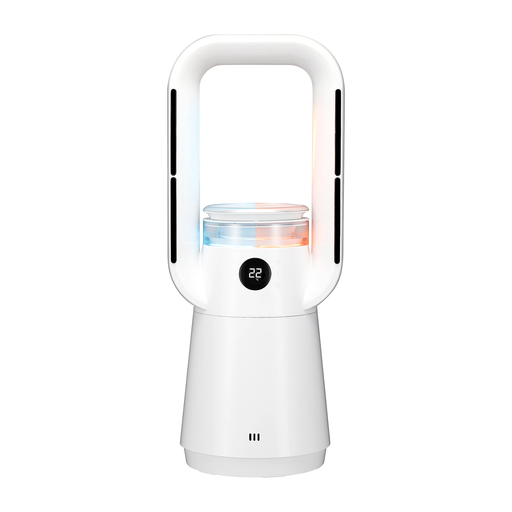 Image unavailable
Consider this model if its oscillating cooling-fan function suits your planned position. Its title also identifies heating, humidifier and air-purifier functions and an included HEPA filter; check its dimensions and noise at the settings you would use near occupants.
Image unavailable
This is primarily a fan heater, so check that its cooling-fan function meets your need for airflow rather than assuming it behaves like a dedicated circulator. Its listed 1500 W rating is for PTC heating. Check the exact model's noise information, and follow the product instructions: the listing warns against use in damp or wet conditions.
An air circulator can make occupants feel more comfortable through air movement, but it does not refrigerate the room or remove heat entering through the glass. The Health and Safety Executive notes that air temperature alone does not determine thermal comfort; consider shading and suitable openings alongside the fan.
No. The Health and Safety Executive advises that fans do not improve ventilation in a poorly ventilated workspace. If you use the conservatory as a home office or another occupied room, consider its fresh-air provision separately from the fan you choose for comfort.
Start at a lower speed and aim the airflow across the room or towards a wall or ceiling rather than continuously at one seat. Check that the model's tilt or oscillation lets you make that adjustment from its intended position.