People working quietly
If you concentrate, talk, record audio, game or do detailed craft work in the room, low-speed noise and fine airflow control may matter more than a strong setting you rarely use.


Choose a circulator with controllable airflow and vertical as well as horizontal direction adjustment if you want to move room air around seated people and work areas without aiming a constant stream at one person. Check noise at the speed you expect to use and whether the fan fits your layout. A circulator does not bring in fresh air or capture hobby-related dust and fumes; the Health and Safety Executive advises addressing ventilation and contaminant control separately.
If you concentrate, talk, record audio, game or do detailed craft work in the room, low-speed noise and fine airflow control may matter more than a strong setting you rarely use.
If air needs to reach a workbench and several seats, look at how the fan changes direction vertically and horizontally instead of relying on a fixed stream.
The Health and Safety Executive distinguishes moving room air from supplying fresh air or capturing contaminants. Identify the ventilation or process-specific controls your activity needs before choosing a comfort fan.
Decide whether you need comfort airflow, fresh-air ventilation or control of dust and fumes before comparing fan features. For comfort airflow, consider where the fan can stand, where it can aim and how it sounds at a usable speed.
| Concern | What to check | Who this matters to |
|---|---|---|
| Airflow around the room | Check vertical and horizontal movement or tilt, and the available speed settings. | When several people share the room, I want air to reach the seating and work areas without a constant draught on my hands. Around 31% of consumers put room-wide distribution first. |
| Noise during use | Check which setting a stated noise figure describes, and whether the controls suit quieter use. | I need to concentrate or talk while the fan runs, so its sound at my usual setting matters more than its lowest published figure. Quiet operation comes first for roughly 25% of consumers. |
| Placement and direction | Compare the base footprint, height and cable route; confirm which stands or accessories are included. | My bench and seating arrangement may change, and I need a stable place to aim the fan without obstructing the workspace. About 19% of consumers prioritise placement flexibility. |
| Fresh air and contaminants | Identify whether the activity calls for fresh-air ventilation or process-appropriate extraction rather than a room fan. | If the room is stuffy or my hobby produces dust, vapour or fumes, moving the same air around will not address the underlying need. For approximately 25% of consumers, deciding whether a circulator is appropriate is the primary concern. |
A fan moves air already in the room; the Health and Safety Executive says not to rely on fans to improve fresh-air supply in a poorly ventilated space.
If the room is stuffy, assess suitable windows, vents or a mechanical system that brings in outdoor air.
Blowing air across a dust- or fume-producing task can redistribute contaminants instead of capturing them.
Identify controls suited to the particular process and materials, including source-capture extraction where appropriate, before adding a fan for comfort.
Manufacturers describe airflow using different figures and units, which alone cannot establish how a fan will work in your room.
Compare the direction controls, placement and noise at your intended setting alongside any stated airflow figure.
Duux distinguishes features across its Whisper models, including battery options; its Whisper Flex Smart page was marked discontinued when checked.
Confirm the exact model, included stand or battery accessories and current availability on the seller’s product page.
The MeacoFan 1056 is a compact option to examine if multi-directional airflow and remote control suit your room.
The Whisper range is worth comparing if quiet low-speed use and a choice of fan heights matter to you.
Levoit lists both a pedestal air circulator and a slim tower fan, which serve different placement and direction-control needs.
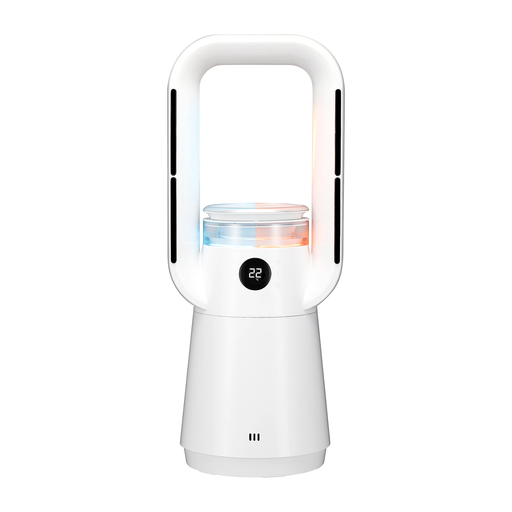
This air circulator offers an oscillating fan function for moving existing room air. Check its direction of movement and noise at your intended setting before choosing it for an occupied hobby room.
 No image available
Consider its fan function if you want airflow to sweep across part of the room rather than remain fixed in one direction.
The product name states 65° oscillation and an included HEPA filter. Check whether oscillation covers vertical as well as horizontal movement, and how loud the fan is at the setting you expect to use.
Its air-purifier function does not replace fresh-air ventilation or process-appropriate extraction for dust, vapour or fumes.
No. It moves existing indoor air rather than supplying fresh air. The Health and Safety Executive advises using suitable open windows, vents or mechanical fresh-air systems to improve ventilation.
Not on its own. A portable fan may redistribute contaminants; the Health and Safety Executive describes local exhaust ventilation as a way to capture them at source. Choose controls for the specific process and materials before using a fan for comfort.
No. A stated minimum noise figure does not describe every speed. Check the setting to which the figure applies and assess noise at the airflow level you plan to use.
Check the marking and product information applicable to the specific electrical item. Department for Business and Trade guidance dated August 2026 describes continued recognition of CE marking alongside UKCA arrangements for products covered by the relevant Great Britain rules. Northern Ireland has a different framework, so check the requirements for the intended destination.