People seeking airflow at one chair
If you mainly read, watch television or relax in one spot, a fan you can aim nearby may be more useful than one that sweeps across every seat. You still need a position where it will not be knocked over.


For airflow around one chair, choose a compact circulator that can be aimed and set to a gentle speed; consider a height-adjustable pedestal or hybrid model if several seats need airflow. In a shared lounge, check noise at the settings you would actually use, stable placement and the cable route. A circulator moves room air rather than replacing fresh-air ventilation when the problem is stale air or moisture.
If you mainly read, watch television or relax in one spot, a fan you can aim nearby may be more useful than one that sweeps across every seat. You still need a position where it will not be knocked over.
For conversation, television or work in the same room, speed control and the sound at your chosen setting matter as much as the direction of the breeze. A timer may also help you avoid leaving the fan running longer than intended.
If the fan sometimes serves one chair and sometimes several seats, adjustable height or a tabletop-to-pedestal format offers different placement options. Allow room for the base and a safe route for its lead.
Decide whether you need a breeze at one seat, airflow across several seats or fresh air entering the lounge. Those are different jobs, even though a circulator can be useful alongside ventilation.
Choose it when: One chair is the priority and there is a stable nearby surface or clear floor position.
Trade-off: A directed breeze may suit one person better than several; check whether its aiming and oscillation controls can also serve the rest of the seating area.
Choose it when: Air needs to pass above chair arms or reach people in several positions.
Trade-off: The base needs clear floor space, and its lead must not cross a walking route.
Start here when: The concern is stale air, moisture, cooking smells or indoor pollutants rather than a lack of breeze.
Trade-off: A circulator can move air around the room, but it cannot by itself exchange indoor air for fresh outdoor air. Use suitable vents, windows or ventilation equipment without propping open fire doors.
| Concern | What to check | Who this matters to |
|---|---|---|
| Aim and draught | Check adjustable tilt and whether horizontal oscillation can be switched off or narrowed. Plan a stable position beside the chair. | If I want a breeze while seated but dislike air blowing straight at my face, I need control over where it goes. Around 44% of consumers put directed chair-side airflow first. |
| Noise in shared use | Compare noise claims at their stated speed settings, then consider the speeds you expect to use during conversation or television. | When other people are talking or watching television, I need airflow that does not dominate the room. Quiet shared use is the primary concern for roughly 33% of consumers. |
| Changing coverage | Measure the tabletop or floor footprint and cable route; check whether the height and oscillation suit the seats you want to reach. | If the seating arrangement changes, I want to reposition the fan without obstructing the space around the chairs. Wider, flexible coverage comes first for about 23% of consumers. |
A circulator redistributes indoor air. The Department for Levelling Up, Housing & Communities describes ventilation as exchanging stale indoor air for fresh outdoor air, so a fan alone will not resolve moisture or pollutants.
If the lounge feels stale, use suitable windows, vents or maintained mechanical ventilation where appropriate. Do not prop open fire doors.
A manufacturer's low-setting noise claim does not tell you how the fan will sound at the stronger setting you may need across the lounge. Figures from different brands may also describe different operating conditions.
Check which speed each noise figure describes, and consider the available speed steps and retailer return terms if sound at close range will affect your choice.
A pedestal base or trailing lead can get in the way even when the fan can reach the right height. Electrical Safety First advises placing fans where they will not be knocked over.
Measure the intended position, keep the lead out of walking routes and use a tabletop model only on a stable surface.
The DREO UK page described in the product research for the TurboPoly 512 lists a 120V input. That makes the electrical configuration of the exact variant an important purchase check, not something to infer from the page's UK branding.
Confirm the model number, rated input, supplied plug and any required adapter against the product documentation before ordering.
The MeacoFan Sefte 10 table model and MeacoFan 1056 illustrate compact circulators with directional controls for room-air movement.
The TurboPoly 512 and 508S illustrate remote-controlled, height-adjustable approaches to directing air across a seating area.
The AirFlo Smart hybrid is an example for households considering both pedestal and tabletop placement in the same lounge.
These products cover different ways of providing airflow near a chair: a rechargeable desk fan, fan heaters with fan functions and a portable air conditioner with a fan function. They are not interchangeable with a dedicated air circulator; check the operating mode, placement and noise that matter for your lounge.
 No image available
Consider this if you want a fan heater that can also provide airflow beside a chair; check whether its fan-only mode gives you the breeze you want.
The product title specifies 1500W PTC heating and 70° oscillation. It is a fan heater rather than a dedicated air circulator, so confirm its fan-only noise and UK electrical configuration for the exact unit.
 No image available
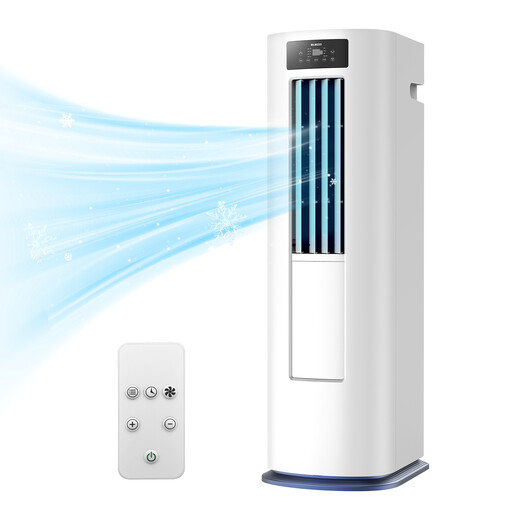
Consider this only if you also want the cooling and dehumidifying functions of a mobile air conditioner, rather than a small chair-side circulator.
Its title lists cooling, dehumidifier and fan functions, a remote control, a 24-hour timer and a window mounting kit. Check where the unit and kit would go, along with its noise during the mode you intend to use.
 No image available
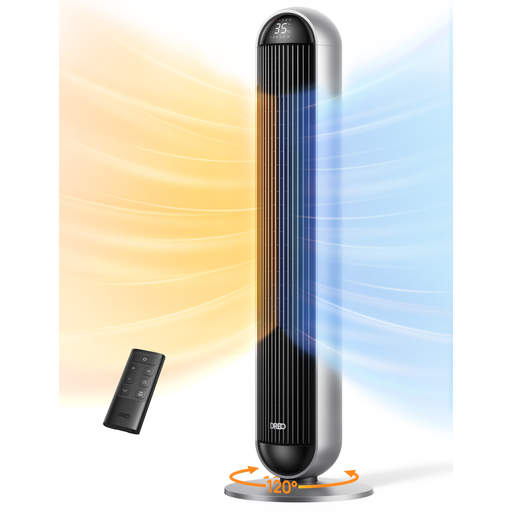
This is a possible choice if a portable fan heater serves another need in the lounge as well as chair-side airflow.
Before treating its fan function as a substitute for a circulator, check the fan-only output, direction of airflow, operating noise and the exact unit's UK electrical configuration.
 No image available
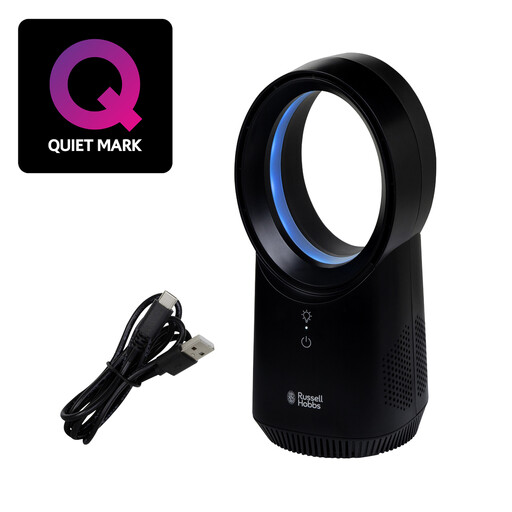
For airflow close to one chair, this rechargeable desk fan may suit a stable nearby surface when you want to avoid a mains lead beside the seat.
The title specifies three speed settings and USB charging. Check whether its airflow direction, battery runtime and sound at your preferred speed suit the intended position; it is not presented as a whole-lounge circulator.
Not on its own: a circulator moves indoor air rather than bringing in fresh air. UK government ventilation guidance distinguishes that air exchange from circulation; if stale air or moisture is the concern, use suitable windows, vents or maintained ventilation equipment where appropriate, and use the fan for airflow comfort.
Put it on a stable surface or in a clear floor position where it cannot be knocked over. Electrical Safety First advises care with fan placement; keep its lead out of walking routes and away from places where children or pets could pull it.
Electrical Safety First recommends against using an electric fan overnight. If you want airflow before sleep, consider a model with a timer and follow its instructions; switch the fan off when it is no longer needed.
Check the rated input, supplied plug and instructions for the exact model intended for UK use. This matters particularly when a product page lists an unexpected voltage; do not assume that every variant shown under the same model name has the same electrical configuration.
Unplug it before cleaning and follow the manufacturer's instructions for the grille and blades. Check the unit and cable before using it again after storage, rather than operating it if either appears damaged.