Chair-side comfort seekers
If you read, work or relax in one chair, a controllable breeze may be the priority. A compact fan is a practical option when there is a secure surface close enough to position it where you need it.


Choose a compact table air circulator if you have a stable surface beside the chair and want to keep the floor clear. An adjustable pedestal model can direct air over furniture, but its base and cable need space; a cordless portable model offers more freedom of placement, provided its battery and charging arrangements suit your use.
If you read, work or relax in one chair, a controllable breeze may be the priority. A compact fan is a practical option when there is a secure surface close enough to position it where you need it.
When the same room is used for sitting, working and sleeping, the sound at a useful fan speed matters more than a headline minimum noise figure. Controls such as a timer or dimmable display may also matter in the evening.
If a chair arm or nearby furniture obstructs a tabletop fan, look at the available height and direction controls. Meaco describes its pedestal range as a way to move air over furniture, though the base still needs clear floor space.
Choose it when: a stable surface beside the chair lets you aim airflow without using floor space.
Allow for: the surface it occupies and any chair arm or furniture that blocks the airflow path.
Choose it when: airflow needs to pass over a chair arm or other furniture without taking up a side table.
Allow for: a base and cable on the floor beside the seating area.
Choose it when: the chair is away from a convenient socket or the fan regularly moves between positions.
Allow for: charging time and the runtime at the speed you intend to use; check whether a battery is included with the exact model.
For a chair in a small flat, start with a safe position and an unobstructed airflow path. Then consider whether sound during seated activities or access to a socket will limit where you can use the fan.
| Concern | What to check | Who this matters to |
|---|---|---|
| Chair-side fit and direction | Measure the available surface or floor area, then check the model’s dimensions, tilt and oscillation. | I need the fan to sit securely close to my chair and send air where I sit without obstructing the room. Around 45% of consumers would put chair-side fit and direction first. |
| Sound during quiet use | Check whether the stated noise figure is a minimum or a range, and look at the available speeds and evening controls. | When I read or take calls in the same room, I want a useful airflow setting that does not become distracting. Roughly 33% of consumers would make quiet use their primary concern. |
| Airflow over furniture | Check the height adjustment and direction controls against the chair arm or furniture in the airflow path. | If furniture blocks a low fan, I need air to reach the chair from another height or angle. Around 11% of consumers would prioritise clearing that obstruction. |
| Placement away from sockets | For a cordless model, check battery inclusion, runtime at the required speed and charging method. | My preferred chair position is away from a convenient socket, so I need to use the fan there without a cable across the floor. Approximately 11% of consumers would put socket-free placement first. |
A raised fan may direct air over furniture, but its base can obstruct a narrow route beside the chair.
Measure the clear floor area and plan a cable route before buying. If the base will not fit safely, consider a compact model only where a stable surface is available.
The quietest stated setting may not be the one that sends enough air to your chair, particularly when furniture is in the way. Manufacturer noise figures are not automatically comparable across models.
Look for a stated noise range where available and check the speed choices, timer and display controls you would use in the evening.
Cordless placement is useful away from sockets, but the included accessories and runtime affect how long the fan can be used in that position.
Check the exact variant for battery inclusion, runtime at the speed you need and its charging method.
Some models use an optional battery pack rather than including one.
A fan beside a chair needs stable placement and a cable route that will not be knocked or tripped over.
Electrical Safety First advises against leaving an electric fan running overnight or while you are out. Inspect the cable, do not use a damaged appliance and unplug it when it is not in use.
Meaco offers table, portable battery and adjustable pedestal air circulators relevant to different chair-side positions.
Dreo’s UK-listed pedestal models are relevant when you want to adjust airflow direction from a floor-standing position.
Duux’s standing-fan range is worth considering when flexible positioning is important.
These choices include a multi-function air circulator and two cordless fans for nearby personal airflow. Check each model’s placement requirements: a fan that fits on a stable surface may be more practical beside one chair, while battery details matter if that position is away from a socket.
 No image available
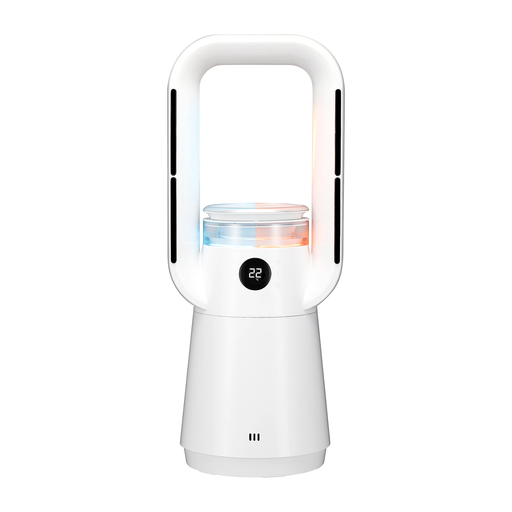
Consider this multi-function model if you want moving airflow beside the chair and have a stable place for the appliance. Its name specifies 65° oscillation and an included HEPA filter. Check its dimensions and the noise at the setting you would use before choosing a position.
 No image available
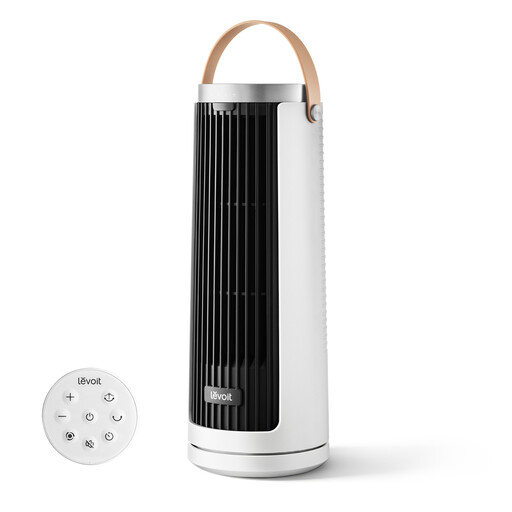
This portable fan suits a chair-side position on a stable surface when a nearby socket is inconvenient. Its name specifies USB Type-C recharging and multiple airflow modes. Check battery runtime and whether its airflow can be directed towards your chair.
 No image available
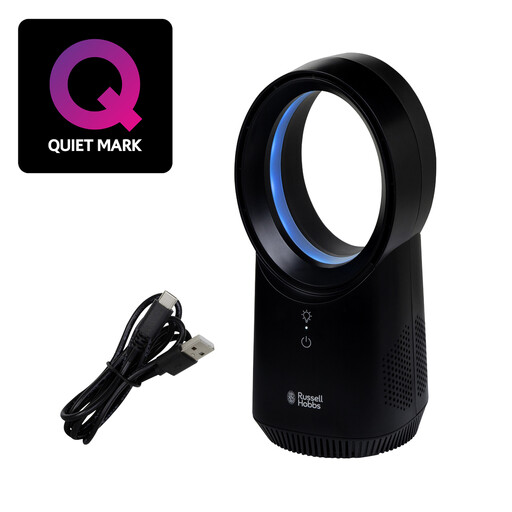
This desk fan is a cordless option when a stable desk or side table sits beside the chair. Its name specifies three speed settings and USB charging. Check its battery runtime, sound level and airflow direction if you plan to use it for long or quiet seated periods.
Choose a table model when you already have a secure nearby surface and want to preserve floor space; choose an adjustable pedestal model when furniture blocks airflow from that height. Measure the pedestal base and keep its cable out of the walking route.
Not necessarily: a published minimum may apply only to the lowest speed, which might not deliver the airflow you want at the chair. Check whether the supplier gives a noise range and look at the speeds and evening controls for the exact model.
Electrical Safety First advises against leaving an electric fan running overnight or while the home is unoccupied. Place it where it cannot be knocked over, keep the cable clear and unplug it when it is not in use.
Check the exact fan’s supplied plug, instructions and suitability for where you intend to use it. The Office for Product Safety and Standards says electrical equipment placed on the Great Britain market must meet the applicable requirements of the Electrical Equipment (Safety) Regulations 2016; safe placement and an undamaged cable still matter during use.
An air circulator moves air; it should not be treated as a substitute for measures that reduce overheating in the flat. The UK Health Security Agency notes that top-floor flats can be more prone to overheating, so consider shading and appropriate window management as well as where you place the fan.