Students who study or sleep nearby
If the sofa shares space with coursework or a bed, look for a lower speed you can live with during quiet periods. A timer or dimmable display may also matter more to you than maximum airflow.


Choose a compact, tilting circulator if it can sit safely near the sofa and you mainly want a directed breeze. If you study or sleep in the same room, give its lower speed settings and noise information particular attention. Consider oscillation or adjustable height when air needs to reach beyond one seat, but allow space for the larger setup; manufacturers’ noise figures may use different settings and test methods.
If the sofa shares space with coursework or a bed, look for a lower speed you can live with during quiet periods. A timer or dimmable display may also matter more to you than maximum airflow.
If the fan must move between the sofa, desk and bedside area, check its dimensions, weight, cable reach and where it can stand securely. A wide oscillation range may be less important than finding a workable position.
If air needs to reach more than the nearest sofa seat, controllable oscillation or adjustable height may be more useful than a fixed fan aimed at one person. Check that the fan will not obstruct the walking route.
Start with where the fan can stand and where you need the air to go. Then decide whether quiet operation, easy repositioning or wider coverage is the main priority.
| Concern | What to check | Who this matters to |
|---|---|---|
| Study and sleep noise | Check which speed a quoted noise figure describes, and look at lower speed settings, timers and display controls. Treat figures from different manufacturers as separate claims unless their test conditions match. | If I work or sleep beside the sofa, I need airflow that does not keep interrupting me. Around 36% of consumers would put low-disruption airflow first. |
| Airflow towards the sofa | Check whether the fan offers manual tilt, vertical movement, horizontal oscillation or a combination, and whether it can stand safely in the intended position. | When the available surface is away from my seat, I need to aim the air where I sit rather than at an empty part of the room. Directed sofa-area airflow would come first for around 29% of consumers. |
| Footprint and portability | Measure the available surface or floor space; compare dimensions, weight and cable reach if the fan will move between locations. | I may need to shift the fan from the sofa to my desk without leaving it in the walkway. Around 21% of consumers would prioritise a compact fan they can reposition. |
| Wider circulation and control | Check height adjustment and oscillation range. Consider whether a timer or remote control would be useful from the fan’s planned position. | If more than one part of my room needs airflow, I want to change its reach without continually moving the fan. Wider circulation or hands-off control would lead the choice for around 14% of consumers. |
A small fan can be convenient to store, but vertical tilt alone may not direct airflow across several seats or beyond the sofa.
Work out the fan’s position relative to the sofa before choosing between a targeted, tilting model and one with horizontal as well as vertical movement.
A manufacturer’s dB figure may refer to a particular speed or test setup. A lower quoted figure does not, by itself, establish which fan will sound quieter where you study.
Check the setting behind each figure and whether the fan has lower speeds you would use regularly. Read the applicable return terms if quiet operation is decisive.
An air circulator moves air rather than refrigerating the room. NHS guidance says electric fans can help when temperatures are below 35°C; a fan should not be your only response to severe heat or feeling unwell.
Pay attention to room conditions, take appropriate heat precautions and seek health advice if symptoms develop.
London Fire Brigade identifies overloaded sockets as a common cause of electrical fires. A fan cable beside a sofa can also be caught under furniture or cross a walking route.
Use an undamaged, suitable mains connection, avoid daisy-chained extension leads and route the cable clear of furniture, doors and walkways.
The MeacoFan 1056 is a desktop circulator, while the 1056P adds a height-adjustable pedestal format for different fan positions.
The Whisper Flex² Smart changes between a 54 cm table-fan configuration and a 92 cm standing configuration, according to Duux.
The AirFlo Mini is a compact option for targeted positioning; the AirFlo Plus uses a convertible desk-and-pedestal format.
These choices range from portable fans for a close sofa-side position to tower and multifunction models. Check each fan’s placement and airflow direction against your room rather than assuming every design will circulate air across the same area.
 No image available
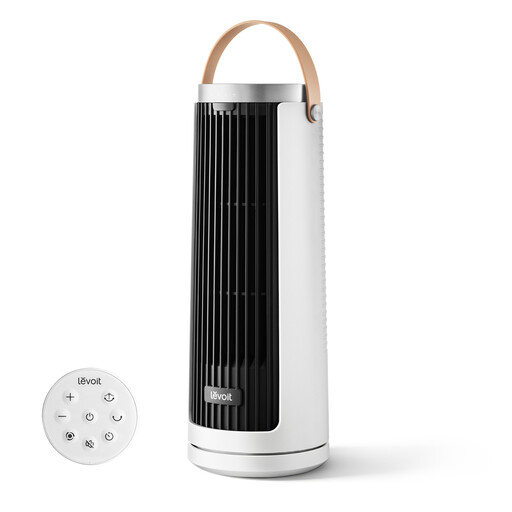
Consider this portable model for a nearby surface when you want personal airflow beside the sofa.
Its listed features include USB Type-C recharging and multiple airflow modes. If the fan must aim at a particular seat or run during quiet study, check its directional adjustment, dimensions and noise information before choosing it.
 No image available
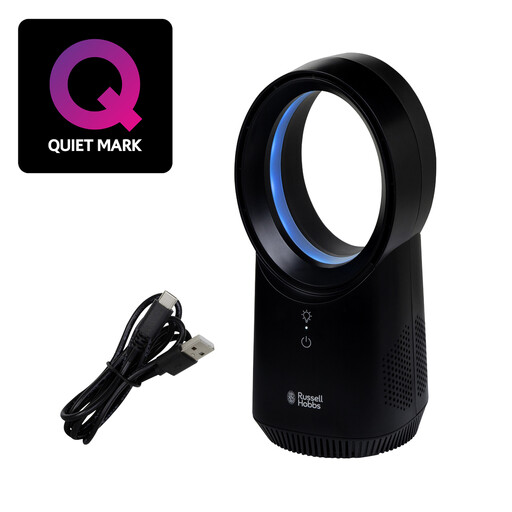
A desk-fan format is worth considering when a stable surface is available close to the sofa.
This model is listed with three speed settings and USB charging. Check its dimensions, directional adjustment and noise information if space or quiet work is your deciding concern.
 No image available
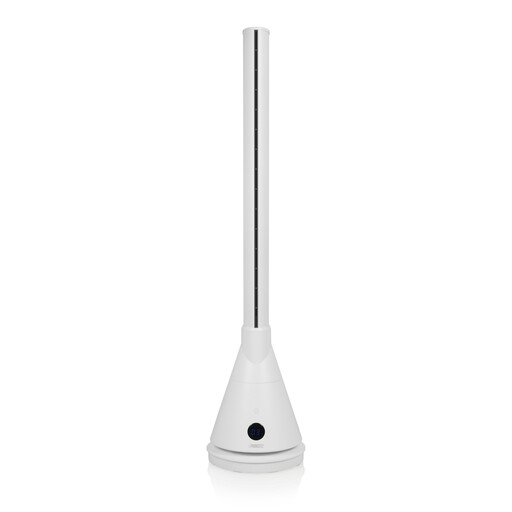
Consider this tower format if a fixed floor position near the sofa is more practical than a desk surface.
The title lists app control and a 2000 W heating function alongside cooling-fan use. Measure the intended floor space and check noise information before deciding whether it suits a room used for study or sleep.
 No image available
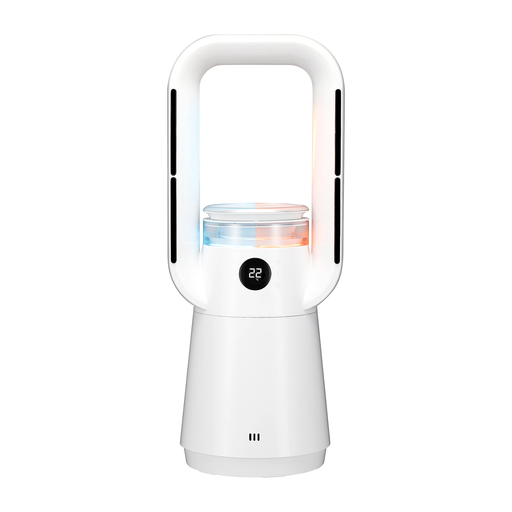
This is an option to examine if you want a fixed-position circulator rather than a close personal fan.
The title specifies 65° oscillation and lists heater, cooling-fan and humidifier functions, with a HEPA filter included. Check the oscillation direction and noise information for your intended position, and read the supplied instructions for maintenance of the additional functions.
 No image available
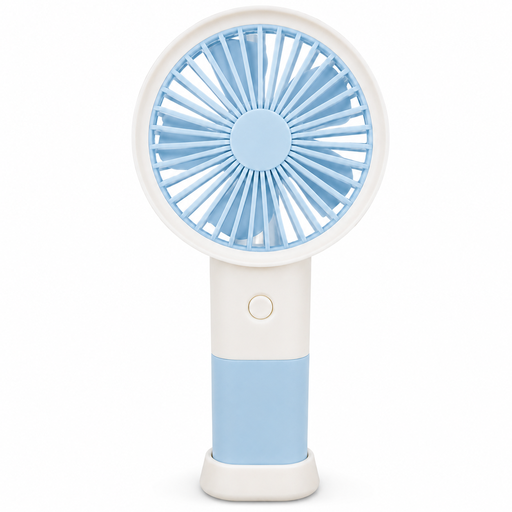
Use the table-stand format as a close personal-airflow option when the fan can sit beside the sofa.
The title lists three speeds and Type-C charging. If you need air to reach beyond the nearest seat, check its airflow direction and dimensions rather than treating this handheld format as a room-positioned circulator.
An air circulator moves air; it does not refrigerate the room. NHS guidance says electric fans can help when temperatures are below 35°C, but do not rely on a fan alone in severe heat or if you feel unwell.
Choose a compact desk or floor circulator when it can stand safely close to the sofa and you mainly need a directed breeze. A height-adjustable or oscillating pedestal design is worth considering when air must reach over furniture or across more of the room; measure its footprint and keep it clear of the walkway.
The Department for Business and Trade’s March 2026 guidance says electrical equipment in Great Britain may use UKCA or CE marking. The Office for Product Safety and Standards also sets out the applicable Electrical Equipment (Safety) Regulations 2016; a marking alone is not a substitute for choosing equipment suitable for its intended mains supply and use. Northern Ireland has separate marking arrangements, so check guidance applicable there if that is where the fan will be used.
Use an extension only if it is suitable for the connected equipment and the socket will not be overloaded; do not daisy-chain extension leads. London Fire Brigade warns about overloaded sockets. Keep the lead out from under furniture and away from walking routes, and stop using equipment with a damaged cable, plug or casing.