People seeking a personal breeze
If you read, watch television or work in one chair, aimable airflow and a secure place for the fan may matter more than reaching across the room.


Choose a compact table air circulator if you have a stable surface beside the chair and want to direct airflow towards one seated position. An adjustable pedestal model is more useful when the air needs to clear chair arms or nearby furniture, but it occupies floor space. Either type moves air rather than lowering the room’s ambient temperature or supplying fresh air.
If you read, watch television or work in one chair, aimable airflow and a secure place for the fan may matter more than reaching across the room.
When a fan runs close to a reading or work chair, check how it sounds at the speed you expect to use. A manufacturer’s minimum noise figure describes a particular operating condition, not every setting.
If there is no stable raised surface nearby, an adjustable pedestal can bring airflow above chair arms or furniture. Allow space for its base and a safe route for its cable.
For airflow beside one chair, establish where the fan can stand and whether its air stream can reach the seated position; then consider disturbance at the speed you would actually use.
| Concern | What to check | Who this matters to |
|---|---|---|
| Airflow direction | Check vertical adjustment and whether horizontal oscillation can be stopped when you want a fixed direction. | If my chair arm blocks a low air stream, I want the breeze to reach me without moving the chair. Around 42% of consumers put directional airflow first. |
| Noise nearby | Compare the exact model’s stated noise setting with its available lower speeds; a minimum dB figure does not describe every speed. | When I read or work with a fan close by, I do not want its sound to distract me. Roughly 33% of consumers put quiet operation first. |
| Placement | Check the available tabletop or floor space, base stability and a cable route clear of feet. | Without a secure side table, I need a floor position that keeps the fan stable and the walkway clear. Around 25% of consumers put placement flexibility first. |
A low air stream can meet a chair arm or nearby furniture instead of reaching the seated person; Electrical Safety First also notes that high-speed floor fans can be noisy.
Check the intended air path while seated, along with head adjustment and oscillation controls, before choosing a fan for its output.
A fan moves indoor air but does not itself bring in fresh outdoor air or lower the ambient temperature. The Health and Safety Executive describes ventilation as bringing in fresh air and removing indoor air.
Use the fan for air movement, and address stuffiness through suitable windows, vents or the building’s ventilation system where appropriate.
An unstable position makes the fan easier to knock over, while a cable across a walking route creates a trip hazard.
Place the unit on a flat, stable surface or base, away from furniture edges, and route its cable clear of the path around the chair.
A quoted minimum may apply at a low setting, rather than at the airflow level you want beside your chair.
Check the exact model’s settings and the conditions attached to its noise figure. If close-range sound is decisive, look for testing at a comparable speed.
Meaco’s MeacoFan 1056 is a table-format air circulator; the MeacoFan 1056P adds an adjustable pedestal for positioning airflow above chair-side furniture.
Duux’s Whisper Flex² Smart offers a table-to-standing format for people who may change where the fan sits.
Shark is relevant if moving a fan beyond one fixed chair-side position matters more than choosing a dedicated air circulator.
These options suit a chair-side position with a stable surface: one combines an air circulator with other functions, while the other is a portable tower fan. Check directional control and the space each needs if you want airflow aimed at one seated position.
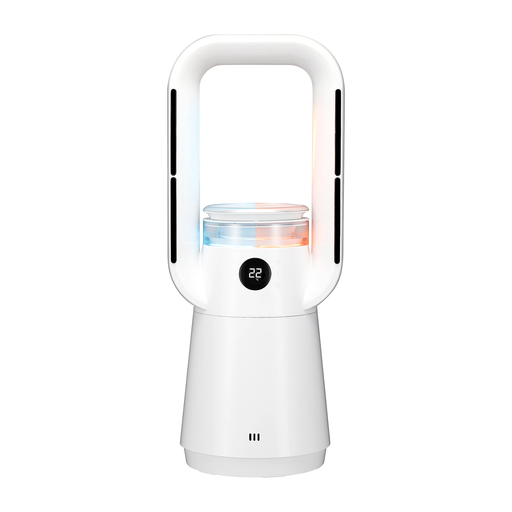 No image available
Consider this multifunction unit if you have a stable chair-side surface and want an oscillating fan function.
The product name specifies heater, cooling-fan, humidifier and air-purifier functions, an included HEPA filter and 65° oscillation. Check its dimensions, vertical adjustment and noise at your intended setting if you need a breeze directed towards your chair.
Place it on a stable, heat-resistant surface with its air inlets and outlets unobstructed.
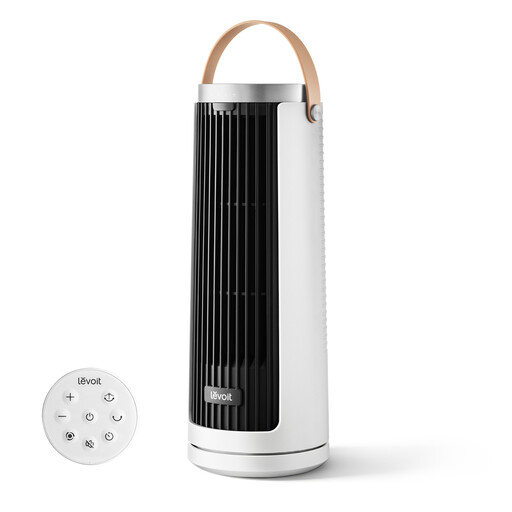 No image available
Consider this portable fan if you want to move it between stable surfaces rather than leave an air circulator beside one chair.
Its product name specifies USB Type-C recharging and multiple airflow modes. Check battery runtime, noise at your intended setting and whether it offers the directional adjustment you need.
Set it on a stable, flat surface.
No: it moves air rather than lowering the ambient temperature. For fresh-air ventilation, use suitable windows, vents or a designed ventilation system; a recirculating fan does not replace them.
Choose a table air circulator if a stable nearby surface lets you aim air at the seated position; choose an adjustable pedestal if chair arms or furniture block a lower air stream. A floor fan is worth considering when circulation across a more open area matters, provided its position, noise and cable route suit the room.
Use a stable surface or base and keep the cable out of walking routes and away from children or pets. Do not balance the fan on a furniture edge, and stop using it if the unit or cable is damaged.
Electrical Safety First advises against leaving an electric fan running overnight or while you are out. For evening use, consider a timer and unplug the fan when it is not in use.
No. UK Health Security Agency hot-weather guidance says to use electric fans when the air temperature is below 35°C and not to aim them directly at the body because this can contribute to dehydration. Follow wider hot-weather precautions rather than relying on airflow alone.