Small-batch scone bakers
You usually bake for one or two people and are willing to work in batches. Jamie Oliver’s air-fryer cheese-scone recipe calls for even spacing and notes that batches may be necessary.


Choose by the space available for scones and the cleaning routine, not litre capacity alone. A single basket can suit occasional small batches if the scones fit with gaps between them; an air-fryer oven offers a flatter tray layout when you want to bake several. In a shared kitchen, also check the operating clearance, socket position and how everyone will clean food-contact surfaces.
You usually bake for one or two people and are willing to work in batches. Jamie Oliver’s air-fryer cheese-scone recipe calls for even spacing and notes that batches may be necessary.
You need a place to use and store the appliance, plus a cleaning routine that other residents can follow after cheese and flour have been cooked in it.
You would rather assess tray shape and room for several scones than choose an appliance solely for its frying features.
Start with the scones you intend to bake: their size and spacing determine the useful cooking area. Then check whether the appliance can be cleaned and used safely in the space you share.
Consider it when: You usually make a small batch and can bake in rounds.
Trade-off: Jamie Oliver’s one-drawer cheese-scone recipe requires gaps between scones and notes that batches may be needed.
Consider it when: You want a flatter tray layout for several scones or a small baking tin.
Trade-off: Allow worktop room for the appliance and time to clean its trays and interior.
Consider it when: Separate cooking zones would help residents share the appliance, or a vertical layout suits the worktop.
Trade-off: Total capacity is divided between drawers, so measure each cooking area before planning a scone batch.
| Concern | What to check | Who this matters to |
|---|---|---|
| Scone fit and baking control | Measure usable tray or basket width and height against your scones or tin. Check the available temperature settings and baking instructions. | If I want several scones ready together, I need room to leave gaps without crowding the heating area. Around 42% of consumers put baking fit first. |
| Cleaning between users | Check which removable parts can be washed and how the manual says to clean the chamber, door and other food-contact areas. | When others use the appliance after my cheese scones, I want a cleaning routine we can all follow, especially where food allergies matter. For around 33% of consumers, cleaning and allergen control come first. |
| Space and shared use | Compare external dimensions and operating clearance with the intended worktop. Plan for a suitable wall socket rather than an extension lead. | If worktop room and socket access are shared, I need an appliance that has a suitable place to operate without obstructing other cooking. Space and day-to-day use are the first concern for around 25% of consumers. |
A large stated capacity can be split between drawers or shelves, while the flat area available to each scone remains limited.
Measure your scones or tin, then compare those measurements with the usable internal dimensions and the space needed between scones.
Jamie Oliver’s one-drawer cheese-scone recipe calls for even spacing and warns that batches may be necessary.
If serving everyone together matters, check how many scones fit with gaps between them or consider a flat-tray oven layout.
Repeat batches take time, and earlier scones may cool while later ones cook.
Washable baskets or trays do not replace cleaning the rest of the appliance where residue can collect.
Agree on a shared routine for cooling the appliance, washing removable parts and cleaning the interior as the manufacturer directs. Discuss allergen-sensitive use before sharing food-contact equipment.
Electrical Safety First advises against plugging an air fryer into an extension lead and warns against unattended use.
Choose an operating position near a suitable wall socket, keep the cable clear of heat and worktop edges, and stay present while baking.
Its Vortex Plus Air Fryer Oven is an oven-style option to examine if a Bake programme and removable trays appeal to you.
Its basket and oven-style ranges are worth comparing if the distinction between baking settings and an oven-like layout matters to you.
Its VertiCook View illustrates a vertical dual-drawer layout for kitchens where worktop footprint matters.
These air-fryer ovens, basket models and divided or stacked designs offer different layouts for a shared kitchen. Compare the usable cooking area and operating space with your own batch before choosing.
 No image available
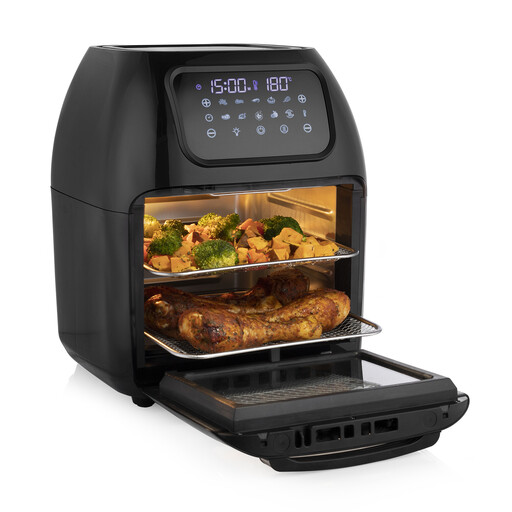
Consider this oven-style layout if you prefer to assess a tray arrangement for your scones. The product title states 10L, 1800W, 10 programmes and dishwasher-safe parts; check the usable rack area, headroom and cleaning instructions before choosing.
 No image available
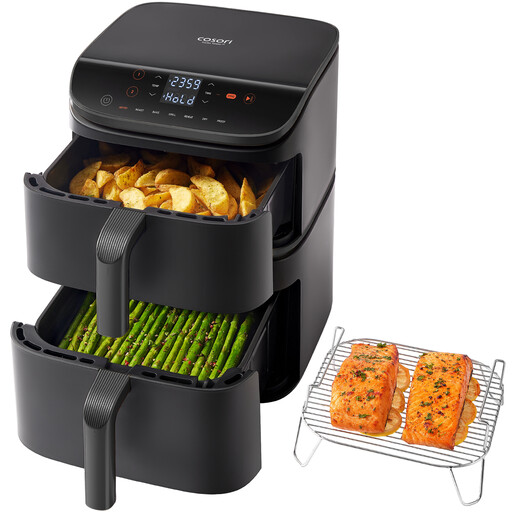
Consider the double-basket layout if separate cooking areas would help in your shared kitchen. The product title states 10.8L total capacity; check the usable area inside each basket and the baking settings against your recipe.
 No image available
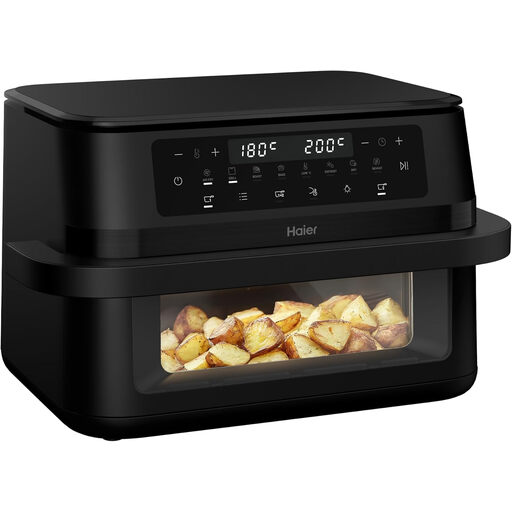
Consider this model if a removable divider and a stated Bake function suit how residents will use the appliance. Its title also lists a viewing window and dishwasher-safe parts; measure the usable basket area and confirm the required ventilation space before buying.
 No image available
The vertical two-drawer layout may suit a shared worktop where separate cooking areas matter. The product title lists four cooking levels and six cooking functions; check each drawer’s flat area and headroom, and allow for the operating clearance specified in its instructions.
 No image available
Consider its removable divider if you want to compare a single cooking zone with divided use. The product title lists Bake and dishwasher-safe parts; confirm that the undivided area and height accommodate spaced scones or your tin.
Choose by usable cooking area and height rather than litre capacity alone. Measure your scones or tin and leave room between scones; Jamie Oliver’s one-drawer recipe notes that a batch may need more than one round.
Follow a recipe suited to your appliance and check its manual for the appropriate programme and temperature. Tower describes its baking setting as using more even, slower heat than air frying; Instant Pot UK suggests reducing a conventional oven recipe’s temperature by about 20°C and checking at around 80% of its oven time as a starting point, not a rule for every fryer.
Use it only if your appliance instructions permit it and food holds the paper securely in place. Electrical Safety First warns that loose paper can reach a heating element and catch fire.
Let it cool, unplug it and clean removable food-contact parts as its manufacturer directs; clean the chamber and door where applicable. Instant Pot UK’s Vortex Plus Air Fryer Oven guidance calls for cleaning after each use and describes wiping its chamber and door with a damp cloth and mild washing-up liquid.
Do not assume the rules for a food business apply in the same way to an informal household meal. The Food Standards Agency’s cited allergen guidance is for food businesses; if you sell or commercially supply scones, check its current guidance and the requirements relevant to that activity.