Small-batch shared-kitchen cook
If you usually make a few fritters for yourself, a compact basket format may suit the space you have. Look for removable parts you can clean promptly after cooking.


For a modest batch of vegetable fritters, start with a single-basket air fryer; choose an air-fryer oven if you need trays or several cooking levels. A larger countertop oven makes more sense when its extra functions will be used regularly and its worktop footprint and electrical requirements suit the shared kitchen. Whichever format you choose, check the usable cooking dimensions, cleaning instructions and manual-required ventilation clearances.
If you usually make a few fritters for yourself, a compact basket format may suit the space you have. Look for removable parts you can clean promptly after cooking.
If you prepare several portions or cook fritters alongside other food, an oven-style layout gives you racks to consider instead of a single basket. Check that your intended trays and fritters fit the usable cooking space.
If other people use the same equipment, prioritise accessible food-contact parts and an agreed cleaning routine. Where someone needs to avoid allergen cross-contact, an odour feature is no substitute for suitable cleaning or separate equipment.
Choose when: You normally cook one modest batch and want removable basket components.
Trade-off: A basket does not offer the flat, multi-rack layout of an oven.
Choose when: You need oven-style racks for several portions or want to cook another food at the same time.
Trade-off: Racks and other accessories take space and add surfaces to clean.
Choose when: The kitchen will make regular use of multiple cooking levels and functions.
Trade-off: Check the worktop position and electrical arrangement carefully: SharkNinja lists the Ninja DT200UK at 50.5cm deep with a 2400W main unit.
For fritters in a shared kitchen, decide how much usable cooking area you need, then assess cleaning and safe placement before weighing odour and monitoring features.
| Concern | What to check | Who this matters to |
|---|---|---|
| Batch size and layout | Check usable basket or rack dimensions and whether the supplied accessories suit your formed fritters; litres alone cannot establish fit. | If I make several portions, I need room for the fritters without assuming that a capacity figure tells me how they will fit. Around 38% of consumers put batch size and layout first. |
| Cleaning and shared hygiene | Check which food-contact parts can be removed and how each must be washed; agree on a cleaning routine where equipment is shared. | When housemates use the appliance in turn, I want to remove food debris and clean the cooking surfaces between uses. For around 31% of consumers, that is the primary concern. |
| Worktop and electrical fit | Measure the intended position against the model dimensions and manual-required clearances; check its rated power and the available electrical arrangement. | With limited communal worktop space or sockets, I need an appliance I can place and power safely. Worktop and electrical fit come first for around 23% of consumers. |
| Odour and monitoring | Check model-specific window, filter and timer features, while following the manual’s ventilation and supervision instructions. | If cooking smells affect other housemates, I may value an odour-related feature and a way to check the food without opening the appliance. Around 8% of consumers prioritise odour and monitoring. |
A basket and an oven-style cavity arrange food differently. Neither capacity figure tells you whether your formed fritters or preferred tray will fit.
Check usable internal dimensions and the supplied basket, racks or trays before deciding between formats.
Instant Pot describes the Vortex Plus OdourErase filters as capturing food smells; that claim does not establish allergen control. The Food Standards Agency’s MyHACCP guidance calls for attention to potential cross-contamination in food operations.
Clean food-contact parts after use and, where allergen-sensitive food is involved, establish whether separate equipment or a suitable cleaning routine is needed.
Electrical Safety First warns that ovens and grills can overload extension leads, particularly alongside other large appliances.
Check the appliance rating and available socket arrangement. Do not daisy-chain extension leads or exceed an extension lead’s maximum current rating.
A timer can end a programmed cycle, but it does not remove the need to supervise hot food and equipment. The Instant Vortex Plus manual says not to leave the appliance unattended while it is in use.
Stay available while cooking, keep combustible items away and let the appliance cool before cleaning it.
The Vortex Plus ClearCook and OdourErase is a 5.7L basket-format example for modest fritter batches; Instant Pot lists its width as 30cm.
The FW556DG0 is an oven-style option for cooks considering racks rather than a basket. Tefal lists a 15L cavity and three rack levels.
The DT200UK is a larger multifunction countertop oven for households that expect to use two-level cooking.
The Satisfry Large 26510 is a 5L basket-format reference for a straightforward cooking routine.
These models cover divided and two-drawer air fryers as well as an oven-style air fryer. For fritters, compare their usable basket or rack space with your usual batch, then check cleaning and placement requirements.
 No image available
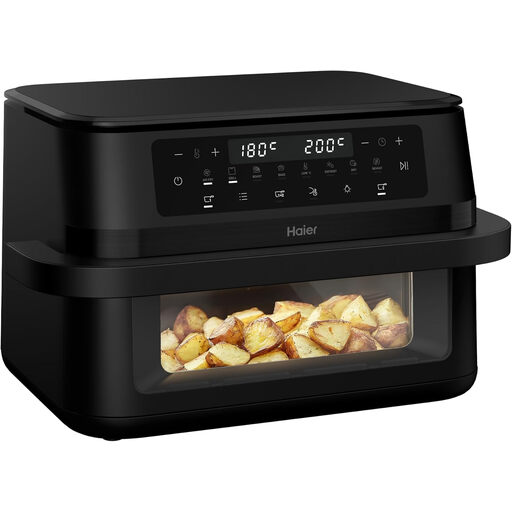
Consider the divided basket if you want to arrange a larger fritter batch or separate foods. The product title lists an 11L capacity, viewing window and dishwasher-safe parts. Check the usable basket area, appliance rating and placement instructions against your shared kitchen before buying.
 No image available
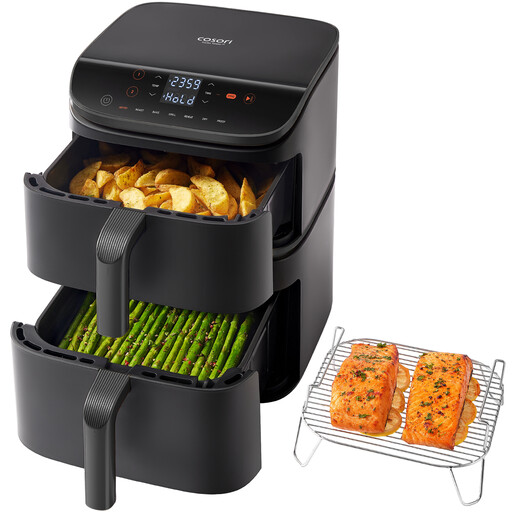
The two-basket layout is worth considering if you want to separate fritters from another food. Its title specifies a 10.8L total capacity; the baskets are not oven-style racks. Check each basket’s usable dimensions, ventilation instructions and electrical requirements for your intended position.
 No image available
Consider this vertical drawer format if you want separate cooking areas rather than a single basket. The title lists four cooking levels and a 7.6L total capacity. Check that your fritters fit the usable drawers or racks, and confirm the appliance’s worktop and electrical requirements.
 No image available
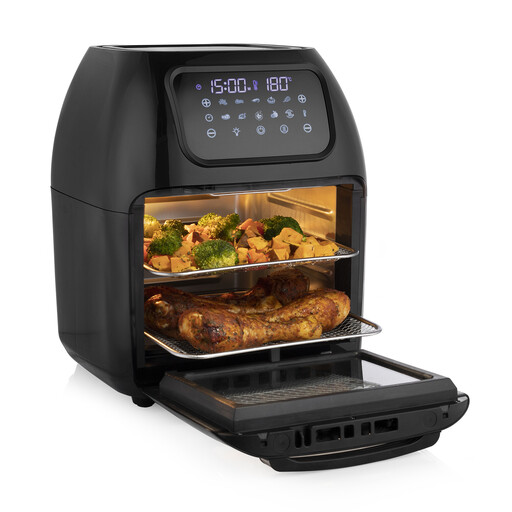
This oven-style format is the option here to examine if you prefer racks for formed fritters. Its title lists 10L capacity, 1800W rated power and dishwasher-safe parts. Confirm usable rack dimensions, exactly which accessories can go in the dishwasher, and the space and ventilation the manual requires.
 No image available
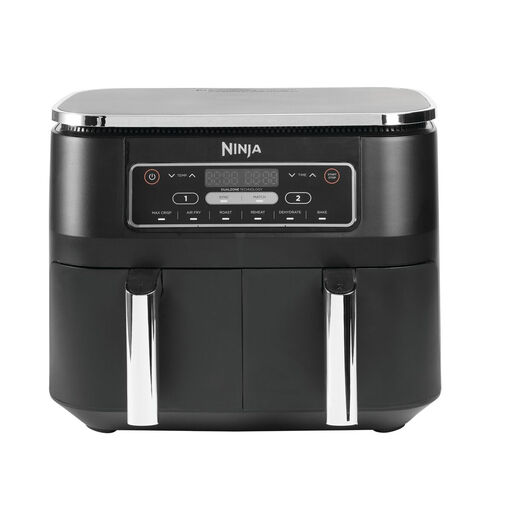
The two-drawer format may suit cooking fritters and another food separately. The title specifies 7.6L total capacity and six cooking functions, but the drawers do not provide an oven-style tray layout. Check usable drawer space, cleaning instructions, worktop fit and electrical requirements.
Yes, a basket air fryer is a practical format to consider for a modest batch if the formed fritters fit its basket or crisping plate without overcrowding under the appliance instructions. If you need trays or several rack levels, compare an air-fryer oven instead; capacity in litres does not establish usable cooking area.
Measure the intended worktop position against the model dimensions and its manual-required ventilation clearances, then check the available electrical arrangement. Keep vents unobstructed; Electrical Safety First warns that ovens and grills can overload extension leads when used alongside other large appliances.
No: auto-off ends a cycle but does not make unattended cooking safe. The Instant Vortex Plus manual says not to leave that appliance unattended while it is in use, so remain available to supervise cooking and follow the instructions for your own model.
Choose a format whose food-contact parts can be cleaned thoroughly, and agree on separate equipment or a cleaning routine where someone needs to avoid allergen cross-contact. An odour-filter feature does not establish allergen control; the Food Standards Agency’s MyHACCP guidance also emphasises identifying potential cross-contamination areas in food operations.