
24/7 Customer Support

Free returns

Same-day & Next-day Delivery

Quality Guaranteed

Unlock Your Welcome Offers: FREE Delivery | Up to 80% OFF | Free 30-day JoyPlus trial
Download the APP
A suitable air purifier can help manage airborne dust, pollen, smoke particles and household odours, but choosing one is not simply a matter of selecting the highest-looking filter grade. UK shoppers often pay more for features that do little in their room, or choose a compact unit that cannot circulate enough air.
This guide explains the specifications that matter, common buying traps and a practical shortlist for bedrooms, living rooms, offices, pet households and larger spaces.
A product may advertise H12 or H13 HEPA filtration and a high particle-capture percentage. That describes the filter material under stated conditions, not necessarily how quickly the complete appliance cleans your room.
The Clean Air Delivery Rate (CADR) is more useful for comparing airflow. A higher CADR generally means the machine can process more air in a given period, although the result also depends on room size, ceiling height, doors and fan speed.
Coverage figures are not always presented using the same assumptions. One manufacturer may quote a spacious room under low air-change expectations, while another may provide a smaller practical recommendation.
For a UK bedroom or home office, compare the stated room area with the CADR. A large room air purifier may be unnecessary in a 10–15 m² bedroom, while a small-footprint desktop appliance may struggle in an open-plan lounge.
A purifier that is too loud may be left switched off overnight. Similarly, a low purchase price can become less attractive if replacement filters are difficult to source or need frequent changing.
Check the quoted sleep-mode noise, filter availability, cleaning instructions and expected replacement interval before buying. A washable pre-filter can reduce dust build-up, but it does not automatically mean every filter layer is washable.
A HEPA air purifier is designed to capture fine airborne particles. H13 and H12 labels can help identify the filter grade, but buyers should also check the complete filtration system, airflow and replacement arrangements.
A typical three-stage design includes:
If you need an air purifier for smoke or a pet hair and odour air purifier, activated carbon and a removable pre-filter are useful features to look for. Carbon capacity varies, so do not assume that every thin carbon layer will perform identically.
CADR is normally shown in cubic metres per hour. As a practical comparison:
For example, the ROUNY model lists a CADR of 150 m³/h, while the TRULIVA KJ260 lists 260 m³/h. The ELECCI model lists 550 m³/h, making its published airflow substantially higher, although its high-speed noise is also listed at 69 dB.
A quiet air purifier should provide a clearly stated sleep-mode figure rather than relying only on phrases such as “whisper quiet”. Listed examples range from 20–25 dB in sleep mode on selected models to higher readings at maximum speed.
An air purifier with air quality sensor can automatically adjust fan speed or show PM2.5 levels. This is convenient, but sensor readings are not a substitute for ventilation or a guarantee of a particular indoor-air outcome.
Also check wattage. The Lavieair K01 lists 15 W, the Homintell 300 model lists 25 W and the ELECCI model lists 60 W. Actual electricity use depends on operating mode and time. For UK households, the most economical option is often the model that provides enough airflow without needing maximum speed continuously.
The following selections match different household needs using the specifications supplied by each product listing.
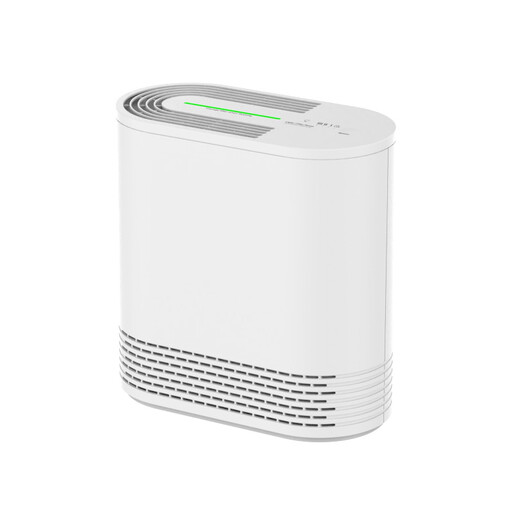
Why This Fits Their Persona: Its 85 m³/h CADR, 15 W power rating and compact format suit a small bedroom, home office or rented flat where space and everyday running costs matter.
The stated CADR is clearly provided, and the washable pre-filter helps capture larger particles before the H13 HEPA and carbon layers.
Three fan speeds, sleep mode, night light and a filter replacement reminder.
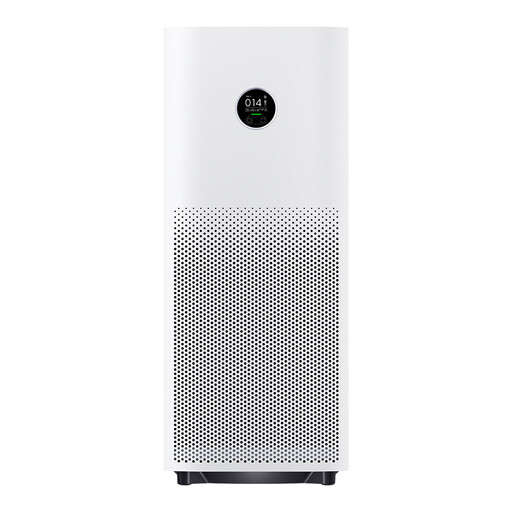
Why This Fits Their Persona: This model is aimed at households wanting a connected air purifier for home use, with app control and information displayed directly on the appliance.
It combines a stated three-stage filter with a laser particle sensor, auto mode and an OLED display rather than relying only on a headline filter label.
Wi-Fi and app control, PM2.5 display, temperature and humidity information, plus a published recommendation of up to approximately 48 m².
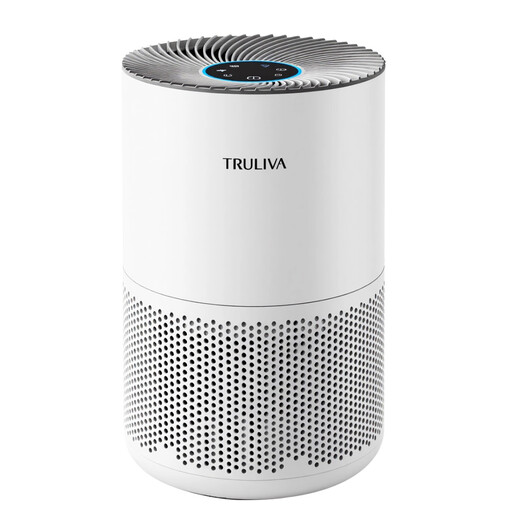
Why This Fits Their Persona: The 260 m³/h CADR and multi-filter design make it a practical option for living rooms, offices or households dealing with dust, pet particles and household odours.
The listing provides both airflow and dimensions, helping shoppers compare it with the actual room rather than an unsupported coverage slogan.
Listed 24 dB sleep mode, 24-hour timer, child lock and a four-filter arrangement described for smoke, gases, pet particles and odours.
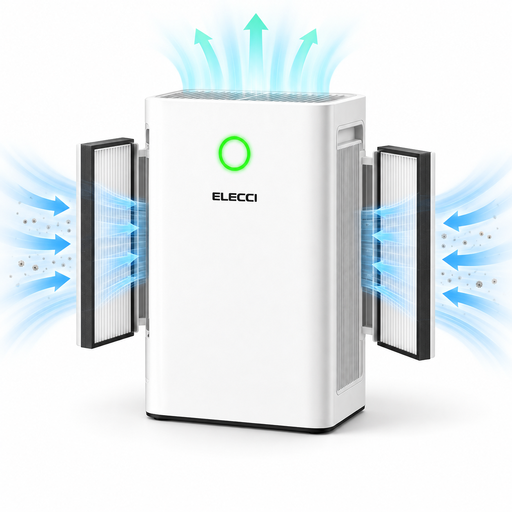
Why This Fits Their Persona: Its listed 550 m³/h CADR is aimed at faster air circulation in larger homes, open rooms or frequently occupied areas.
Its high airflow is stated alongside a 69 dB maximum noise figure, making the performance-versus-noise trade-off clear before purchase.
60 W motor, washable pre-filter, 8-hour timer and a stated 48 m² room suitability.
We have compiled a complete, real-time list of products that fully satisfy these strict selection criteria and UK safety regulations.
This depends on the room, pollution sources and selected speed. Many households use auto mode or a lower setting for longer periods, then increase airflow after cooking, cleaning or opening windows. Follow the appliance manual and continue normal ventilation where appropriate.
The interval varies by filter design and indoor conditions. Some listings suggest approximately six to eight months, while other appliances use an hour-based reminder. Homes with pets, smokers or substantial dust may require earlier replacement. Inspect the filter and follow the manufacturer’s schedule.