
24/7 Customer Support

Free returns

Same-day & Next-day Delivery

Quality Guaranteed

Unlock Your Welcome Offers: FREE Delivery | Up to 80% OFF | Free 30-day JoyPlus trial
Download the APP
An air purifier can be useful in bedrooms, home offices, living rooms and homes with pets, but choosing the right model requires more than comparing headline filter claims. A compact unit may be unsuitable for an open-plan room, while a powerful model can be unnecessarily expensive to run in a small bedroom.
Marketing language can also obscure practical details such as replacement filter costs, actual airflow and noise at higher fan speeds. This guide explains the specifications that matter and matches different types of UK households with suitable options.
A HEPA air purifier can capture fine airborne particles, but the filter grade alone does not tell you how quickly the appliance cleans a room. Airflow, fan design and room size all affect performance.
A unit with an H13 filter and low airflow may take longer to circulate air than a model with a slightly different filter specification but a higher CADR. Treat filter grade as one part of the decision rather than a complete performance measure.
Room coverage depends on the manufacturer’s testing method and the number of air changes per hour. A stated area may be based on a relatively low air-change target, so an air purifier for allergies may need more capacity if you want faster circulation during high-pollen periods.
For practical shopping, compare the CADR, measured in cubic metres per hour, and consider the purifier’s intended room size. A bedroom, study or nursery normally needs less airflow than a large living room.
Filters are consumable parts. A washable pre-filter can catch larger dust, hair and fibres, but the main particle and carbon filters usually still require replacement. Check whether replacement filters are available before buying.
Noise figures also need context. A quoted sleep-mode level usually refers to the lowest fan setting, not maximum output. If you need a quiet air purifier, look for a sleep mode and check whether the product provides noise information for more than one setting.
Clean Air Delivery Rate (CADR) indicates how much filtered air the purifier delivers per hour. Higher CADR is generally more suitable for larger rooms or faster air circulation.
As a simple comparison:
Avoid placing a small-room purifier in a large open-plan area and assuming it will perform in the same way.
A typical three-stage system includes:
An air purifier with activated carbon filter may be more appropriate for cooking smells, smoke or pet odours. Carbon performance depends on the amount and type of carbon used, so avoid assuming that every thin carbon layer will provide the same result.
Leave clear space around air inlets and outlets, following the product instructions. Keep electrical appliances away from water, excessive humidity, curtains and heat sources.
Useful features may include:
An air purifier with app control can be convenient for scheduling and remote adjustments, but it may add setup complexity. If you prefer straightforward operation, physical controls and a simple display may be more practical.
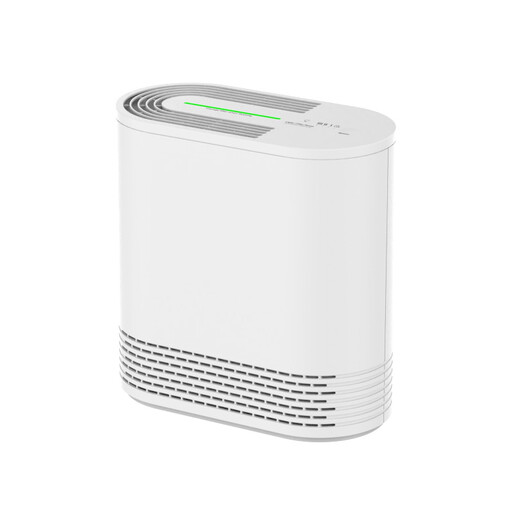
Why This Fits Their Persona: Its 85m³/h CADR is specified for small rooms such as bedrooms and offices, making it a practical starting point for room-by-room use in a UK flat or house.
The product specification clearly states its CADR and includes a filter replacement reminder, reducing guesswork about room suitability and maintenance.
Three fan speeds, sleep mode, washable pre-filter and activated carbon layer. It also includes a night light.
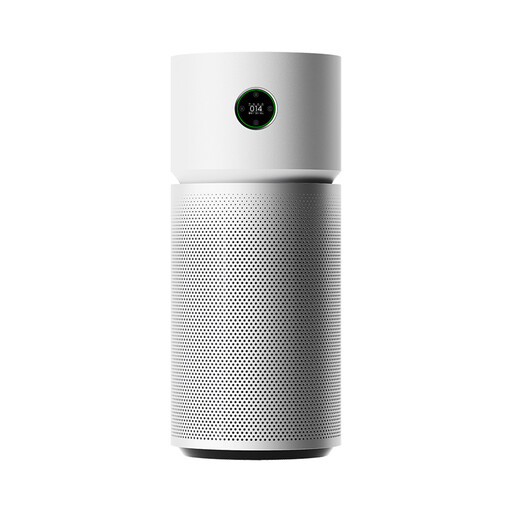
Why This Fits Their Persona: It is designed for households wanting substantial airflow, sensor feedback and connected controls across larger living spaces.
Its stated 600m³/h particle CADR gives a clearer basis for comparing room capacity than relying on a filter label alone.
PM2.5/PM10 sensing, OLED display, Xiaomi Home App and voice-control compatibility. Sleep mode is specified from 20.2dB(A).
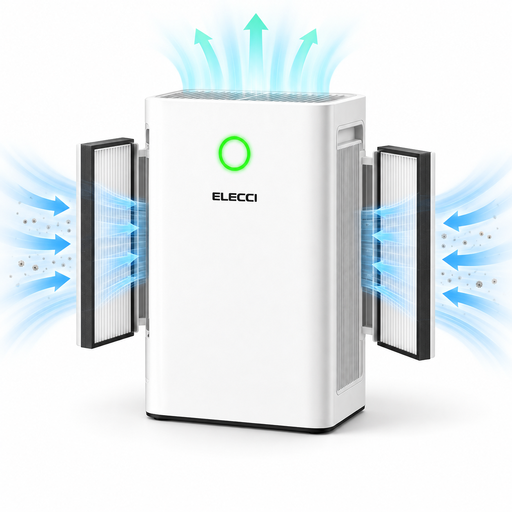
Why This Fits Their Persona: The specified 550m³/h CADR and coverage guidance up to 48m² make it a candidate for larger bedrooms, living rooms or busy family spaces.
The published CADR is considerably higher than small-room models, helping buyers avoid under-sizing a purifier for a larger area.
Washable pre-filter, timer, air-quality indicator and stated 60W input power. Check the full noise specification before using it beside a bed.
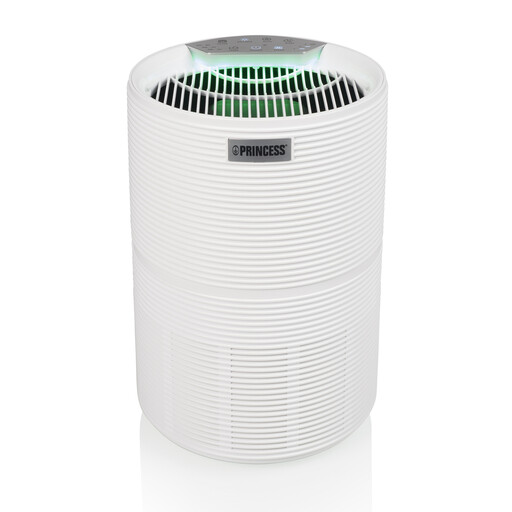
Why This Fits Their Persona: App and voice control suit households that want to schedule room-by-room purification or check settings remotely.
The 160m³/h CADR, 3-in-1 filter and room air-quality indicator provide practical details beyond the word “smart”.
H13 HEPA, activated carbon, temperature and humidity display, colour air-quality indicator and an eight-hour timer.
We have compiled a complete, real-time list of products that fully satisfy these strict selection criteria and UK safety regulations.
Running cost depends on wattage, electricity tariff and operating hours. For example, a 10W model used continuously consumes approximately 0.24kWh per day, while a 60W model uses approximately 1.44kWh per day. Multiply consumption by your electricity rate to estimate the cost. Auto and sleep modes may reduce usage compared with continuous maximum-speed operation.
Place it on a stable, level surface with unobstructed air intake and outlet space. Keep it away from curtains, walls, heaters and damp areas. A bedside position may be convenient, but avoid placing the appliance where it could be knocked over or where airflow is blocked.
The interval varies according to model, usage, indoor dust levels and pet ownership. Some products provide a filter reminder, while others specify a typical lifespan such as six to twelve months. Clean a washable pre-filter as instructed, but do not wash a main HEPA or composite filter unless the manufacturer explicitly says it is washable.