
24/7 Customer Support

Free returns

Same-day & Next-day Delivery

Quality Guaranteed

Unlock Your Welcome Offers: FREE Delivery | Up to 80% OFF | Free 30-day JoyPlus trial
Download the APP
A suitable air purifier can help reduce airborne dust, pollen, pet dander and household odours, but choosing one is not simply a matter of picking the highest particle-removal percentage on the box. UK homes vary widely in room size, ventilation, heating and humidity, so a model that works well in a small bedroom may be unsuitable for an open-plan lounge.
The most useful approach is to compare measurable specifications with your actual room and routine.
A HEPA air purifier may advertise a high percentage for capturing particles at a particular size, but this does not tell you how quickly it cleans a room. Airflow is also important. The Clean Air Delivery Rate (CADR) indicates the volume of filtered air delivered per hour.
A compact model with a modest CADR may be appropriate for a study or bedroom, while a large room needs considerably more airflow. Do not rely solely on a stated coverage area: check the testing conditions, ceiling height and recommended air changes.
A smart air purifier with app control, voice commands and automatic modes can be convenient, particularly if you want to schedule operation or monitor air quality remotely. However, these features do not replace an effective filter and suitable CADR.
If you only need straightforward overnight filtration, manual controls and a reliable sleep mode may offer better value. A built-in sensor is useful when it clearly displays PM2.5 levels or adjusts fan speed, but a decorative light is not the same as meaningful air-quality feedback.
Filters are consumable parts. Before buying, check whether replacement filters are available, how often they may need changing and whether the cost suits your budget. A washable pre-filter can capture larger dust and hair, but the main HEPA filter is generally not washable unless the manufacturer specifically says otherwise.
For cooking smells, smoke and pet odours, look for an air purifier with activated carbon filter. Carbon quantity and design differ between models, so a thin carbon layer may offer less odour adsorption than a larger dedicated carbon section.
CADR is one of the most practical comparison points. As a general guide:
For example, the Lavieair K01 lists a CADR of 85m³/h, making it more suitable as a compact air purifier for a bedroom or office. By contrast, the Xiaomi Smart Air Purifier Elite lists 600m³/h particle CADR and coverage up to 125m² under stated conditions.
A practical three-stage arrangement normally includes:
An H13 HEPA filter is a commonly searched specification, but compare the complete filtration system and airflow rather than treating the grade as the only deciding factor. A model with a pre-filter can be particularly useful for an air purifier for pets, as it helps intercept hair before it reaches the finer filter.
For an air purifier for a bedroom, check the sleep-mode noise figure and whether the display or indicator lights can be dimmed. Listed noise levels are normally measured under specific settings, so maximum-speed operation will usually be louder.
Keep the appliance on a stable, level surface with clear space around the air inlet and outlet. Do not place it in a bathroom, beside a heat source or where curtains can obstruct airflow. Always remove protective plastic from a new filter before use.
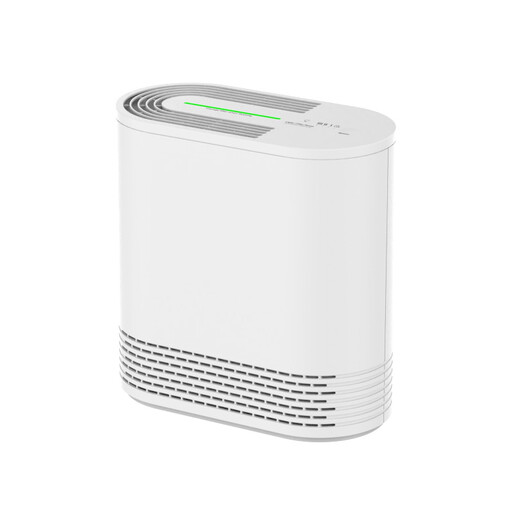
Why This Fits Their Persona: A compact choice for a UK bedroom, home office or other small room where a lower-power 15W appliance is preferred.
Its stated 85m³/h CADR makes the intended room scale clearer, while the filter reminder helps with maintenance planning.
H13 HEPA, activated carbon and washable pre-filter; sleep mode and night light.
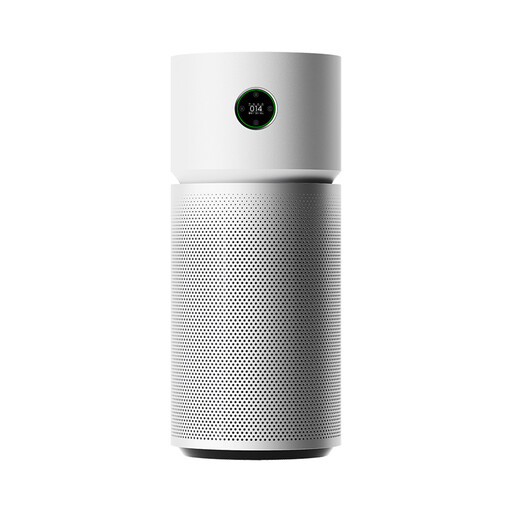
Why This Fits Their Persona: Designed for larger UK homes, open living spaces and households wanting detailed monitoring and remote operation.
Its 600m³/h particle CADR and stated room assumptions provide more useful context than a headline coverage figure alone.
PM2.5/PM10 sensor, app and voice control, OLED display and a listed 20.2dB sleep-mode minimum.
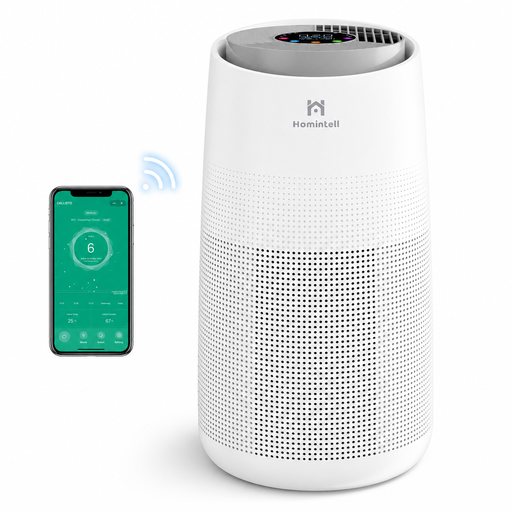
Why This Fits Their Persona: A practical option for pet owners, families or medium-sized rooms where stronger airflow and automated monitoring are priorities.
The stated 300m³/h CADR is matched with a filter reminder, four fan speeds and an automatic mode rather than relying on vague room claims.
H13 HEPA and activated carbon filtration, Wi-Fi control, PM2.5 display and a listed 26dB sleep mode.
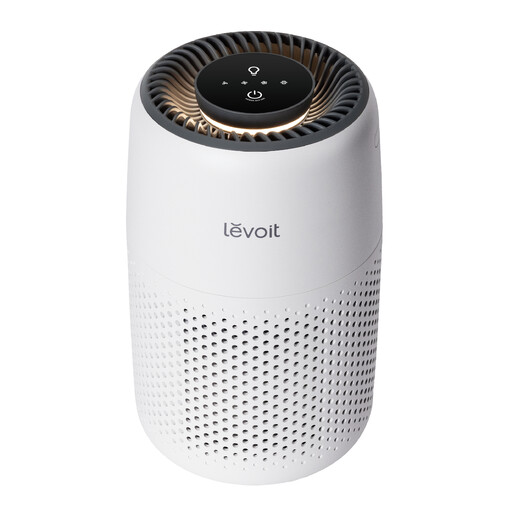
Why This Fits Their Persona: Suited to a desk, bedside table, nursery or office up to approximately 15m² where compact dimensions matter.
Its compact-room specification prevents buyers from applying small-appliance performance to an oversized living room.
Three-stage filtration, aroma pad, single-button control and noise from 25dB.
We have compiled a complete, real-time list of products that fully satisfy these strict selection criteria and UK safety regulations.
It depends on the room, outdoor pollution, cooking and whether pets or smokers are present. Many households run a purifier continuously on a low or automatic setting, while others use it during cooking, cleaning or overnight. Check the appliance’s power rating and filter guidance before choosing continuous operation.
Replacement intervals vary by model and usage. A purifier operating every day in a home with pets, smoke or considerable dust may need a replacement sooner than one used occasionally in a clean bedroom. Follow the filter indicator or manufacturer’s instructions, and never operate the unit without its filter fitted.
Running cost is influenced by wattage, fan speed and hours of use. A 7–15W compact model generally uses less electricity than a large-room unit operating at high speed, but it also moves less air. Compare the power specification with the CADR and choose a size that fits the room rather than buying an unnecessarily powerful appliance.