
24/7 Customer Support

Free returns

Same-day & Next-day Delivery

Quality Guaranteed

Unlock Your Welcome Offers: FREE Delivery | Up to 80% OFF | Free 30-day JoyPlus trial
Download the APP
An air purifier can be useful for bedrooms, home offices, living rooms and pet areas, but choosing one based only on phrases such as “powerful purification” or “hospital-grade filter” can lead to disappointment. The right model depends on room size, airflow, filter design, noise level and the cost of replacement filters.
Before buying, watch for three common pitfalls:
CADR, measured in cubic metres per hour, indicates how quickly a purifier can deliver filtered air. It is more useful than a vague “suitable for large rooms” statement.
As a practical guide:
Measure the room rather than relying solely on the product title. High ceilings, open doorways and frequent cooking or smoking can also increase the airflow required.
A HEPA air purifier is designed to capture fine airborne particles such as dust and pollen. Some products specify an H13 HEPA filter, while others simply state “high-efficiency particulate filtration”. These descriptions are not interchangeable, so check the exact filter specification.
For smoke, cooking smells and pet odours, look for an activated carbon filter. Carbon helps adsorb some odour compounds, but the amount and quality of carbon vary between products. A thin carbon layer may have less capacity than a larger carbon filter.
A pre-filter is also valuable because it catches larger dust, hair and lint before they reach the main filter. Pet owners should check whether it is washable or needs frequent cleaning.
For an air purifier for bedrooms, noise figures of around 20–30dB in sleep mode may be more comfortable for light sleepers. However, compare the maximum noise level as well, especially if you plan to run the purifier at high speed after cooking or during a smoky period.
Useful everyday features include:
Before ordering, check replacement-filter availability, suggested replacement intervals, wattage and whether the supplied plug is suitable for UK sockets. Keep electrical appliances away from water, maintain clear space around air inlets and outlets, and follow the supplied instructions.
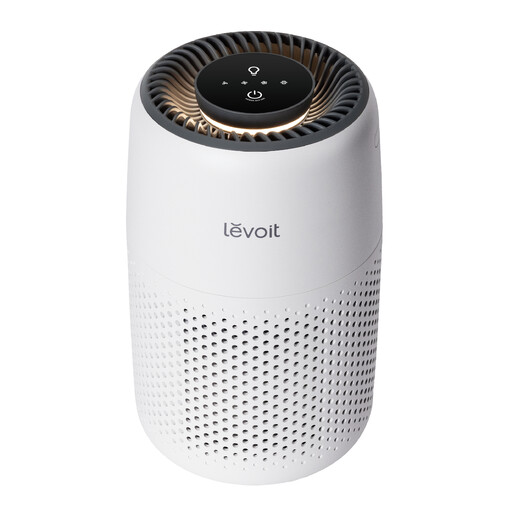
Why This Fits Their Persona: Its compact design is intended for spaces up to 15m², making it suitable for a desk, bedside table, nursery or small home office.
The stated room limit helps prevent using a small unit in an unsuitable large room. Its filter replacement guidance also makes ongoing maintenance easier to plan.
Three-stage filtration, approximately 7W power use, a 25dB minimum noise figure and an adjustable night light.
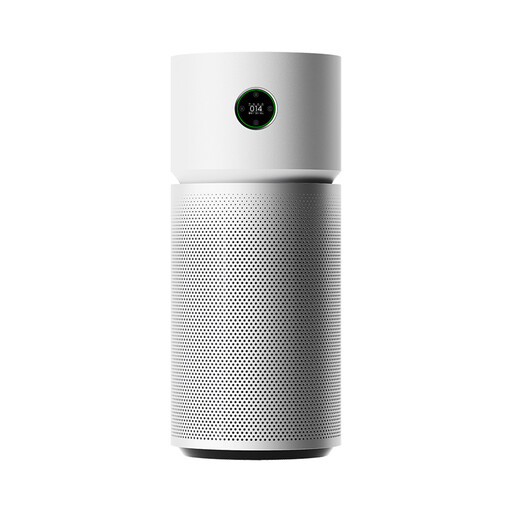
Why This Fits Their Persona: It suits larger UK homes, open-plan rooms and buyers who want detailed monitoring through an app, display and voice-control compatibility.
Its listed 600m³/h particle CADR gives a clearer performance reference than an unqualified room-size claim. Check the large dimensions before choosing a placement.
PM2.5/PM10 sensing, activated carbon filtration, app and voice control, and a listed sleep-mode noise level of 20.2dB(A).
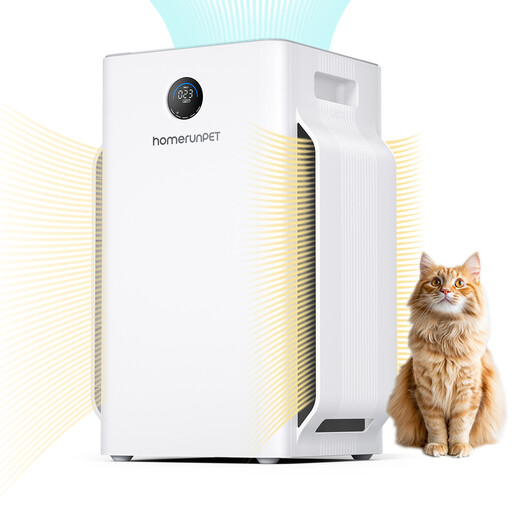
Why This Fits Their Persona: Designed for households with cats or dogs, it combines pet-hair capture, odour control and automatic air-quality monitoring for rooms up to 40m².
The washable pre-filter can be cleaned regularly to manage hair and dust, while the stated 25dB sleep mode separates nighttime performance from maximum-speed operation.
HEPA and activated carbon filtration, auto mode, child lock, filter reminder and a 40m² stated coverage area.
We have compiled a complete, real-time list of products that fully satisfy these strict selection criteria and UK safety regulations.
Place the purifier on a firm, level surface with clear space around the intake and outlet. Avoid pushing it tightly against a wall, placing it behind curtains or running it on a soft bed or sofa. For noticeable room-level circulation, keep doors and windows closed while the unit is operating, unless ventilation is required for another reason.
Vacuum or wipe a reusable pre-filter according to the manual. Do not wash a non-washable HEPA or carbon filter. Replacement intervals vary, often from several months to around a year depending on usage, pets, smoke and indoor dust.
Running cost depends on wattage, daily hours and your electricity tariff. A low-power compact model may use around 5–20W, while larger units can use considerably more at high speed. Using auto mode, timers or sleep mode can reduce unnecessary operation, but check the model’s rated power before buying.
Many manufacturers suggest replacing composite filters every six to twelve months, although homes with pets, smokers or high dust levels may need more frequent changes. Treat the filter reminder as a prompt, not a guarantee. Reduced airflow, visible loading or persistent odours can indicate that maintenance is due.
Put it in the room where the relevant particles are generated or where you spend the most time, such as a bedroom, living room or pet area. Leave the recommended clearance around the appliance and avoid placing it directly beside a wall or furniture. An air purifier does not replace regular cleaning, ventilation or advice from a qualified healthcare professional.