People with larger conservatories
A spacious, high-ceiling or partly open conservatory makes clean-air capacity especially important. Check the room’s dimensions and how often its doors are open before relying on a stated coverage area.


Choose a particle-filtering purifier with clean-air delivery suited to your conservatory’s floor area, ceiling height and usual door use. A compact model is more plausible for a small, enclosed space than for a high-ceiling room with frequently open doors. A purifier can filter airborne dust passing through it, but it cannot remove dust already settled on surfaces, so weigh noise and filter upkeep alongside regular cleaning.
A spacious, high-ceiling or partly open conservatory makes clean-air capacity especially important. Check the room’s dimensions and how often its doors are open before relying on a stated coverage area.
If you read, work or relax in the conservatory, consider the noise at the fan setting you expect to use regularly, not just a sleep-mode figure. Display lights and available controls may also affect comfort.
If pollen or pet dander matters alongside household dust, look for suitable particle filtration and an identifiable replacement filter. Keep cleaning and ventilation in the routine: a purifier only filters air that passes through it.
Start with the conservatory’s size and usual door position, then consider whether you can comfortably run the chosen purifier and maintain its filter.
| Concern | What to check | Who this matters to |
|---|---|---|
| Room fit and clean-air delivery | Measure floor area and ceiling height; compare particle clean air delivery rate (CADR) in m³/h and the air-change basis of any coverage claim. Account for doors that are often open. | A tall conservatory or one opening into the house makes me wary of choosing from a maximum-area figure alone. Around 45% of consumers put adequate clean-air capacity first. |
| Comfort during regular use | Check noise figures by operating mode, display controls and whether automatic operation is available; sleep-mode noise does not describe a higher fan setting. | If I work or read in the conservatory, I need a setting I can leave running without finding it intrusive. Quiet everyday operation comes first for roughly 33% of consumers. |
| Particle filtration and upkeep | Identify the particle filter and its exact replacement model; check the manufacturer’s replacement guidance. Plan to continue cleaning settled dust. | I want to address airborne dust and keep the filter maintainable, without expecting it to clean shelves or floors. For about 22% of consumers, filtration and upkeep are the primary concern. |
Manufacturers can state coverage at different air-change frequencies. A figure for a compact, enclosed room may not describe what to expect in a taller conservatory or one with frequently open doors.
Measure the space and look for a stated particle CADR and coverage conditions. Levoit, for example, gives different areas for its Core 600S at one and two air changes per hour; compare claims on the same basis before deciding.
A filter acts on air passing through the appliance, not dust already on glazing, furniture or floors. Disturbing settled dust can put it back into the air.
Use the purifier alongside regular cleaning. Asthma + Lung UK recommends damp dusting to avoid stirring up dust.
The filter needs to remain available and be replaced in line with the maker’s guidance if the purifier is to remain practical for regular use.
Find the exact replacement-filter model before buying and check its current availability and recommended replacement interval.
Activated-carbon or formaldehyde-focused filtration addresses a different concern from capturing airborne household dust. Its presence does not establish that a purifier is suitably sized for your conservatory.
If dust is the main concern, prioritise particle filtration and clean-air delivery. Consider additional gas-focused features only if you have a separate reason to want them.
Compare individual models rather than treating a brand’s range as having one room size or set of features.
Its Core range includes compact and larger HEPA-based purifiers with published clean-air delivery figures.
The connected 3000i AC3033/30R1 is a model to examine when considering a larger conservatory.
The Purifier Big+Quiet Formaldehyde combines particle filtration with gas- and formaldehyde-focused filtration for large-space use.
These purifiers offer a range of stated clean-air delivery figures for conservatory dust concerns. Match each model’s capacity and coverage conditions to your own room rather than assuming that a stated maximum area guarantees a fit.
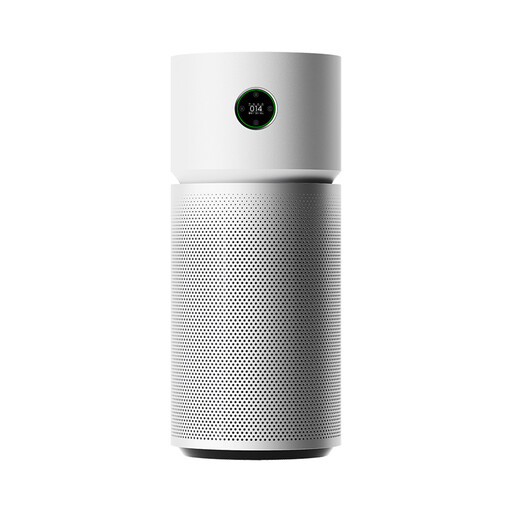 No image available
Consider this model when assessing a larger conservatory, while checking its stated coverage against your ceiling height and usual door position.
The product title states a 600 m³/h CADR, coverage up to 125 m², PM2.5/PM10 sensing and app control.
Identify the compatible replacement filter and its replacement guidance before buying.
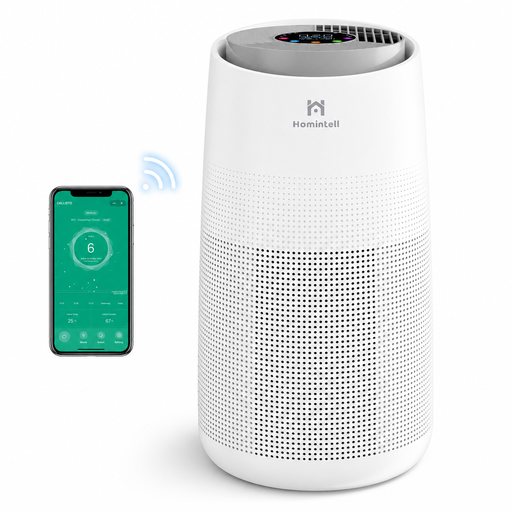 No image available
This model may suit a conservatory whose dimensions fit its stated coverage; check the air-change basis before relying on the area figure.
The product title specifies a 300 m³/h CADR, a 36 m² room claim, an H13 HEPA and activated-carbon filter, and Wi-Fi control.
Check which replacement filter fits this model and whether it is available.
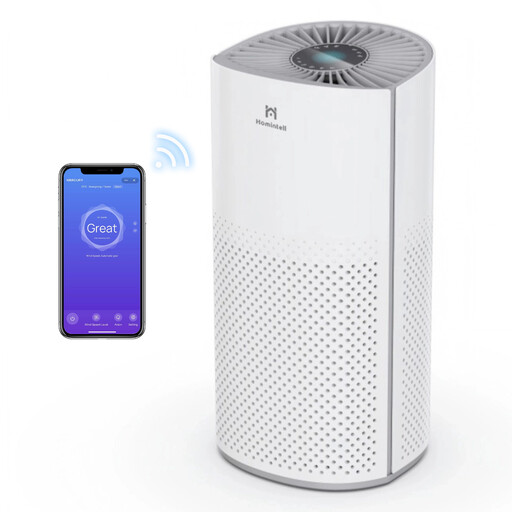 No image available
Consider this model for a smaller, more enclosed conservatory rather than assuming its area claim applies to an open-plan space.
The product title states a 200 m³/h CADR, H13 HEPA and activated-carbon filtration, and Wi-Fi control.
Coverage figures of 24 m² and 25 m² appear in the product information, while noise figures differ between the title and description. Confirm the applicable coverage conditions and noise setting before choosing it.
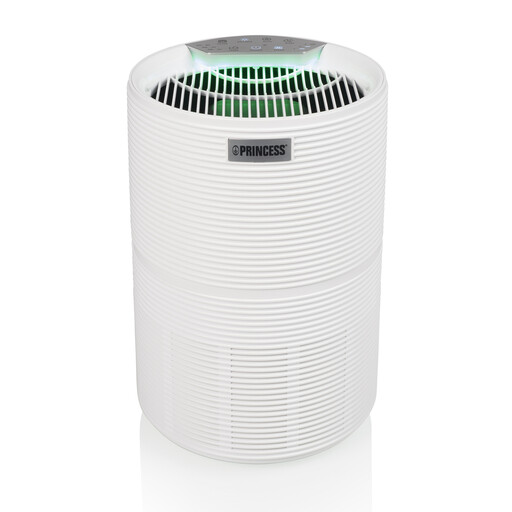 No image available
This is a model to assess for a defined conservatory space where its clean-air delivery meets your room’s needs.
The product title states a 160 m³/h CADR, coverage up to 55 m², an H13 HEPA filter, app control and an air-quality sensor.
Check the coverage claim’s air-change basis, operating noise and the matching replacement filter.
No. A particle-filtering purifier can capture airborne dust that passes through it, but dust on glass, furniture and floors still needs cleaning. Asthma + Lung UK recommends damp dusting to help avoid stirring dust into the air.
Measure the floor area and ceiling height, then consider whether doors are commonly open. Compare a stated particle CADR and the air-change conditions behind any room-area claim; a maximum area alone does not tell you how often the room’s air is being filtered.
No. Filtering particles indoors is a different task from providing ventilation. In England, Approved Document F addresses building ventilation requirements; for everyday indoor air quality, Asthma + Lung UK also advises airing rooms when possible.
Find the exact replacement filter, its availability and the manufacturer’s replacement guidance, then consider electricity use at the setting you expect to run. Also check noise at that setting: a sleep-mode figure does not describe operation at a higher fan speed.