What should you check before buying?
Start with the room and its airborne-dust load, then decide which everyday constraints—noise, other pollutants or upkeep—will determine whether you keep using the purifier.
| Concern | What to check | Who this matters to |
|---|
| Room-sized dust filtration |
Measure the room; compare dust CADR where available, or check the air-change basis behind a room-area claim. The Association of Home Appliance Manufacturers describes CADR as pollutant-specific, including dust. |
If airborne dust is the main reason for buying, I need enough particle-cleaning capacity for the room I actually use. Around 33% of consumers put room-sized dust reduction first. |
| Noise during long sessions |
Compare noise by fan mode and check whether timers, lights or scheduling suit extended use. A sleep-mode figure does not describe higher-speed operation. |
When I work or study in the hobby room for hours, a distracting fan could make me reluctant to leave it running; roughly 27% of consumers prioritise tolerable long-session operation. |
| Dust and odours |
Distinguish particle filtration from any activated-carbon stage. For paints, adhesives or solvents, follow the material's safety guidance and ventilate appropriately. |
If my activities also produce odours or fumes, I need to address those at the source rather than expect a dust filter to handle them. About 20% of consumers make this mixed-pollutant need their priority. |
| Placement and filter upkeep |
Check the footprint and required airflow clearance, then identify the exact replacement-filter code and change guidance. |
With little clear space around my projects, I need a unit I can position properly and filters I can keep replacing; around 20% of consumers put placement and upkeep first. |
Joybuy air purifiers for hobby rooms
These particle-filtration models span stated room sizes and airflow figures for hobby-room use. Compare each listing's sizing basis, usable fan speed and replacement filter before choosing; controls and compact dimensions do not establish dust-cleaning capacity on their own.
 No image available
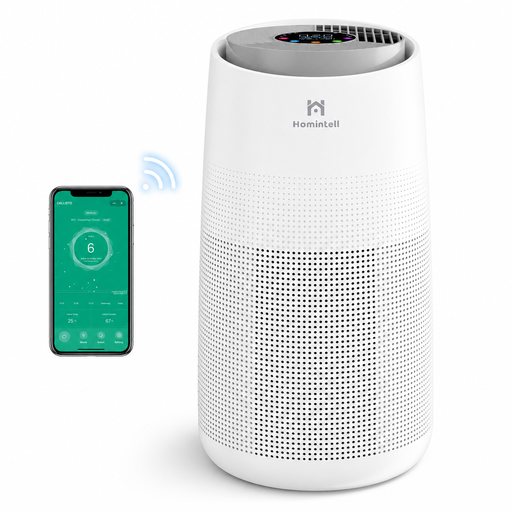
Homintell Smart Air Purifier, 300 m³/h CADR, H13 HEPA
Consider this model if a frequently used hobby room calls for a higher stated airflow and scheduled operation.
The listing states 300 m³/h CADR, 36 m² coverage, a pre-filter, H13 HEPA and activated-carbon stages, a dust sensor, Wi-Fi controls and an 8-hour timer. Check the air-change basis behind the coverage figure and the compatible replacement filter. It also lists UV and ioniser functions; confirm how ionisation operates and whether it can be disabled before using the unit in an occupied room.
Joybuy
 No image available
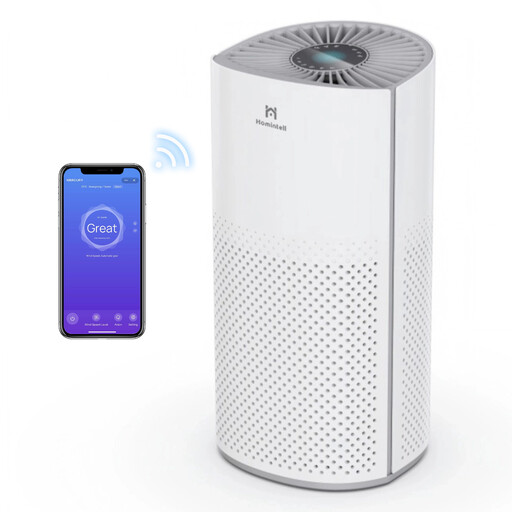
Homintell Smart Air Purifier, 200 m³/h CADR, H13 HEPA
This model offers sensor-led and timed operation for a hobby room where dust filtration and adjustable controls both matter.
The listing states 200 m³/h CADR, a pre-filter, H13 HEPA and activated-carbon stages, a PM2.5 sensor, Wi-Fi controls and a timer. Check the room-coverage basis and operating-mode noise: the title and description give differing noise figures. Confirm replacement-filter availability and how the listed ioniser operates before use in an occupied room.
Joybuy
 No image available
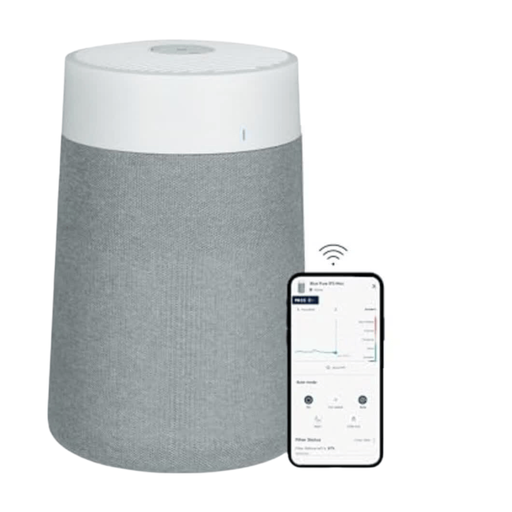
Blueair Blue Pure 511i Max Air Purifier, Grey
This model suits consumers who want app scheduling and air-quality monitoring alongside particle filtration for a hobby room.
The listing describes HEPASilent filtration, a washable pre-filter, a carbon stage and Night mode. Its CADR figures conflict, so confirm the correct dust CADR and the basis of its room-coverage claim before judging room fit. Check noise at the airflow you would use and the compatible replacement filter.
Joybuy
 No image available
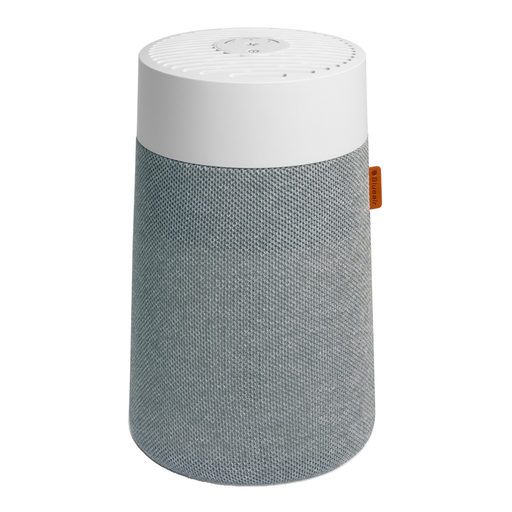
Blueair Blue Pure Mini Max 111524 Air Purifier, Grey
Its compact format is worth considering where a small hobby room has limited placement space.
The listing states coverage up to 20 m² and describes HEPASilent filtration for airborne dust and a washable pre-filter. Check the air-change basis behind that area figure, noise at the intended fan speed and the main filter's replacement requirements before deciding whether it fits the room.
Joybuy
 No image available
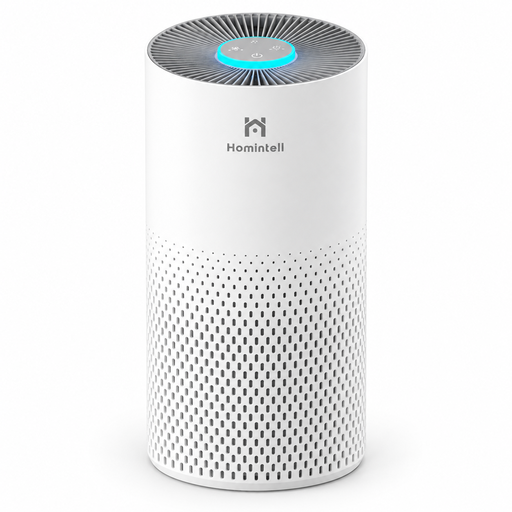
Homintell Air Purifier, 150 m³/h CADR, H11 HEPA
This model is an option to assess for a smaller hobby room where timed particle filtration is useful.
The listing states 150 m³/h CADR, a pre-filter, H11 HEPA and carbon stages, three speeds and an 8-hour timer. Its room-coverage figures differ, so confirm the applicable area and air-change basis. Check noise by fan mode and the compatible replacement filter for extended use.
Joybuy
Frequently asked questions
Will an air purifier stop dust settling on my projects?
No, it cannot stop all dust settling. A correctly sized particle purifier can reduce airborne dust in the room where it runs, but dust already on projects and surfaces still needs cleaning. The US Environmental Protection Agency advises using filtration alongside source control and ventilation.
How do I size a purifier for a hobby room?
Measure the room where the purifier will run and compare dust CADR or room ratings with a clear air-change basis. The Association of Home Appliance Manufacturers describes CADR as a measure for specific test pollutants, including dust; a headline area figure without its operating basis is less useful for comparing models.
Do I need activated carbon to tackle dust?
No, particle filtration is the relevant feature for airborne dust. Activated carbon is a separate consideration if odours or gases also concern you, but it does not replace source control, material safety instructions or appropriate ventilation when using paints, glues or solvents.
How often should I replace the filter?
Follow the instructions for the exact purifier and compatible filter you buy. Levoit advises a 6–8 month replacement interval for its Core 300 and Core 300S filters, but that model-specific guidance is not an interval for every purifier or dust load.
Should I use an ioniser or ozone-generating cleaner in a hobby room?
Do not use equipment intended to generate ozone in an occupied hobby room. The US Environmental Protection Agency warns that ion generators and other ozone-generating air cleaners can produce ozone under some conditions, while ionisation may deposit particles on surfaces instead of collecting them in a filter. Check how any ionisation feature works before choosing a model that includes one.


