
24/7 Customer Support

Free returns

Same-day & Next-day Delivery

Quality Guaranteed

Unlock Your Welcome Offers: FREE Delivery | Up to 80% OFF | Free 30-day JoyPlus trial
Download the APP
As a Joybuy Product Recommendation Officer, my role is to help you navigate the crowded market of home appliances. Many of us in the UK, especially in urban areas, are increasingly aware of indoor air quality. Whether it's tackling seasonal pollen, the dust that never seems to settle or lingering pet odours, finding the right air purifier for home can feel like a daunting task.
The market is filled with devices making bold claims. Unfortunately, many fall short, leaving you with a machine that is either ineffective, noisy or expensive to maintain. Before you invest, let's look at the common pitfalls that can lead to a poor purchase.
To make an informed choice, focus on the specifications, not just the marketing. Here are the three non-negotiable factors to analyse.
The CADR is the most important metric for performance. Measured in cubic metres per hour (m?/h), it tells you how much clean air the purifier can produce at its highest setting. To ensure effective air changes, match the CADR to your room size. A good rule of thumb is to choose a unit with a CADR that is at least three times your room's volume. For a typical 15m? UK bedroom with a 2.4m ceiling (36m? volume), you would want a CADR of at least 108 m?/h to properly tackle air purifier for dust and pollen issues.
A genuine HEPA air purifier is the standard for capturing microscopic particles. Look for units with a multi-stage filtration system:
pet odour eliminator.If you're looking for a quiet air purifier for bedroom use, the noise level is critical. This is measured in decibels (dB). A unit operating below 30dB is considered whisper-quiet and is unlikely to disturb your sleep. Check the noise level for the lowest fan setting, as this is how it will likely run overnight.
While an air purifier for home is a powerful tool, achieving truly fresh air involves a multi-faceted approach. Regular cleaning to remove settled dust and allergens is crucial. Using a lightweight vacuum cleaner or a powerful cordless stick vacuum on floors and a specialised mite removal vacuum on upholstery and mattresses prevents these particles from becoming airborne again. For immediate freshness or surface hygiene, a disinfectant spray can also complement your routine.
Here are a few air purifiers that align with our selection criteria, matched to different household needs.
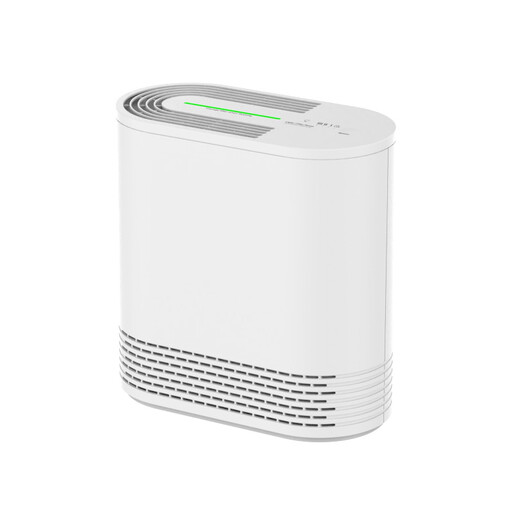
Why This Fits Their Persona: This compact unit is ideal for a desk or nightstand in a smaller UK bedroom or study. It provides effective, localised air cleaning without a large footprint or initial outlay.
Its 85 m?/h CADR is clearly stated for small rooms, avoiding misleading size claims. The washable pre-filter helps reduce the long-term cost of filter replacements.
Features a 3-in-1 filtration system with an H13 HEPA filter and a quiet sleep mode, making it well-suited for overnight use.
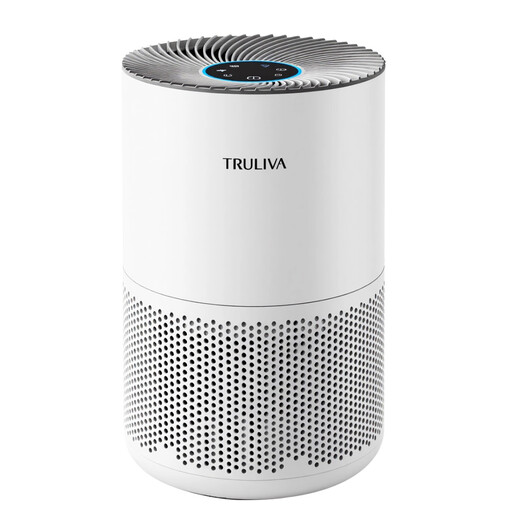
Why This Fits Their Persona: With a high CADR and comprehensive filtration, this model is built for living rooms where pet dander, pollen and other allergens are a constant concern. It has the power to manage air quality in larger, high-traffic areas of the home.
The strong 260 m?/h CADR is genuinely suitable for medium-to-large rooms, delivering on its performance claims. Its washable filter design also helps manage long-term running costs.
Features a robust H13 HEPA filter system and a quiet sleep mode operating at just 24dB, making it powerful yet unobtrusive.
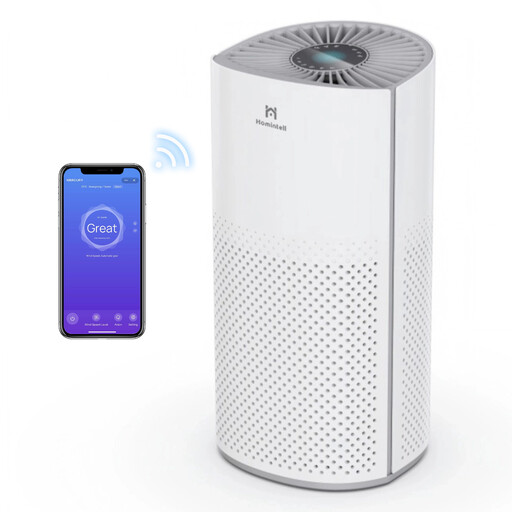
Why This Fits Their Persona: This is a modern smart air purifier for those who value convenience and data. WiFi connectivity allows for remote control via an app, while the auto mode and real-time air quality display provide a "set and forget" experience.
The built-in filter replacement reminder prevents you from forgetting maintenance, ensuring the unit runs efficiently and avoiding the hidden cost of poor performance from a clogged filter.
Features real-time PM2.5 monitoring with a colour-coded display and an auto mode that adjusts fan speed based on air quality, optimising performance and energy use.
We have compiled a complete, real-time list of products that fully satisfy these strict selection criteria and UK safety regulations.
1. How often do I need to replace the filters in an air purifier? This depends on the model and your household environment. Generally, the main HEPA and activated carbon filters require replacement every 6 to 12 months. Many units now include a filter life indicator to alert you. Washable pre-filters should be cleaned monthly to maintain airflow and protect the inner filters.
2. Where is the best place to put an air purifier in a room? For the best results, place the unit in the room where you spend the most time, such as the bedroom or living room. To ensure optimal airflow, allow at least 30-50 cm of clear space around all sides of the purifier. Avoid placing it in tight corners, behind furniture or directly under shelves.
3. How much does it cost to run an air purifier? Running costs are determined by the purifier's power consumption (measured in Watts) and your electricity tariff. Modern, energy-efficient models are designed for continuous operation. A unit with a power rating of 25W running 24/7 would consume approximately 0.6 kWh per day, typically costing only a few pounds per month to run. Look for models with low power consumption in sleep mode for overnight use.