
24/7 全天候客户支持

免费退货

当日/次日达

品质保障

开启新人专享福利: 全场免邮 | 低至 2 折 | 免费试用 30 天 JoyPlus 会员
下载 Joybuy
With the rise of urban living and increased awareness of indoor pollutants, many UK households are considering an air purifier for home use. From city dust and traffic fumes to seasonal pollen and pet dander, the air inside our homes can often be less clean than we think. Finding the right device can feel overwhelming, with countless features and technical terms to decipher.
As a Joybuy Product Recommendation Officer, my role is to help you navigate these choices. This guide offers practical advice and highlights a few carefully selected options to help you find a suitable air purifier for your living space, whether you need a quiet air purifier for a bedroom or a powerful unit to manage allergens.
Before looking at specific models, it helps to understand a few key features. Focusing on these will ensure you select a device that genuinely meets your needs.
The core of any effective air purifier is its filter. The most common and recognised standard is the HEPA air purifier. HEPA stands for High-Efficiency Particulate Air. A true HEPA filter is designed to capture at least 99.97% of airborne particles down to 0.3 microns in size. This includes common irritants like dust mites, pollen, mould spores and pet dander, making it a crucial feature for anyone seeking an air purifier for allergies or general dust reduction. Many models also include an activated carbon layer to help absorb odours and gases.
One of the most important specifications to check is the CADR, or Clean Air Delivery Rate. Measured in cubic metres per hour (m?/h), this rating tells you how quickly the purifier can clean the air within a particular room size. A higher CADR is needed for a large living room, while a smaller bedroom can be served effectively by a unit with a lower CADR. Always check the manufacturer's recommended room size and compare it to the space you intend to use it in for optimal performance.
If you plan to use the device in a bedroom or a quiet office, noise level is a critical factor. Look for models that specify their noise level in decibels (dB) and offer a dedicated 'sleep mode', which typically runs the fan at its lowest, quietest speed.
For added convenience, a smart air purifier can be a great option. These devices often connect to your home Wi-Fi, allowing you to control settings, monitor air quality and set schedules remotely via a smartphone app.
Here are a few air purifiers that stand out for their specific features and suitability for different home environments.
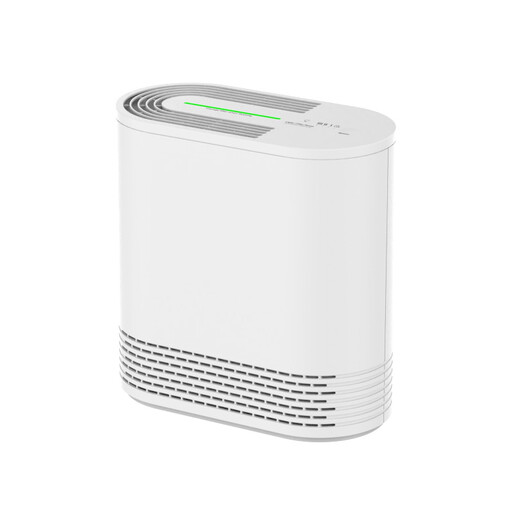
Why It Stands Out The Lavieair K01 is a compact and straightforward unit designed for smaller spaces. Its 3-in-1 filtration system combines a washable pre-filter for larger particles, an H13 HEPA filter for fine particulates and an activated carbon layer for odours. With a quiet sleep mode and a gentle night light, it is well-suited for continuous use in a bedroom.
Pros
Who is it for? This is a practical choice for individuals looking for an effective air purifier for a bedroom, home office or other small rooms up to around 10m?.
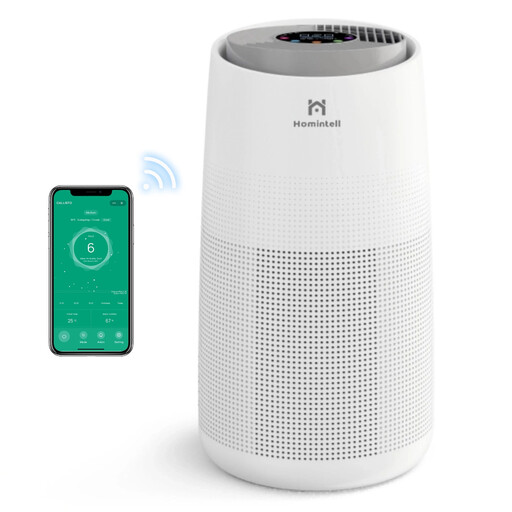
Why It Stands Out This Homintell model offers a significant step up in power and features. With a CADR of 300m?/h, it is capable of handling medium-sized rooms like living rooms or master bedrooms up to 36m?. Its smart capabilities are a key highlight, offering Wi-Fi control via an app. The built-in dust sensor provides real-time air quality feedback through a colour-coded light and it also displays temperature and humidity.
Pros
Who is it for? A great fit for tech-savvy users or families who want to actively monitor and manage the air quality in their main living areas.
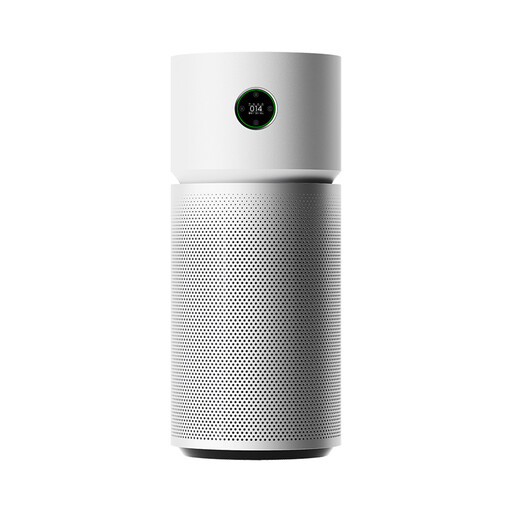
Why It Stands Out For those with large, open-plan spaces or significant concerns about allergens, the Xiaomi Smart Air Purifier Elite UK is a high-performance option. It boasts a very high CADR of 600m?/h, making it suitable for areas up to 125m?. It is T?V Rheinland Allergy Care certified, which provides reassurance for those with sensitivities. According to the brand, its three-in-one filtration system is designed to remove 99.98% of 0.3μm particles, while its UV-C LED and plasma technology target airborne viruses.
Pros
Who is it for? Ideal for households with large living spaces, pet owners or individuals seeking a high-specification solution for managing allergies and airborne pollutants.
The models above represent a fraction of the available choices. If your needs differ—perhaps you require a different size, budget or feature set—there are many other purifiers to consider.
Explore our complete collection of Room Air Purifiers to find the perfect fit for your home.
Filter lifespan varies depending on the model, usage hours and the level of air pollution in your home. Most HEPA and carbon filters require replacement every 6 to 12 months. Many modern air purifiers, including the ones mentioned, have a built-in filter replacement indicator that will alert you when it is time for a change. Always refer to the manufacturer's specific recommendations.
Yes, an air purifier for pets can be very effective. Models equipped with a true HEPA filter are designed to capture pet dander, which is a primary trigger for pet allergies. Additionally, units with an activated carbon filter are excellent at trapping and neutralising the odours that often come with having pets in the home.
For best results, place your air purifier in a location with good airflow, ensuring the air intake and outlet are not blocked. Keep it at least 30-50cm away from walls, furniture or curtains. It is most effective when placed in the room where you spend the most time, such as your bedroom for better sleep or the living room for general daily use.